Microsoft Xbox Series X specs is finally OFFICIAL - no more speculations
Tech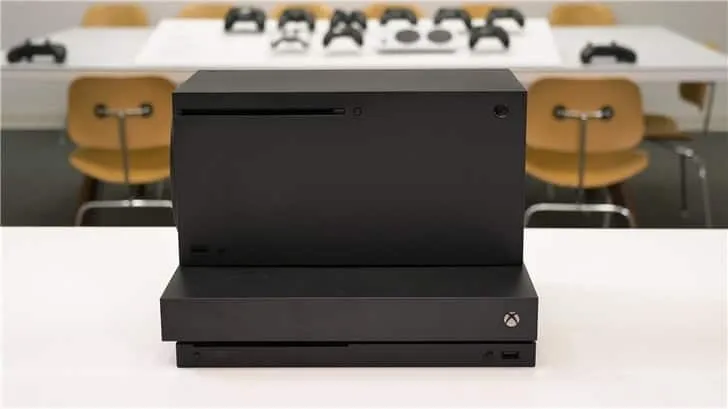

Here are the full specifications of the Microsoft Xbox Series X:
- CPU: 8 cores @ 3.8 GHz (3.66 GHz under Hyper-Threading)
- GPU: 12 TFLOPS, 52CU @ 1.825 GHz
- Die size: 360.45 mm 2
- CPU Build Process: 7nm enhanced version process
- Memory / video memory: 16GB GDDR6
- Bandwidth: 10GB @ 560GB / s, 6GB @ 336GB / s
- Storage: 1TB custom NVME SSD
- I / O throughput: 2.4 GB / s (Raw), 4.8 GB / s (compressed)
- Expandable storage: 1 TB expansion card
- External storage: USB 3.2 external hard disk support
- Optical Drive: 4K Ultra HD Blu-ray Drive
- Performance target: 4K @ 60 frames / second, up to 120 frames / second
- Dimension: 15.1 cm x 15.1 cm x 30.1 cm
- Weight: 4.45kg/9.8lbs
- Total Volume: 6.86 litres
- Ports: HDMI 2.1 output, 3x USB 3.2, networking port, expandable storage slot, power input


Project Acoustics
Project Acoustics is a wave acoustics engine for 3D interactive experiences. It can model wave effects (such as occlusion, occlusion, gating, and reverb effects) in complex scenes without the need for manual area labeling or CPU-intensive ray tracing. It also includes game engine and audio middleware integration.
The principle of Project Acoustics is similar to static lighting : Bake detailed physics principles offline to provide a physical benchmark, and use a lightweight runtime with expressive design controls to meet your artistic goals for virtual world acoustics. Ray-based acoustic methods can use a single source-to-listener ray cast to check occlusion, or drive reverberation by estimating the local scene volume of several rays. But these techniques may be unreliable because pebbles can become clogged like bouldering, which explains how sound bends around objects, a phenomenon called diffraction.
Project Acoustics' simulations use wave-based simulations to capture these effects. Acoustic effects are more predictable, accurate and seamless. A key innovation of Project Acoustics is the combination of acoustic simulation based on real sound waves and traditional sound design concepts. It converts the analog result into a conventional audio DSP parameters to be blocked, transmitting and reverberation.





Loading