OnePlus Watch 4: Titanium Shell, Wear OS 6, and a Chip That's Raising Eyebrows
OnePlusWednesday, 22 April 2026 at 18:08
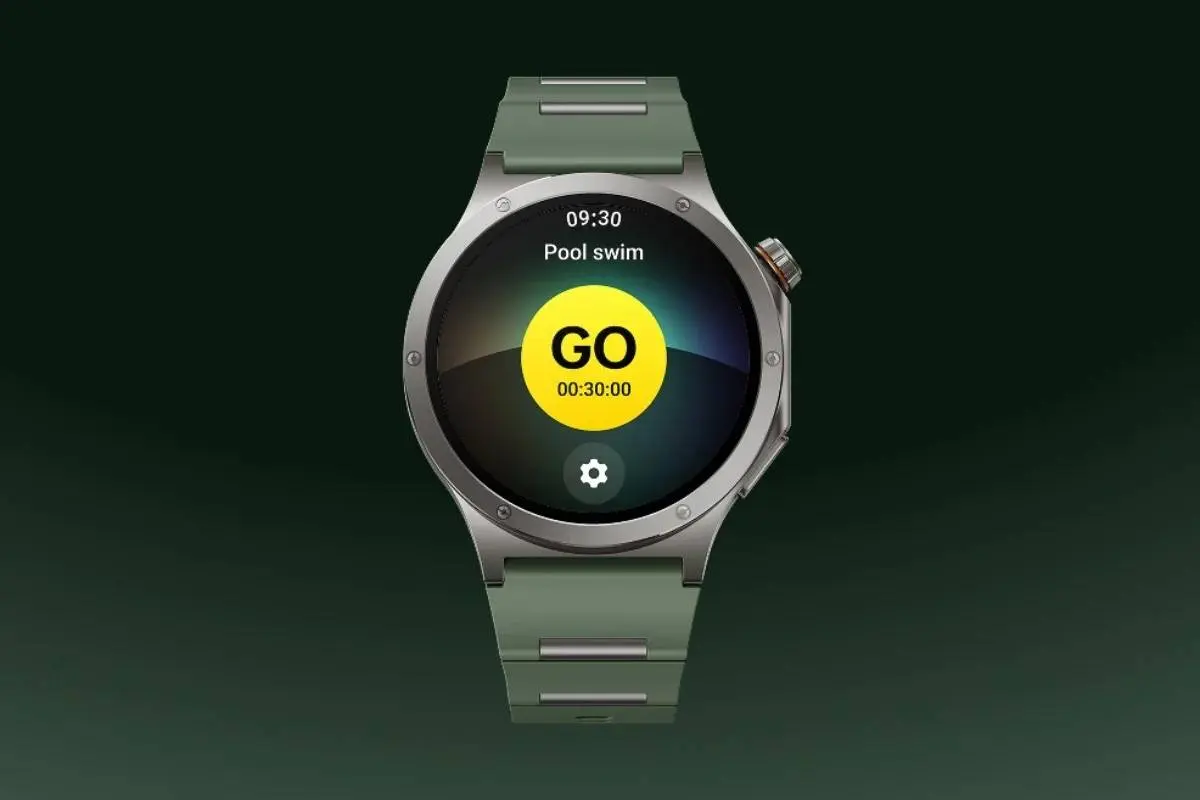
OnePlus has quietly pushed its Watch 4 live on its official product page — no press release, no fanfare, just a spec sheet sitting there for anyone willing to dig. The titanium alloy case measures 47.4mm × 47.4mm × 11mm, tips the scales at around 43g without a strap, and ships in two finishes: Evergreen Titanium and Midnight Titanium. It's a clean, premium package. But dig a little deeper, and some of that shine starts to wear off.

Summary
- Wear OS 6 debut: The Watch 4 is among the first smartwatches to ship with Wear OS 6, built on Android 16, with native Gemini integration.
- Snapdragon W5 — again: OnePlus carries forward the same chip used in the Watch 2 and Watch 3, skipping Qualcomm's newer Snapdragon Wear Elite platform entirely.
- Display unchanged: The 1.5-inch LTPO OLED panel at 466 × 466 resolution is identical to its predecessor — though peak brightness now hits 3,000 nits in sports mode.
- Battery is genuinely impressive: A 646mAh cell claims up to 16 days in power saver mode and full charge in roughly 75 minutes.
- No price, no date: OnePlus hasn't confirmed either yet, though component costs suggest it'll likely land higher than previous models.

The Specs: Some Wins, One Glaring Question Mark
Let's start with what's genuinely good. The display keeps the lights on for up to three days under heavy use, five days in smart mode, and a remarkable 16 days in power saver mode — numbers that comfortably outperform most Wear OS rivals, including Apple Watch. Frankly, battery life has always been OnePlus's smartwatch trump card, and the Watch 4 doesn't abandon that tradition.
The 1.5-inch LTPO OLED panel? Sharp. Peak brightness in sports mode under strong sunlight can reach 3,000 nits. Sapphire Crystal glass covers the display. It's built for punishment — rated to MIL-STD-810H military-grade standards with wet-hand touch control and full seawater corrosion resistance. Plus IP68, IP69, and 5ATM. I suppose if you're swimming through a monsoon, you're covered.
The Chip Problem Nobody Wants to Talk About
Here's the catch. The Watch 4 runs on the same Qualcomm Snapdragon W5 processor and BES 2800 co-processor as the Watch 2 and Watch 3 before it — there's no upgrade to Snapdragon Wear Elite here. Three consecutive generations on the same silicon. That's not a refresh. That's a holding pattern.

The Snapdragon W5 Gen 1 is now two years old. Qualcomm announced the Snapdragon Wear Elite platform, and its absence is notable. Paired with 2GB RAM and 32GB storage, the Watch 4 will run fine day-to-day. But at a premium price point? Buyers deserve better.
Software Is Where It Gets Interesting
The one unambiguous win here is software. The OnePlus Watch 4 debuts with OxygenOS Watch 8, based on Wear OS 6, and features Gemini integration out of the box — making it one of the very first commercial smartwatches to ship with the platform. That matters. Just say "Hey Google" to send a quick message or complete tasks on the go. Gemini can handle tasks across apps, answer questions, and recall important details. For health obsessives, the suite is comprehensive: heart rate, blood oxygen, wrist temperature, sleep analysis, fall detection, and over 100 sports modes. It doesn't break new ground, but it covers all the bases.
The Verdict — For Now
If you're simply looking for a solid, premium-feeling Wear OS smartwatch with long battery life and a robust build, the Watch 4 will likely deliver. It's not revolutionary. It's evolutionary — maybe too evolutionary. The real story will emerge when OnePlus finally announces a price. Given the similarities to its predecessor, there's hope OnePlus sticks close to its previous $350 price tag.
If it doesn't? The competition is watching.
Popular News

Latest News
Loading