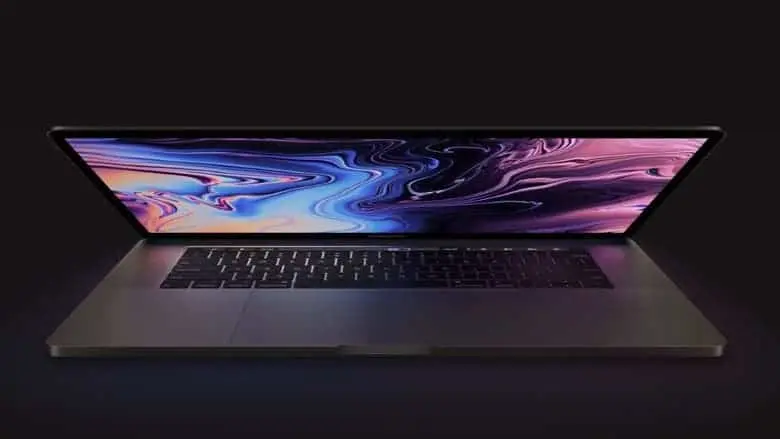
Apple's chip strategy just changed in a fundamental way. Mark Gurman's latest Bloomberg Power On newsletter maps out the M-series roadmap through 2028, and the clear signal is this: AI performance has replaced CPU speed, battery efficiency, and thinness as the primary driver of Apple silicon development.

Summary
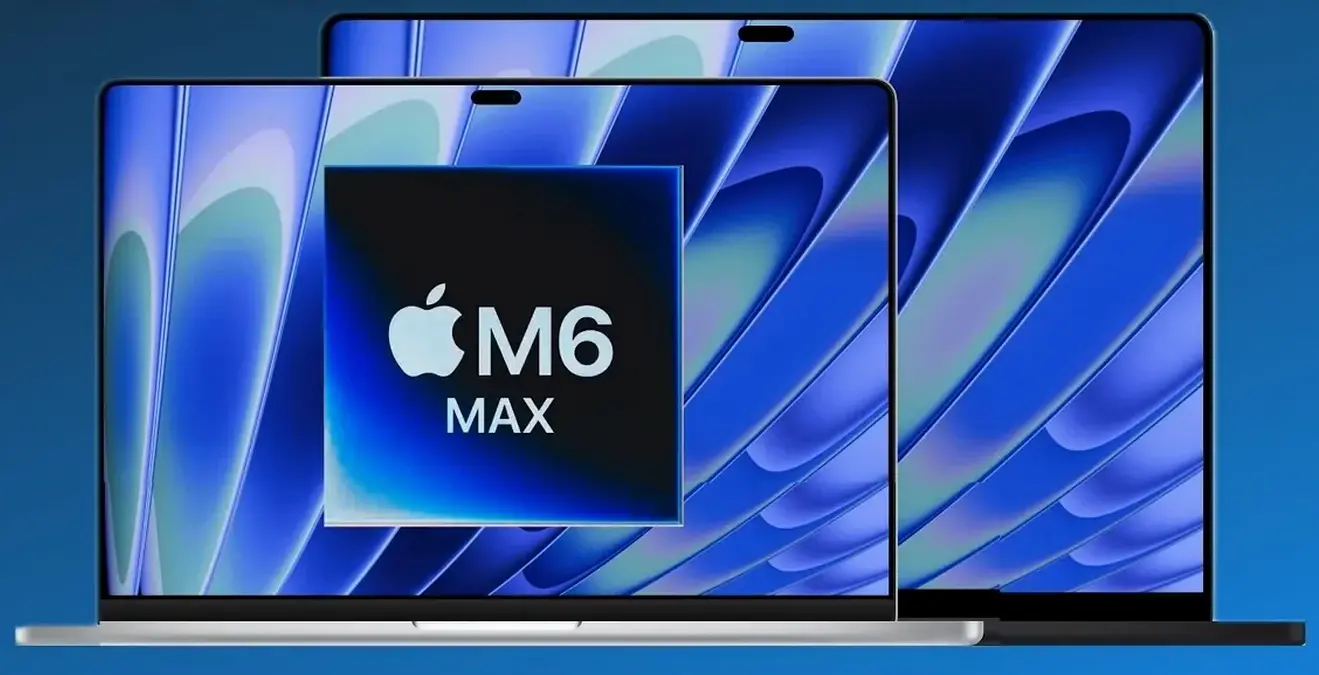
- M6 launches later in 2026: Expected in the first touchscreen MacBook Pro — the base chip only, with no M6 Pro, M6 Max, or M6 Ultra planned.
- Apple is skipping M6 Pro, Max, and Ultra entirely: For the first time ever, Apple will jump directly to M7 variants instead.
- M7 family in 2027: Base M7 in H1 2027, followed by M7 Pro and M7 Max in late 2027, and M7 Ultra in 2028.
- M7 Ultra approaches Nvidia Blackwell territory: Designed to support up to 1.5TB of memory and form the basis of an AI server planned for around 2029.
- M8 already in development for 2028: On a 1.4nm manufacturing process, codenamed Soko, with a high-end variant codenamed Cardinal.
Why Apple Is Skipping an Entire Chip Generation
This is the part that has no precedent. Apple has skipped Ultra chips before — the M3 generation never received an Ultra variant. But skipping the entire Pro, Max, and Ultra tier for a single generation is entirely new. The reason is speed.
Gurman's report says Apple finalized the M7 design just six months after beginning work on the M6. That's unusually fast. The implication is that Apple saw a clearer path to major AI improvements through the M7 than through an incremental M6 Pro or M6 Max — so it made the decision to accelerate rather than spread resources across a full M6 family that would be obsolete within months.
Read also
The AI Server Ambition Behind All of This
The M7 Ultra is the centerpiece of a larger strategy. It's being designed to support up to 1.5TB of unified memory — roughly double what the M5 Ultra supports — and will form the foundation of a next-generation Apple AI server planned for around 2029. Before that, Apple is preparing a more powerful server based on the existing M5 Ultra, under the internal codename J246. Apple wants its own AI infrastructure, independent of third-party cloud providers.
The Apple Car Legacy Nobody Expected
Here's the origin story. Apple's self-driving car project — canceled in 2024 after more than $10 billion in spending — never produced a vehicle. But the machine learning and custom silicon work done for that project became the direct foundation for the Neural Engine. Thousands of engineers, hundreds of patents, specialized facilities — none of it went to waste. It became Apple Intelligence instead.
What 1.4nm Means for 2028
The M8 generation, expected in 2028, is being designed on a 1.4nm manufacturing process — a step beyond today's 3nm and the 2nm process expected for the M7. TSMC has publicly confirmed 1.4nm production is on its roadmap for 2027–2028. That generation will deliver meaningful gains in both performance and power efficiency, making it the platform Apple needs for truly competitive on-device AI against what Nvidia will have built by then.
Popular News



Latest News
Loading