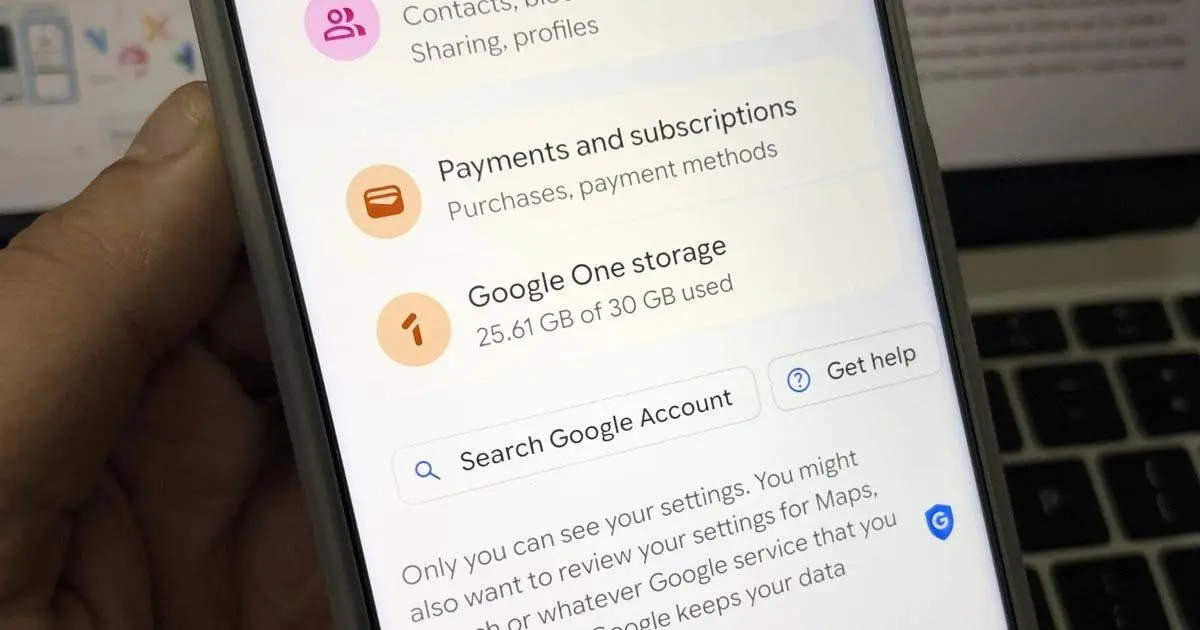
For over a decade, signing up for Google meant getting 15GB, no questions asked. That deal has quietly changed.
Summary
- Google has altered its free storage policy for new accounts: users who skip phone number verification during signup now receive only 5GB by default, with the full 15GB unlocked only after linking and verifying a mobile number.
- Google confirmed the change to Engadget as "a test" in "select regions," framing it as a measure to ensure storage is "added only once per person" — effectively an anti-abuse mechanism targeting bot and throwaway account creation.
- The test is currently most active in specific African markets including Kenya and Nigeria, with reports from Reddit users in those regions being the first to surface the change publicly.
- The wording on Google's official support documentation was quietly updated from "Your Google Account comes with 15 GB of cloud storage at no charge" to "up to 15 GB," with Wayback Machine archives tracing the change to around March 18, 2026.
- Existing accounts are not affected — the 5GB cap applies only to newly created accounts in regions where the test is active, and only when the signup process is completed without phone verification.
"The prompt users now encounter makes the trade-off explicit: provide your number and get 15GB, or skip it and stay capped at 5GB — a shift that turns what was once a guaranteed perk into a conditional offer."
The Real Motivations Behind the Change
Google's stated reason is straightforward: the phone number requirement prevents users and bots from creating multiple accounts to accumulate free storage indefinitely. The anti-abuse framing is legitimate — account farming for free cloud storage is a real and documented behavior. But it's unlikely to be the only driver.

The unstated rationale is almost certainly economic. Google is facing increased costs and scarcity of memory and storage hardware — a pressure that's industry-wide in 2026 following the memory crisis driven by AI infrastructure demand. Attaching the full 15GB to a verified identity also builds out Google's verified user database at the point of account creation. That information has clear value within an advertising-driven business model. The change serves multiple purposes simultaneously, which is why it's being tested rather than announced.
What "Up to 15GB" Actually Signals
The language shift from an unconditional "15 GB" to "up to 15 GB" across multiple Google support pages suggests the full allocation is no longer treated as a baseline entitlement but as a tier that requires meeting a condition. This is the kind of documentation change companies make when preparing for a broader policy shift, not just a regional experiment. Whether this becomes the global standard depends on how the regional test performs — but the groundwork has clearly been laid.
For context: if Google moves forward with the change globally, new accounts without phone verification would offer the same 5GB as Apple's iCloud — a notable shift for a service that has long used its larger free tier as a competitive advantage.
Practical Implications for New Users
The fix is easy for most people: link a phone number during signup. The concern is more structural. In regions where phone number ownership is less universal, or where users have legitimate privacy reasons to avoid linking personal identifiers to their accounts, 5GB is a genuinely tight ceiling. A single year of Gmail usage combined with Google Photos auto-backup on a modern smartphone can consume 5GB quickly. An account that remains over its storage quota for two years or longer may have content deleted across Gmail, Drive, and Google Photos — a consequence most users are unaware of until it's too late.
Popular News



Latest News
Loading