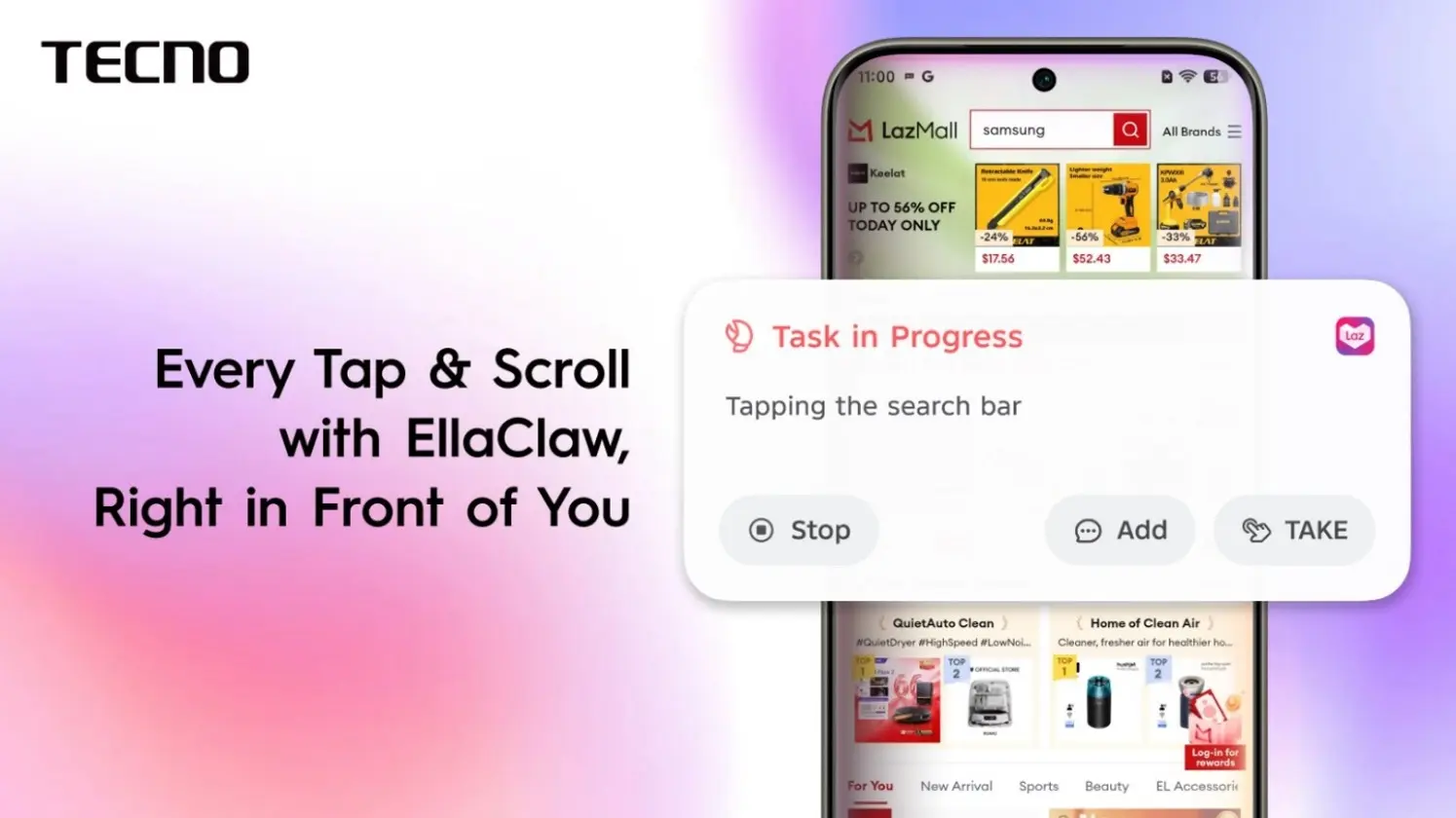
The "AI Phone" era is barely out of its infancy, and its successor is already knocking on the door. According to a new deep dive from Counterpoint Research, the mobile landscape is undergoing a massive shift away from simple question-and-answer AI models. The industry is officially pivoting toward the Agent Phone—devices that don't just chat, but interpret user intent to execute complex, multi-step actions across different applications. In this regard, Tecno has been impressing with its EllaClaw.
As the smartphone operating system evolves from a simple matrix of app launchers into an active orchestrator, competitive differentiation is moving away from raw hardware specs. Instead, the new battleground centers on real-world execution. And per Counterpoint's analysis, the brand driving the most practical, system-level democratization of this tech right now isn't one of the trillion-dollar legacy players; it's TECNO.

Image Source: Counterpoint
OpenClaw and the End of App Silos
Building a deep AI agent stack completely from scratch is an incredibly expensive and slow engineering challenge for manufacturers. Historically, this meant advanced automation stayed locked behind premium flagship price tags. The catalyst tearing down that barrier is a new class of open architectures known as "Claw" frameworks.
Led by the open-source OpenClaw initiative, these systems give OEMs a shared, system-level execution layer out of the box. Instead of an AI operating within a closed loop, these frameworks facilitate Agent-to-Agent (A2A) communication. Essentially, the AI acts as a unified translator that can jump across different application silos, pass contextual information back and forth, and safely automate tasks on the user’s behalf without requiring specialized APIs for every single third-party app.

Enter TECNO EllaClaw: Practical AI Over Benchmark Bragging Rights
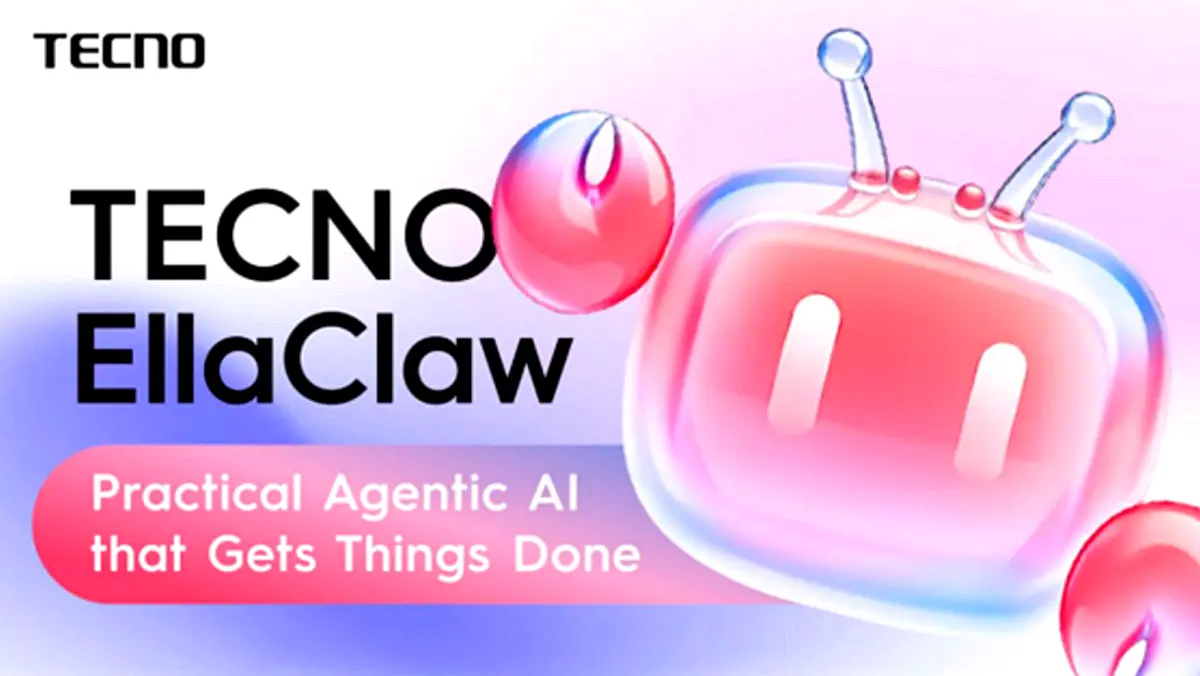
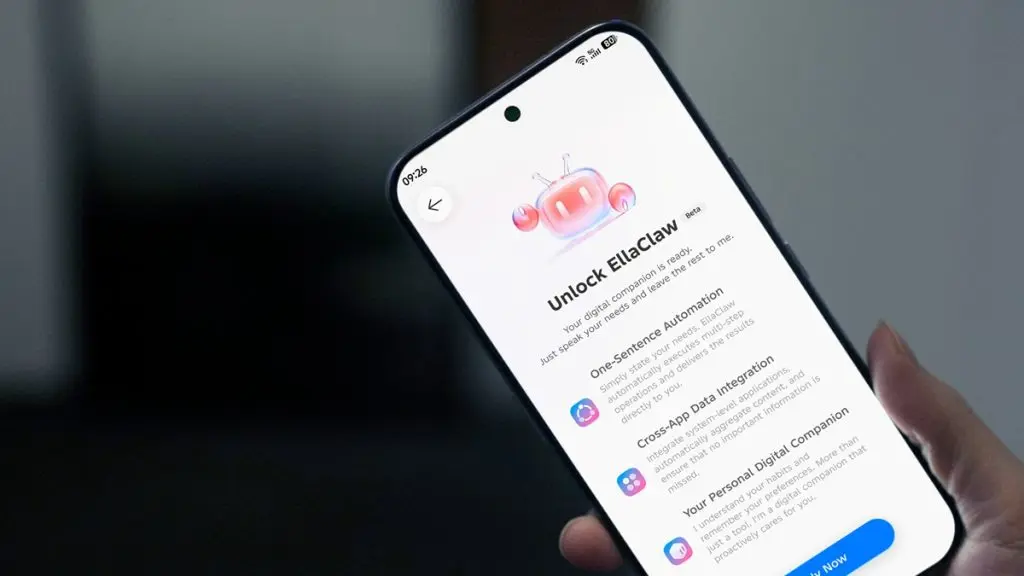
TECNO has integrated this trend directly into its ecosystem with EllaClaw, an advanced exploratory framework that pairs its native Ella assistant with the open-source OpenClaw architecture.
- [Traditional Assistant] --> Relies on user commands --> Opens single app --> Stalls
- [Agentic AI (EllaClaw)] --> Interprets user intent --> Chains cross-app actions automatically
What makes TECNO’s implementation particularly noteworthy is its focus. Instead of chasing abstract, compute-heavy cloud models designed for marketing bullet points, EllaClaw tackles the ground-level frustrations that users face daily—particularly in emerging markets.

The phone works quietly in the background to help you. It has a tool called the One-Tap Phone Caretaker. You do not have to hunt through long menus to fix a slow phone or a dead battery. The smart tool finds the problems for you. It stops apps that waste data, speeds up the phone, and cleans up the mess with one tap.
Read also
Key Points
- Intent-Driven Orchestration: Counterpoint notes that smartphones are shifting from passive text-generators to proactive agents that actively execute tasks on behalf of the user.
- The OpenClaw Equalizer: Open execution frameworks drastically reduce the cost and technical complexity of system-level AI, meaning agentic features don't have to trickle slowly down the price tiers.
- Tearing Down App Walls: Agent-to-Agent (A2A) communication allows separate, unlinked third-party applications to share context via the system agent, paving the way for seamless multi-step automation.
- Real-World Utility Over Gimmicks: Rather than prioritizing raw model size, TECNO's EllaClaw targets practical, localized pain points like battery drain and data tracking, delivering tangible value to everyday users.
This new report shows a big change in tech. Today, good AI is not about a phone that talks back with smart words. Good AI means your phone does hard work for you. It stops you from clicking a hundred buttons. TECNO uses open tech to make this happen. Now, cheap phones get the same smart tools as expensive phones. The future belongs to everyone.
Popular News

Latest News
Loading