OneOdio Studio Max 1 Review: Affordable Studio Headphones That Almost Nail It
ReviewsMonday, 29 September 2025 at 16:52
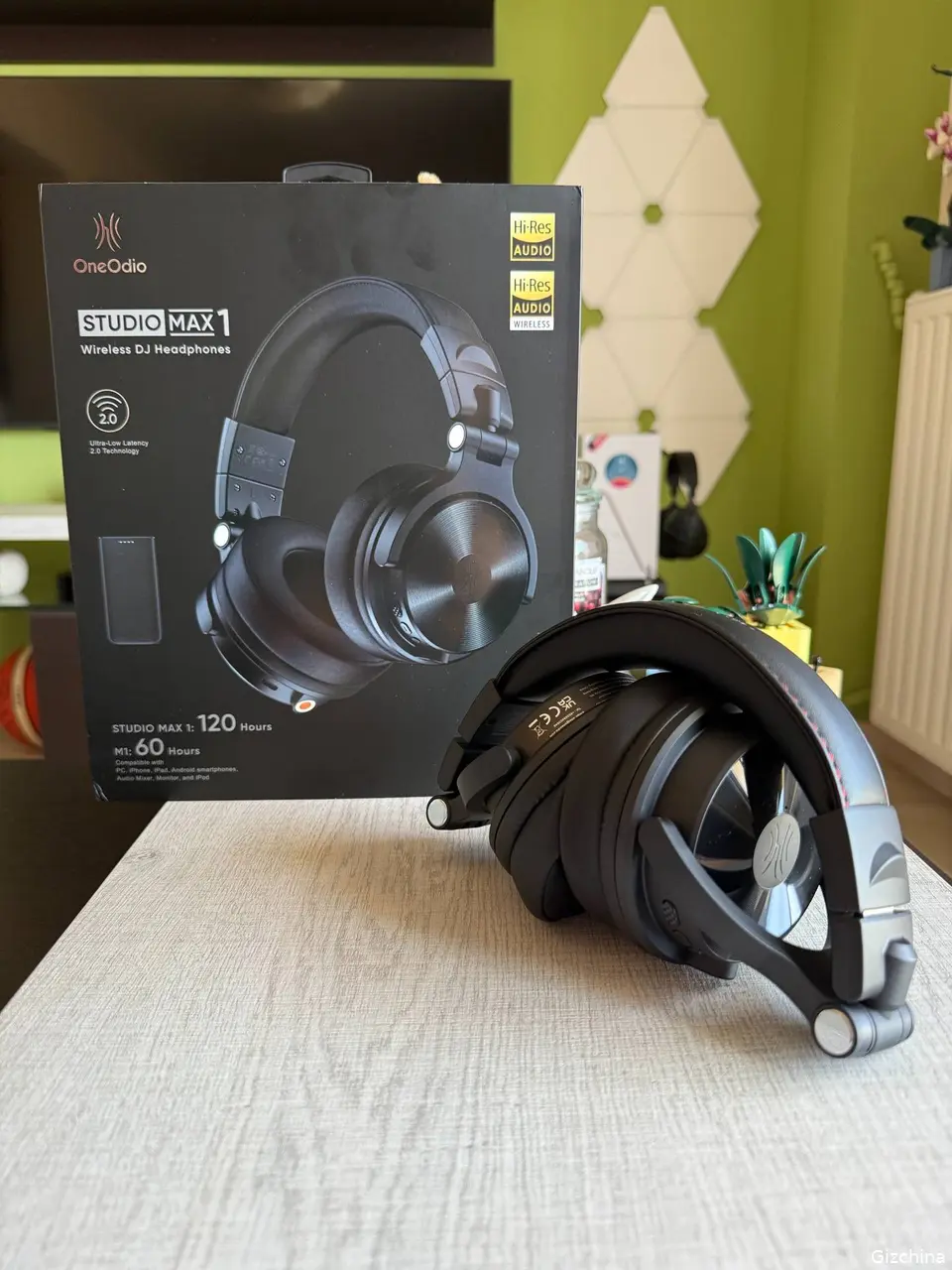
When I first unpacked the OneOdio Studio Max 1, I wasn’t entirely sure what to expect. OneOdio has always occupied that gray zone between budget consumer gear and serious studio tools. The company markets the Max 1 as a versatile set—something you could use for monitoring in the studio, spinning at a DJ booth, or even just streaming music wirelessly on the commute. That’s a tall order for headphones in the their price range.

I’ve now used them in a handful of very different scenarios: a late-night home DJ session, a few podcast edits, and even during a noisy bus ride downtown. The results were… mixed. Impressive in some ways, a bit frustrating in others.
Build and Design
The Studio Max 1 doesn’t scream “premium,” but it doesn’t feel cheap either. The matte black finish is understated, the plastic shell flexible, and the headband reinforced with metal. I twisted the frame absentmindedly during a long call and, to my surprise, it flexed without complaint. That kind of durability matters if you’re tossing them in a backpack between gigs.

The ear cups swivel and rotate like a proper DJ headphone should. I tried the classic “one ear off” monitoring stance during a quick mix session, and they handled it fine without feeling awkward. That rotation also helps them fold flat, making them easier to store.
Dual ports are a nice touch: 1/4" on the left, 3.5mm on the right. That means you can plug in from either side or daisy-chain another set of headphones for sharing. Not something I use often, but it’s handy in a studio or teaching environment.
Visually, they’re plain. Black everywhere, with only the red interior padding giving them any personality. They're stylish— but also... neutral.

Comfort and Fit
Comfort is a big win here. The ear pads are soft with a memory foam core, wrapped in faux leather that doesn’t feel too plasticky. The round shape means your ears might brush the edges—I noticed it—but after an hour or two, it faded into the background.
Clamp force sits in that sweet spot: firm enough to stay put while moving, loose enough not to pinch. During a three-hour podcast edit, I never felt like I had to rip them off. That’s not something I can say for every budget headphone.

They are a bit bulky, though. On the bus, I was very aware of their size. Lightweight, yes, but you won’t forget you’re wearing them in public.
Wireless Convenience
This is where the Max 1 surprised me. Most budget “studio” headphones stick to wired use, but OneOdio added Bluetooth here. Pairing was painless—I had them connected to my phone in seconds.

On wireless, they’re not perfect. There’s a faint latency. Watching YouTube was fine, but when I tried editing video clips, the sync lag was distracting. For DJ sets or mixing, wired is absolutely the way to go. Still, for commuting or background listening, the wireless option felt like a bonus.
Battery life was WAY better than I expected. I used them off and on for more than a week before I remembered to recharge. The USB-C charging is convenient too—no fumbling with outdated micro-USB cables. Awesome work here Oneodio!
DJ Performance
This is where the rotating cups and bass-heavy tuning shine. I threw them into a quick DJ practice session, mixing some house tracks late at night. The boosted low end actually helps when cueing beats—you get that thump clearly in one ear even when the other is free.
Isolation is decent. Not total, but good enough for a living-room setup or a quieter venue. In a really loud club, I’d worry they might not cut through the noise, but for smaller gigs, they could work.

Sound Quality
Now the real test: how do they actually sound?
Bass
The low end is strong, no doubt about it. On Daft Punk’s Lose Yourself to Dance, the bassline had a satisfying thump. But sometimes it overstayed its welcome. On tracks with busy mixes, like anything from Kendrick Lamar’s To Pimp a Butterfly, that extra bass energy blurred detail in the mids. Fun for listening, less ideal for mixing.

Midrange
Vocals take a small step back in the mix. Editing a podcast, I noticed voices felt slightly veiled, like listening through a thin curtain. It didn’t ruin the session, but I found myself double-checking EQ decisions on another pair of monitors. Instruments like guitar and piano separated fine, but everything felt a bit boxed in—more closed-off than I’d like.
Treble
Safe, maybe too safe. Treble never stabbed at my ears, which is good, but cymbals and hi-hats lacked sparkle. Alina Baraz’s Hell and High Water sounded darker than I’m used to, missing that airy shimmer up top. The plus side: fatigue is minimal. I could listen for hours without cringing at sharp sounds.

Studio Use
Could you use these for studio work? Yes—but with caution. Tracking vocals or instruments, they’re fine. The closed-back design keeps sound from bleeding into the mic, and the comfort makes long takes easy.
For mixing, though, they’re limited. The boosted bass and muted treble make it hard to trust every decision. I caught myself EQ’ing vocals differently after switching back to more accurate monitors. The Max 1 gives you an impression of the mix, but not the full truth.
That said, I like having them as a secondary perspective - A LOT. They reveal how a mix might sound on bass-heavy consumer gear, which can actually be useful.
Commuting and Casual Listening
On the metro, the Max 1 did surprisingly well. They block a fair amount of noise, though not everything. Bass-heavy music drowned out the low hum of the engine easily. Voices and announcements were more intrusive, but that’s common with closed-back cans that don’t have active noise canceling.

Wireless freedom was nice here. No cable tugging, no mess. Just put them on and go. Bulk was the main drawback—I felt like I had mini DJ cans on my head in public. But comfort-wise, no complaints.
Price and Value
Here’s the kicker: all of this comes in at €179.99. That shifts the conversation quite a bit. At €80–90, the Studio Max 1 would have been an easy recommendation despite its flaws. At nearly €180, though, expectations are higher, and the competition is far tougher.
For that price, you’re stepping into midrange territory where Audio-Technica, AKG, and Beyerdynamic offer models with cleaner tuning and greater accuracy. Against those, the Max 1 feels less like a bargain and more like a niche choice.
That said, the comfort, durability, and Bluetooth convenience still carry weight. If you want one pair of headphones that can handle DJ practice, casual listening, and occasional studio work, the Max 1 remains appealing. But if critical mixing accuracy is your top priority, €179.99 puts better options firmly within reach.
Final Verdict
The OneOdio Studio Max 1 is a headphone that tries to do a lot—and succeeds in most areas if I must say.
For DJs and casual listeners, it’s a strong pick. The bass hits hard, the rotating cups make cueing easy, and the wireless mode adds real convenience. Comfort is excellent, making long sessions easy to handle.
For studio purists, though, it falls a bit short. The sound isn’t sharp enough, the treble isn’t lively enough, and the mids are too veiled for precise work.
Would I keep them in my setup? Yes, but not as my only pair. They’ve earned a spot as my “fun” headphones—great for bass-heavy playlists, useful for DJ practice, and comfortable enough for commuting. But when it comes time to finalize a mix, I’ll reach for something more accurate.
And honestly, at this price, that feels fair.

Key points of the review
- Build & Design: Durable, flexible, and DJ-friendly with rotating cups and dual ports, though the look is plain and a bit bulky.
- Comfort: Excellent padding and lightweight feel make them easy to wear for hours, even in long studio or editing sessions.
- Wireless Convenience: Bluetooth pairing and USB-C charging add versatility, though latency makes wired mode essential for mixing or video work.
- DJ Performance: Strong bass and swivel cups work well for cueing in smaller setups, though isolation may fall short in very loud venues.
- Sound Quality: Warm, bass-heavy tuning with recessed mids and muted treble—fun for casual listening, but not precise enough for critical studio mixing.
- Price & Value: At €179.99, they face tough competition; great for versatility and comfort, but less convincing if accuracy is the priority.
Popular News

Latest News
Loading