OpenRock E Review: The Lightweight Open-Ear Headphones I Didn’t Know I Needed
ReviewsSaturday, 30 August 2025 at 11:06
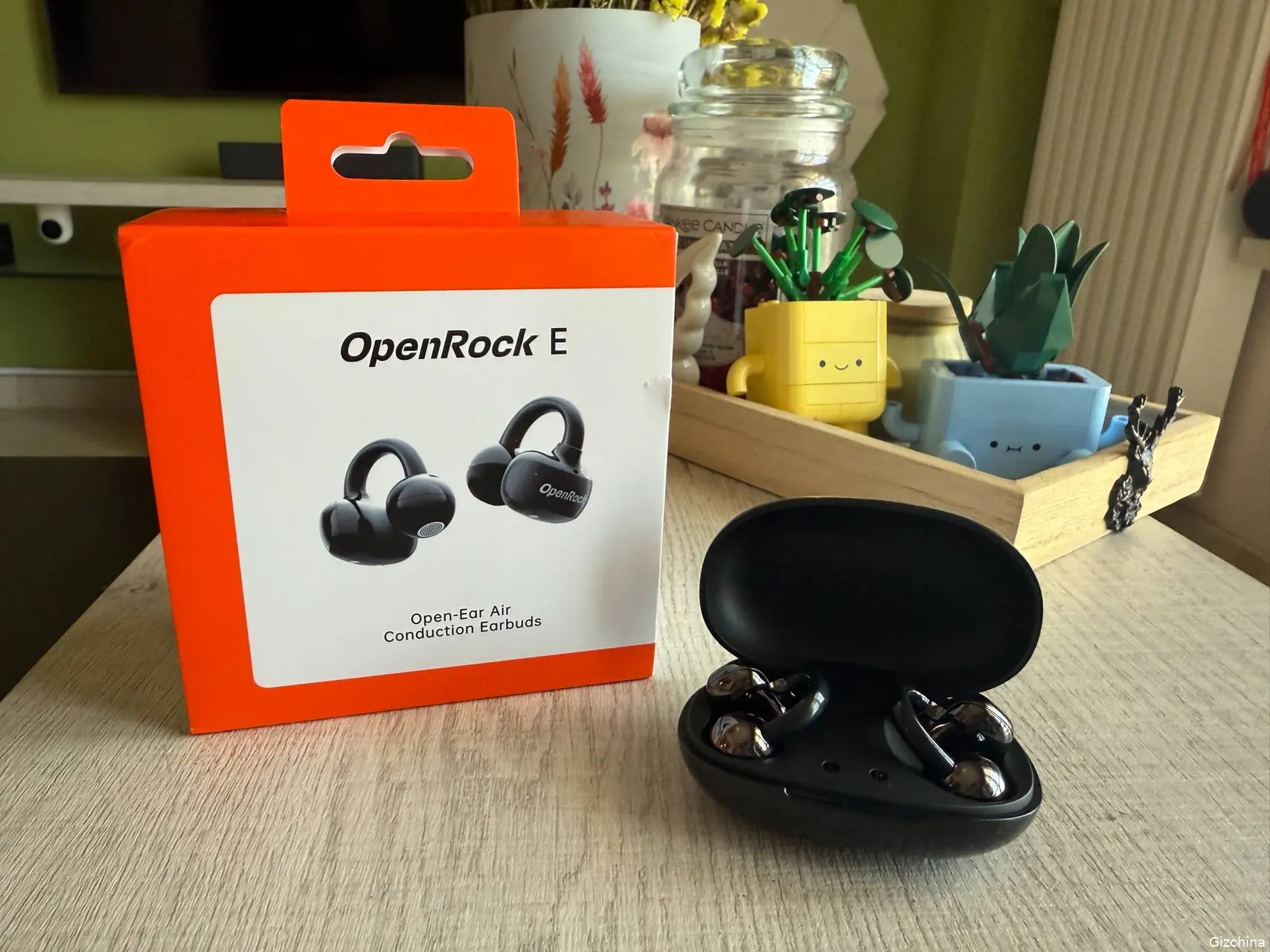
When I first unboxed the OpenRock E, I wasn’t entirely convinced. Open-ear headphones aren’t new. We’ve seen countless variations—bone conduction, semi-open buds, quirky hooks that promise comfort but rarely deliver it. Most of them end up feeling like a compromise: neither as secure as in-ear monitors nor as immersive as over-ears.

But after living with the OpenRock E for a few weeks—daily commutes, workouts, even a couple of Zoom calls—I’ve had to reconsider that assumption. These are not just another iteration of the same idea. They strike a balance I didn’t expect, a balance between sound quality, comfort, and practicality that is difficult to dismiss. Still, it’s not a perfect story.

Design and Comfort
The first thing you notice is the clip-on crescent shape. Instead of sitting inside your ear canal, the OpenRock E wraps gently around the edge of your ear and rests there. Each bud weighs just 4 grams, which is light enough that, after ten minutes, I almost forgot I was wearing them.

Comfort is often subjective. What feels weightless to me might feel intrusive to someone else. That said, the mix of soft 75° TPU and 0.5mm memory titanium creates a kind of spring-loaded flexibility. They hold without squeezing, something I appreciated especially when wearing glasses. I didn’t feel that awkward clash where the arm of the glasses presses uncomfortably against the earbud hook. Here, it all seemed to fit together.

Visually, they’re subtler than most fitness-oriented headphones. The mirror finish doesn’t scream “gym gear,” and I think that matters. You could wear them in an office, and unless someone looks closely, they might mistake them for a piece of jewelry. That kind of discretion is rare in workout gear.

By the way, you can buy them here, in the official page of OpenRock. Use the code Gizchina15 to get 15% discount!
Sound Quality: Surprisingly Full
Let’s be honest: open-ear headphones rarely impress in terms of sound. With no seal, bass usually falls flat, and outside noise tends to wash over everything. That’s why I was surprised when the 10mm dynamic driver, paired with OpenRock’s LISO Lite algorithm, produced audio that felt, well, full.
Bass is never going to rumble like it does in a closed in-ear design. Yet here, it has punch. Listening to electronic tracks, I could feel the thump without distortion. Vocals remained sharp—almost too sharp at times—but the balance was better than I expected. Rock sounded alive, acoustic recordings retained detail, and podcasts were crisp without fatigue.
Of course, there are caveats. On a crowded train, background noise competes heavily, and you’ll want to push the volume higher than feels ideal. Outdoors, they fare better—cycling, jogging, walking through the city—because you retain situational awareness. You hear traffic, conversations, even the faint hum of the world around you, which is precisely the point of an open design.


There’s also a Vocal Mode, designed for clarity during calls or podcasts. It works, but sometimes it overemphasizes mids. A friend described my voice as “slightly tinny” on a call, although still clear. So, good enough for work, but not studio quality.
Battery Life and Charging
Battery life is where the OpenRock E quietly excels. Each earbud runs for about 7 hours per charge, and with the case, you’re looking at 28 hours total. That’s nearly a full week of commuting for me before I even thought about plugging them in.

And charging is quick. Ten minutes in the case gives you about an hour of playback. That’s the kind of margin that saved me twice—once when I realized I’d forgotten to charge before heading to the gym, and again during a late-night train ride. It’s not a groundbreaking feature, but it’s the sort of thing you only appreciate when it bails you out.
Durability is another factor. The case itself is compact, though a little plasticky. It doesn’t feel as premium as some higher-end options, but it’s functional. I carried it in my backpack with keys and cables, and it avoided scratches better than I expected.
Connectivity and Controls
The OpenRock E uses Bluetooth 6.0. On paper, that means faster pairing and more stable connections. In practice, it worked as advertised. I never had dropouts, even in crowded environments like a busy station. The connection felt more consistent than some competitors I’ve tested that still rely on Bluetooth 5.2.
Pairing is straightforward. Pop them out of the case, and they connect almost instantly to the last device used. Switching between my laptop and phone required a manual reset, though—it’s not seamless multipoint. That’s a drawback, especially for those who juggle devices all day.

Controls are customizable through the companion app. The app isn’t the most polished interface, but it gets the job done: EQ adjustments, game mode toggles, even a “Find My Buds” option. I appreciated the ability to fine-tune EQ, although I found myself sticking with the default balance most of the time.
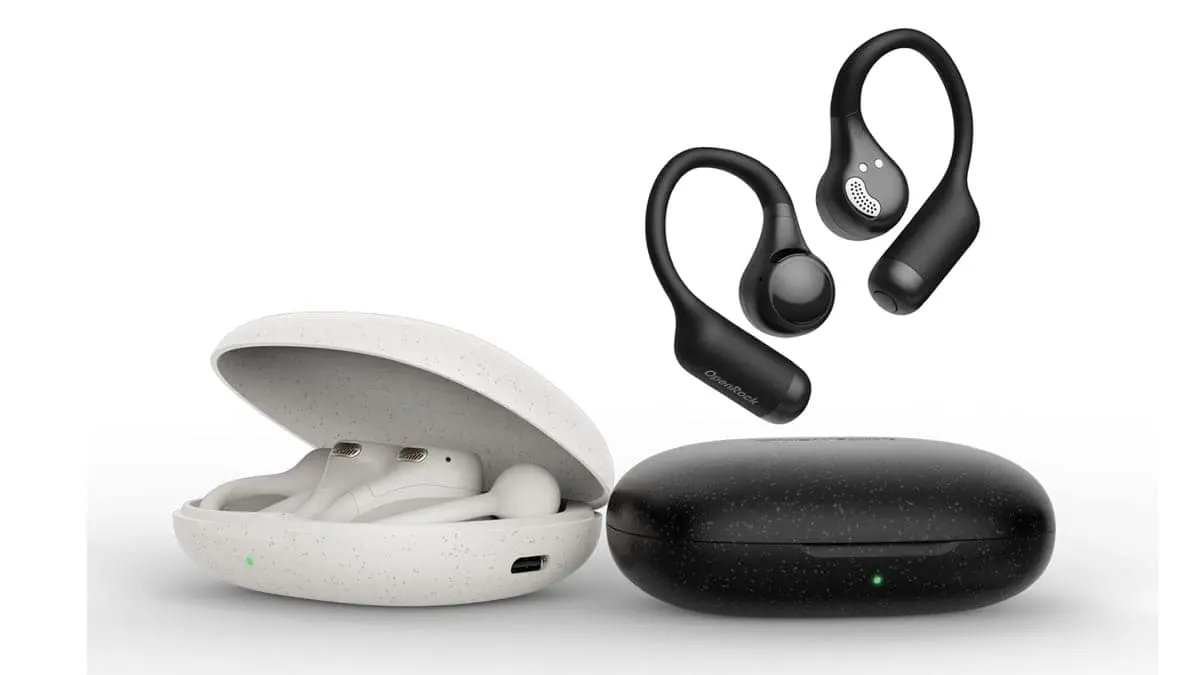
Special Features
Game Mode
Gamers might appreciate 60ms low-latency Game Mode. It’s not console-grade precision, but it’s enough for casual mobile gaming. I tested it with a couple of shooters on my phone, and the lag was minimal. Without Game Mode, the delay was noticeable; with it, voices and gunfire synced much more naturally.

IPX4 Rating
Then there’s the IPX4 water resistance. It’s not submersion-proof, but it shrugged off sweat and light rain without issue. I wore them during a damp morning run, and they kept working as if nothing happened. Would I trust them in a downpour? Maybe not. But for commutes, workouts, or the occasional drizzle, they’re perfectly fine.

Sound Leakage
One concern with open designs is leakage. These headphones do leak a little at high volume. In a quiet office, someone sitting next to you could faintly hear what you’re listening to. At moderate levels, though, it’s barely noticeable.
Living With Them
I didn’t expect the OpenRock E to become my go-to pair, but they slowly did. The reason isn’t one standout feature—it’s the combination. They’re light enough for long sessions, the sound is better than expected, and the open design means I don’t feel cut off from the world.

During a week of commuting, I found myself appreciating the ability to hear train announcements without pulling out a bud. At the gym, I could still notice when someone spoke to me, though the music kept me motivated. Even in the office, they blended in—discreet enough not to draw attention, functional enough for video calls.
That said, they won’t replace closed in-ears for flights or noisy cafés. Isolation is not their strength. And audiophiles will find the bass still lacks the weight of sealed drivers. But that’s the trade-off. You gain awareness, you lose isolation.
Verdict
The OpenRock E Open Ear Headphones aren’t revolutionary, but they are convincing. They combine comfort, decent audio, strong battery life, and thoughtful extras into a package that feels more refined than most of their peers.
Would I recommend them? For runners, cyclists, commuters—absolutely. For anyone who wants to stay connected to their environment without sacrificing too much in sound quality, they hit the sweet spot. For those who demand deep isolation or booming bass, maybe look elsewhere.
They’re not perfect. But they’re practical, and in a market crowded with compromises, that’s worth more than it sounds.
You can buy them here, in the official page of OpenRock. Use the code Gizchina15 to get 15% discount!
Popular News

Latest News
Loading