Choosing a smartphone at the $630 price point usually feels like a series of negotiations. You tell yourself that you can live without a telephoto lens if the battery is good, or you accept a slower processor in exchange for a better screen. The Xiaomi 17 represents a refusal to participate in those compromises. By skipping a generation number to align itself with its biggest rivals, Xiaomi hasn't just updated its branding; it has fundamentally changed what we should expect from a compact flagship. After a month of intensive use, it is clear that this device isn't just a "budget alternative"—it is a legitimate threat to the status quo.

Key Points
- Unrivaled Battery: The 6,330 mAh silicon-carbon cell provides industry-leading endurance in a compact body.
- Extreme Brightness: A 3,500 nit AMOLED display ensures perfect clarity even under direct sunlight.
- Top-Tier Performance: The Snapdragon 8 Elite handles gaming and multitasking with flagship speed and efficiency.
- Pro-Grade Optics: Triple 50MP Leica cameras deliver natural colors and a true 5x optical zoom experience.
- Rapid Charging: Supports 100W wired and 50W wireless charging for minimal downtime.

Xiaomi 17 specifications
- 6.3-inch (2656 x 1220 pixels) 1.5K M10 12-bit OLED 20:9 LTPO display, 1-120Hz variable refresh rate, up to 3500 nits peak brightness, 5,000,000:1 (Min) contrast ratio, HDR10+, Dolby Vision, 1920Hz PWM Dimming, DC Dimming, Xiaomi Shield Glass protection
- Octa Core Snapdragon 8 Elite Gen 5 3nm Mobile Platform with Adreno 840 GPU
- 12GB LPPDDR5x RAM with 256GB / 512GB UFS 4.1 storage
- Dual SIM (nano + nano)
- Android 16 with Xiaomi HyperOS 3
- 50MP rear camera with 1/1.31″ Light Fusion 950 sensor, f/1.67 aperture, Hyper OIS, LED flash, Leica Summilux lens, 50MP 102° Leica ultra-wide angle lens with f/2.4 aperture, 50MP 2.6X 10cm to Infinity Leica telephoto camera with f/2.0 aperture, OIS, 8K video recording
- 50MP front-facing camera with f/2.2 aperture, 4K 60 fps video recording
- In-display ultrasonic fingerprint sensor, Infrared sensor
- USB Type-C audio, Hi-Res audio, Stereo speakers, Dolby Atmos, 4-microphone array
- Dimensions: 151.1×71.8×8.06mm; Weight: 191g
- Dust and waterproof (IP68)
- 5G SA/NSA, Dual 4G VoLTE, Wi-Fi 7 802.11 be, Bluetooth 5.4, Beidou, Galileo, GLONASS, GPS (L1 + L5), NavIC, USB Type-C 3.2 Gen 1, NFC
- 6330mAh (Typical) battery with 100W wired fast charging, 50W wireless charging, magnetic charging, 22.5W wired and wireless reverse charging
Design: A Familiar Silhouette with Better Grip
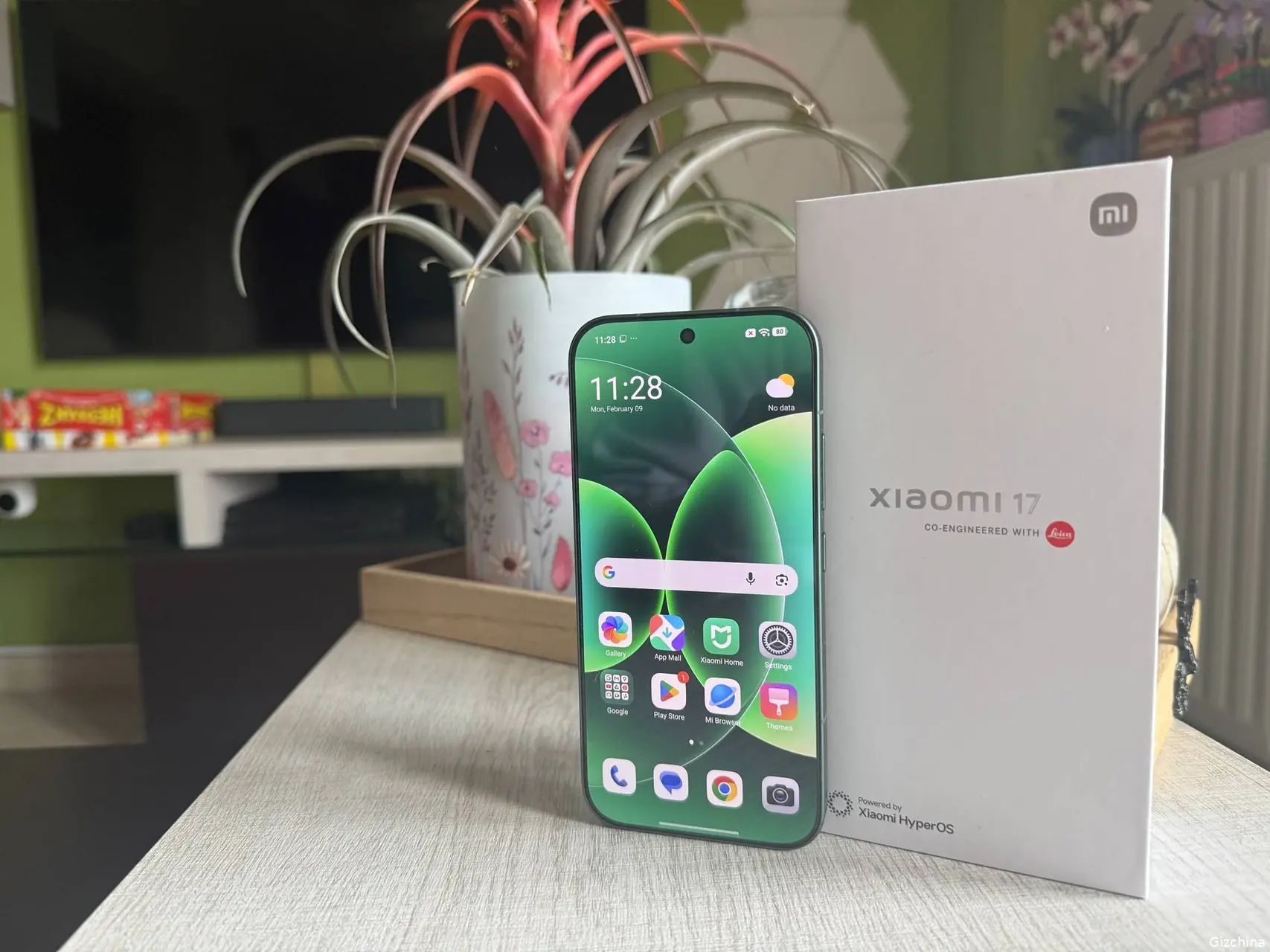
Let’s address the elephant in the room immediately. From a distance, the Xiaomi 17 looks strikingly like a recent iPhone. The flat aluminum edges, the symmetrical bezels, and the placement of the speaker grilles are all very familiar. While some might dismiss this as a lack of original thought, there is a practical benefit: it feels fantastic in the hand. The 6.3-inch form factor strikes the perfect balance for one-handed use, fitting into pockets where modern "Ultra" phones struggle.
The build quality is exceptional. Using Xiaomi Shield Glass on the front and a high-grade aluminum frame, the device feels dense and expensive. The "Venture Green" model we tested has a matte finish that does a decent job of hiding fingerprints, though the glass around the camera module remains a magnet for smudges. The buttons on the right side have a distinct, tactile click with zero wobble, reflecting a level of manufacturing precision often missing in mid-range devices. The haptic engine is another highlight, providing sharp, localized vibrations that make typing feel physical rather than mushy.

The Display: Brighter Than Your Future
The 1.5K AMOLED panel on the Xiaomi 17 is a triumph. While most manufacturers brag about peak brightness numbers that only appear for a millisecond during HDR video, the 3,500 nit peak here is practically useful. In the middle of a clear afternoon, the screen remains perfectly legible. You don't need to hunt for shade to read a text or check a map.

Beyond raw brightness, the color science is impressively mature. The screen runs slightly warm by default, which avoids the sterile, blue-tinted look of many OLED panels. This warmth adds a level of depth to skin tones in videos and makes long reading sessions easier on the eyes. The 120Hz refresh rate is dynamic, scaling down when you are looking at a static photo to save energy. The bezels are so uniform and thin that the screen almost appears to float on top of the frame, providing an immersive experience that punches way above the $630 price tag.
Performance: The Snapdragon 8 Elite Unleashed
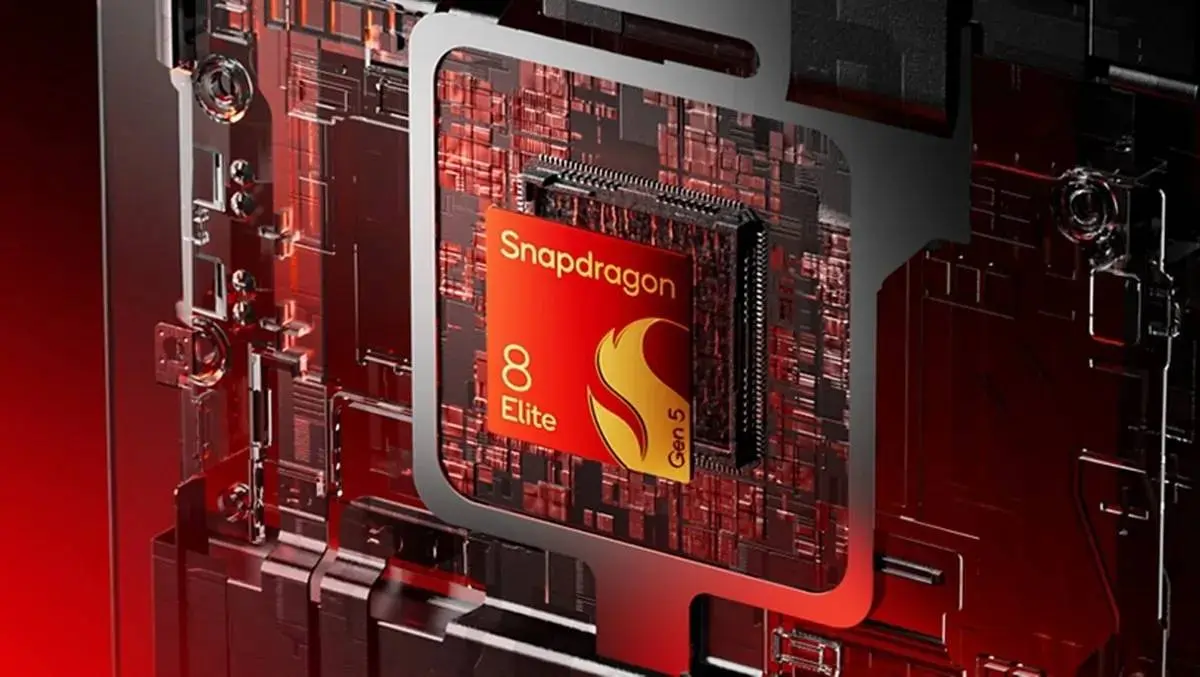
Powering the device is the Snapdragon 8 Elite, and the speed is nothing short of breathtaking. Coming from an older device, the change is immediate. Apps like Instagram or Slack don't just open; they appear instantly. Multitasking is handled by 12GB of RAM, and the software is tuned to keep your most-used apps "alive" in the background for hours.
Heat management is often the downfall of compact flagships, but Xiaomi’s "Stereoscopic Annular Cold Pump" actually works. During a thirty-minute session of high-end gaming, the phone certainly got warm, but it never reached the point of thermal throttling. The frame acts as a heat sink, dissipating energy efficiently so the processor can maintain high clock speeds. Whether you are editing 4K video on the go or playing intensive open-world games, the Xiaomi 17 handles the load with a level of composure that suggests it has power to spare.
The Battery Miracle: 6,330 mAh in a Small Frame
The most "impossible" spec on this phone is the 6,330 mAh silicon-carbon battery. Most phones this size are lucky to house 4,500 mAh. By using a silicon-carbon anode, Xiaomi has achieved a much higher energy density, essentially packing a massive power bank into a slim chassis.

In real-world testing, this battery is a beast. With moderate usage—emailing, social media, and some light photography—the phone can easily stretch into a third day of use. Even on heavy travel days involving constant GPS usage and 5G data, it is nearly impossible to kill this phone before bedtime.
- Wired Charging: 100W allows you to go from empty to full in roughly 35 minutes (with the correct brick).
- Wireless Charging: 50W provides a faster wireless experience than most phones offer with a cable. This isn't just a good battery for a compact phone; it is a good battery for any phone. It changes your relationship with the charger, turning it from a daily necessity into a bi-weekly consideration.
Leica Photography: Three Cameras, One Vision
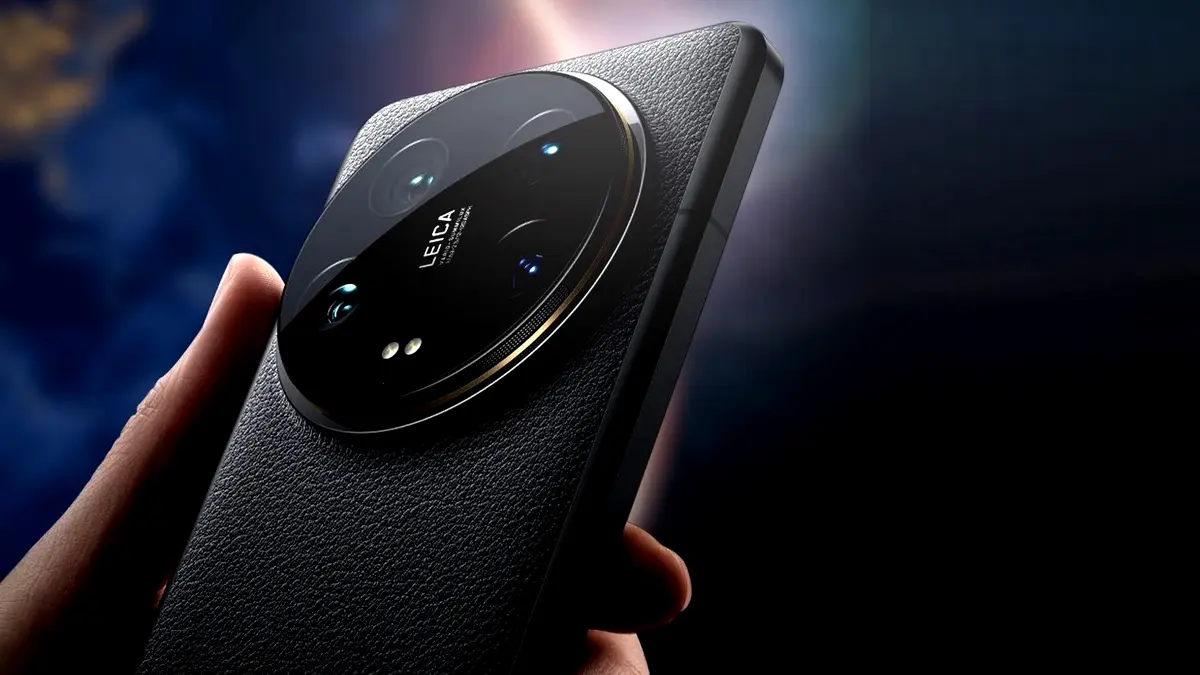
Xiaomi didn't cut corners on the optics. You get three 50MP sensors, meaning there is no "weak link" in the chain. The partnership with Leica brings two distinct photographic styles: Authentic and Vibrant.

- Main Sensor: The Light Fusion 950 sensor captures incredible dynamic range. It handles high-contrast scenes—like a sunset behind a building—without blowing out the highlights or losing the shadows.
- 5x Telephoto: This is the hidden gem. While competitors use digital cropping, the Xiaomi 17 has a true 60mm floating telephoto lens. It produces sharp, detailed shots at 5x and even 10x, and it doubles as a fantastic macro lens for close-up detail.
- Ultra-Wide: The 102-degree field of view is wide enough for architecture and landscapes without the "fish-eye" distortion often seen in cheaper lenses.
The colors are natural and warm. There is a "Leica look" to the photos—a slight vignetting and a focus on contrast—that makes images feel like they were taken with a real camera rather than a smartphone. Low-light performance is equally strong, with the night mode keeping noise under control without turning the sky into a muddy gray mess.
Software and User Experience: HyperOS 3
The software experience is where the most subjective trade-offs happen. HyperOS 3 is fast, fluid, and packed with customization options. For those coming from another Android device, the learning curve is non-existent. However, for those switching from an iPhone, the layout of the settings menu and the notification shade might take a few days to master.
Xiaomi has cleaned up the interface significantly. There are fewer pre-installed apps than in previous years, and the animations are buttery smooth. The "Origin Island" feature provides helpful live updates for things like food delivery or timers, mimicking a feature found on more expensive rivals. The only lingering concern is the long-term update policy. While Samsung and Google offer seven years of support, Xiaomi still lags slightly behind. However, for a $630 device, four years of major updates and five years of security patches is a respectable compromise.
Final Verdict: A New Standard
The Xiaomi 17 is a rare achievement. It takes the "compact flagship" category and injects it with specs that shouldn't fit. You get the best processor on the market, a battery that lasts longer than phones twice its size, and a camera system that actually benefits from its high-end branding.
Yes, the design is uncomfortably close to an iPhone. Yes, the software might require a week of adjustment. But at this price point, those are minor hurdles. The Xiaomi 17 doesn't just ask you to "settle" for a mid-range experience; it demands that you expect more. It is a powerhouse disguised as a compact daily driver, and it is currently the best value in the smartphone market.
Popular News
Latest News
Loading