Samsung Is Killing LPDDR4 — CXMT and GigaDevice Are Ready to Fill the Gap
SamsungWednesday, 22 April 2026 at 00:08
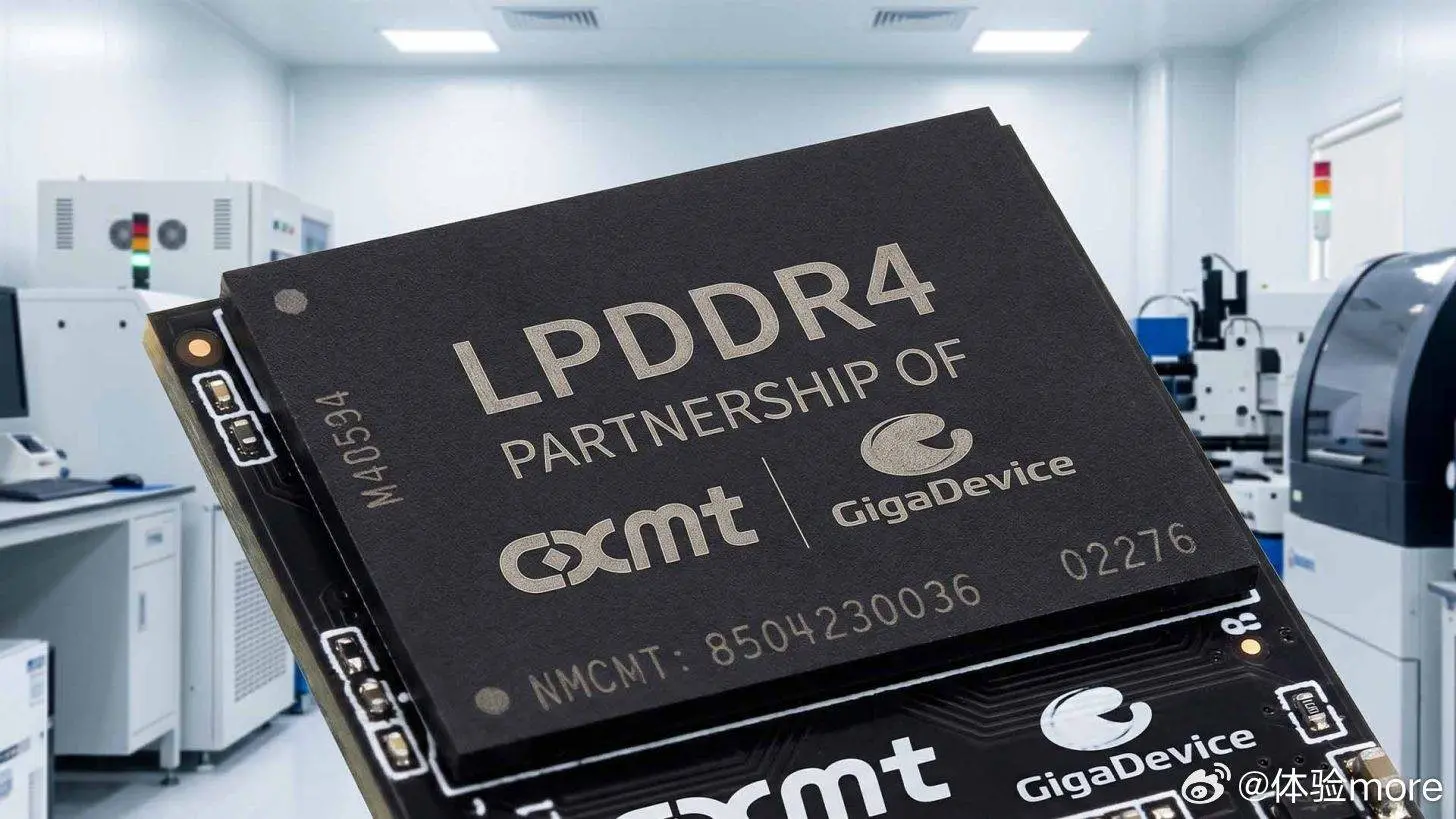
Samsung has stopped taking new LPDDR4 and LPDDR4X orders. The production lines are winding down, with a full end-of-life target by late 2026. The company is converting capacity to LPDDR5 and LPDDR5X — where the margins are higher and AI demand is relentless.
For a huge chunk of the industry, that's a serious problem. China just stepped up to solve it.

Key Points
- Samsung has stopped accepting new LPDDR4 and LPDDR4X orders — existing customers will receive pending shipments but no new orders will be fulfilled
- Production lines at Samsung's Hwaseong complex are being converted to LPDDR5 output, with full LPDDR4 end-of-life targeted by late 2026
- GigaDevice has signed an $825 million DRAM deal with CXMT — six times the $173.2 million deal the two companies signed last year
- CXMT manufactures, GigaDevice distributes — the partnership covers DDR3, DDR4, and LPDDR4 memory for customers Samsung is walking away from
- CXMT and YMTC were recently removed from the Pentagon's restricted companies list, clearing the path for broader global customer access
Why Samsung Is Walking Away Now
LPDDR4 and LPDDR4X have been in production for nearly a decade. They power mid-range and budget smartphones, IoT devices, single-board computers, and handheld gaming hardware. They're everywhere — but they're not profitable anymore.

Chinese manufacturers have been flooding the DDR4 market with chips priced up to 50% below market rate. Samsung's margins on the old standard have been squeezed to the point where holding production capacity makes no financial sense. LPDDR5 and LPDDR5X are faster, more profitable, and in sky-high demand from AI server and flagship smartphone customers. The math is simple.

Who Gets Hurt
The transition is hardest on OEMs building affordable devices. Qualcomm, MediaTek, and Samsung's own chip division use LPDDR4X on lower-end SoCs. Devices like the Galaxy A17 sit right in the transition window — early production batches may still use LPDDR4X inventory, while later units inherit LPDDR5. The performance gain is real, but so is the cost increase passed on to consumers.
Single-board computer makers, IoT manufacturers, and budget device assemblers face either a redesign cycle or a supplier switch. SK Hynix, Micron, Winbond, and Nanya Technology are alternative sources — but none are as positioned to absorb volume as quickly as CXMT.
The $825 Million Chinese Pivot
The CXMT-GigaDevice deal isn't just about LPDDR4. It covers DDR3 and DDR4 as well — a comprehensive play to capture the entire legacy segment Samsung is vacating. At $825 million, the commitment is six times last year's figure between the same partners. That's not opportunistic positioning. That's a strategic land grab.
CXMT has already proven competitive — it sold Lenovo LPCAMM2 modules and its domestically produced DDR5 reaches 8,000MT/s. Its removal from the Pentagon's restricted list removes a major barrier to signing international customers. The timing is deliberate.
Popular News



Latest News
Loading