
The best headphones of 2026 are not all trying to do the same thing. Some are built for serious listening, others focus on blocking out the world, and a few stand out because they offer more than you would expect for the money. That is what makes this year interesting: there is no single design or feature that defines a great pair of headphones.
We are including the OneOdio Studio Max 2 in this list because it takes a different route from the usual wireless models. It is aimed at DJs, creators and people who need flexible connections, very low wireless delay and long battery life. Alongside it, four other releases show just how wide the headphone market has become in 2026.
This is not simply a list of the most expensive headphones you can buy. We have picked five models that offer something worth talking about, whether that is sound quality, battery life, noise cancellation, useful features or overall value. They also cover different budgets, so there should be something here for more than one type of listener.
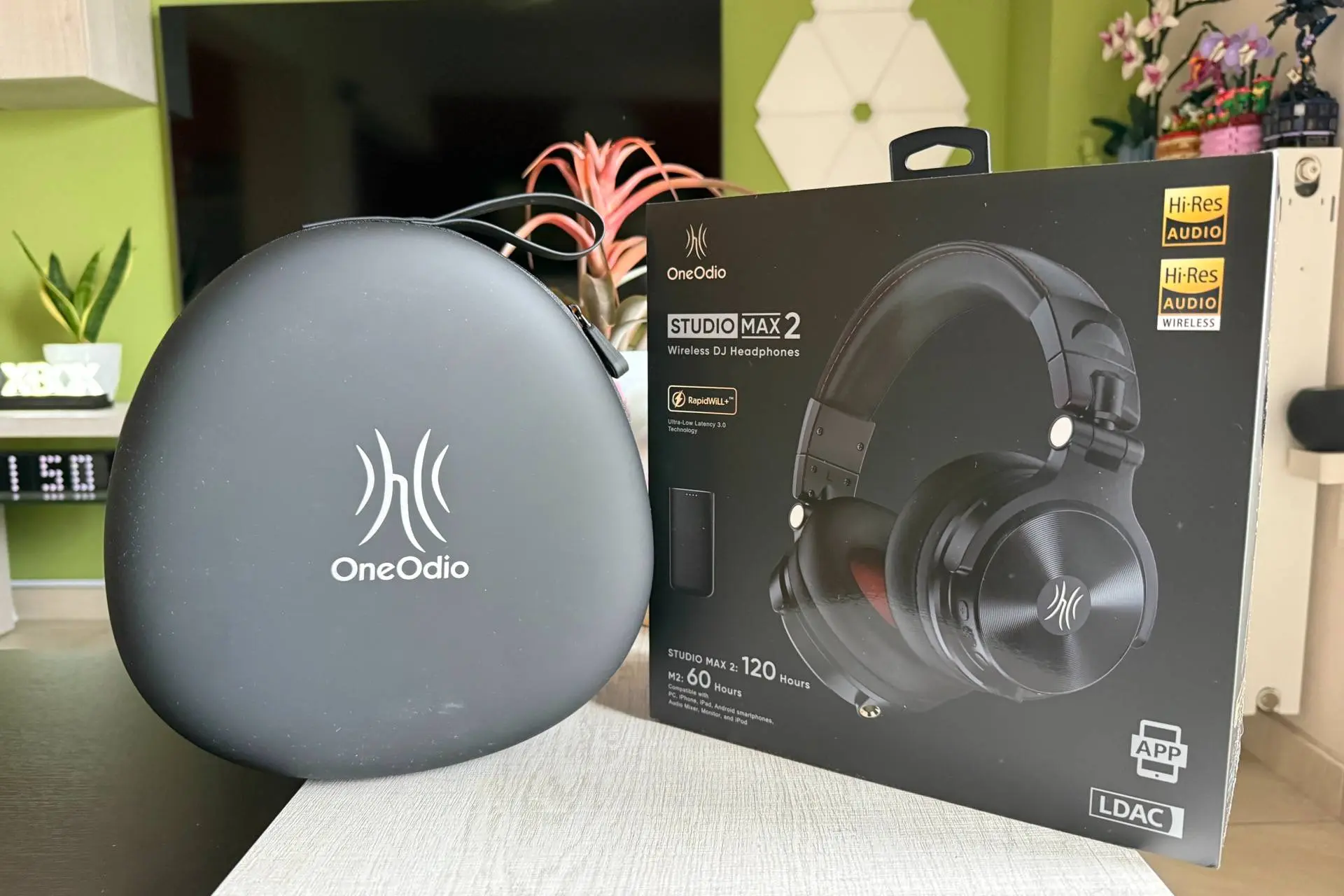
OneOdio Studio Max 2: Made for DJs and creators
The OneOdio Studio Max 2 is not a typical pair of everyday headphones. OneOdio worked with DJ and producer KSHMR on the sound profile, while the package focuses on the needs of people who work with audio. Its main feature is RapidWill+ 3.0, a 2.4GHz wireless link that can bring latency down to around 9ms when used with the supplied transmitter. That makes it more useful for monitoring and DJ work than a standard Bluetooth connection.

The headphones also support Bluetooth 6.0 and Sony LDAC for high-resolution wireless playback. You can switch to wired listening through the 3.5mm or 6.35mm ports, which is useful when connecting to mixers, audio interfaces or older equipment. This mix of connections gives the Studio Max 2 more flexibility than most wireless headphones in its price range.
The battery is another major selling point. OneOdio rates it for up to 120 hours over Bluetooth, while the RapidWill+ mode offers up to 60 hours. The transmitter has its own battery, too. You also get a carrying case and app support, which make the package more complete for people who plan to use these headphones beyond casual listening.
There are trade-offs. The Studio Max 2 is a large, fairly heavy design, and it does not include active noise cancellation. It is also not the pair I would choose first for a quiet, neutral studio reference. Its appeal is the mix of low-latency wireless audio, several connection options and long running time in one package. At around $199.99, it is a specialist option that makes the most sense if you will use those features.

There is also a good reason to check the Studio Max 2 right now. OneOdio is offering GizChina readers an exclusive 15% discount with the code GIZCHINA15, available on OneOdio.com and Amazon US. The code is valid before November 19, 2026, but cannot be combined with the main Black Friday campaign running from November 19 to 30.
Nothing Headphone (a): The value pick with serious battery life
Nothing took a different approach with the Headphone (a). Instead of chasing a premium price, the company brought much of its familiar design language and a strong feature set to a more affordable over-ear model. The result is a wireless headphone that looks distinctive without asking buyers to spend flagship money.

The Headphone (a) uses 40mm drivers, active noise cancellation and Bluetooth 5.4, with support for LDAC as well as the common AAC and SBC codecs. It also has a 3.5mm connection and USB-C audio, so it is not limited to wireless listening. The controls are another highlight. Nothing uses physical controls that are easy to find by touch, while its app gives users access to sound settings and other features.
Battery life is the headline number. Nothing claims up to 135 hours with ANC off and up to 75 hours with ANC on when using AAC. Switch to LDAC and those figures fall, but they remain strong at up to 90 and 62 hours. These are company figures, of course, and real use will depend on volume and settings. Independent testing has also praised the battery, ANC and feature set, while noting that the default sound may not suit everyone.
At around $199.99, the Headphone (a) is a good fit for people who want a modern set of everyday headphones without paying top-tier prices. It is not the most refined model here, but its mix of design, controls and stamina makes it one of the more interesting launches of 2026. It is also a good example of how much more buyers can expect from mid-range headphones today.
Sennheiser MOMENTUM 5 Wireless: A premium all-rounder
Sennheiser's MOMENTUM 5 Wireless is aimed at listeners who want sound quality and daily comfort in one package. It keeps the 42mm dynamic drivers used by the previous generation, but adds a more complete feature set, including adaptive hybrid noise cancellation, spatial audio with head tracking and a redesigned app experience.
The biggest change may be less obvious. The MOMENTUM 5 has a user-replaceable battery, which is still unusual in this part of the market. Sennheiser says the headphones can play for up to 57 hours with ANC enabled, and a ten-minute charge can add up to seven hours of listening. That is useful for travel, work and long days away from a charger. The headphones also support aptX Lossless and aptX Adaptive, along with USB-C and analogue wired listening.

There is a clear premium price to match. Sennheiser lists the MOMENTUM 5 Wireless at around $399.99, putting it well above the Nothing and JBL options. But the battery design gives it a longer-term advantage, while the sound tuning and codec support make it a strong choice for people who care about music first.
I also like the fact that Sennheiser has paid attention to ownership over time. A replaceable battery can help keep a good pair of headphones in use for longer, instead of turning them into another device that needs replacing when its battery starts to fade. It is not a budget buy, yet it feels like a thoughtful update rather than a spec sheet built around one flashy feature.
JBL Live 780NC: Everyday noise cancellation
The JBL Live 780NC is a more straightforward choice. It is designed for people who spend time commuting, working or travelling and want a comfortable over-ear pair that can handle most daily tasks. JBL has equipped it with 40mm drivers, Bluetooth 6.0 and True Adaptive Noise Cancelling 2.0, which uses several microphones to adjust noise reduction as the surrounding sound changes.
The feature list is broad. There is JBL Spatial Sound, LDAC support, multipoint pairing and the Personi-Fi 3.0 sound personalisation system. The companion app lets users adjust the sound, while Ambient Aware and TalkThru modes make it easier to hear what is happening around them without taking the headphones off. JBL also includes a cable for wired listening.

Battery life is another strong point. The company rates the Live 780NC for up to 80 hours with ANC off and up to 50 hours with ANC on. At its $249.95 suggested price, it sits in the middle of this group. It does not have the studio focus of OneOdio or the replaceable battery of Sennheiser, but it covers the basics well and adds useful extras for daily use.
The Live 780NC is also a good choice for people who want a familiar headphone design. There is no unusual connection system to learn and no need to spend time setting up a complex audio workflow. Put them on, connect your phone and get on with your day. For many buyers, that balance is exactly what matters.
EarFun Wave Pro X: Big features without the big price
EarFun has built a name around affordable audio products, and the Wave Pro X is its most ambitious over-ear model so far. Its main talking point is a dual-coaxial driver system, which places two drivers in each earcup to handle different parts of the sound. The aim is to deliver more detail and control than a typical budget headphone design.
The Wave Pro X also supports adaptive hybrid ANC, Bluetooth 6.0, LDAC and other high-quality codecs, plus Auracast for compatible audio sharing. There is USB-C audio and a standard 3.5mm input, so users have more than one way to connect. EarFun claims up to 90 hours of battery life with ANC off, or up to 50 hours with noise cancellation enabled. That is a strong figure for a model that launched at just $129.99.

The value is clear, but buyers should keep expectations in check. Reviews have praised its comfort, battery life and noise cancellation for the price, while some have found that the sound lacks the balance and timing of more expensive rivals. In other words, the Wave Pro X is not trying to beat Sennheiser at its own game. It is trying to offer a long list of features at a price that is easier to accept.
That makes it an interesting option for anyone who wants modern wireless features without moving into premium territory. The dual-coaxial design is also an unusual choice at this price, even if the results will not suit every listener. If your budget is limited, the Wave Pro X deserves a place on your shortlist.
My take: There is no single winner
The most interesting thing about 2026 is how much choice buyers now have. The OneOdio Studio Max 2 serves a clear professional and creator-focused role, while the Nothing Headphone (a) makes a strong case for value. Sennheiser is the more premium choice for listeners who want high-quality sound and a battery they can replace. JBL offers a familiar everyday package, and EarFun brings a lot of technology to a lower price.
I would not rank these five in a simple first-to-last order because they solve different problems. If you DJ or work with audio, the OneOdio is the unusual pick. If you want long battery life for less money, Nothing and EarFun deserve a look. For a more complete premium experience, Sennheiser is the one I would shortlist, while JBL makes sense for daily commuting and travel.
The best headphones are not always the most expensive or the ones with the longest feature list. They are the pair that fits the way you listen. That is why these five releases deserve a place in our 2026 buying guide.
Popular News
Latest News