Honor Just Invented a New Product Category Called "Shrimp Computing."
HonorTuesday, 14 April 2026 at 06:32
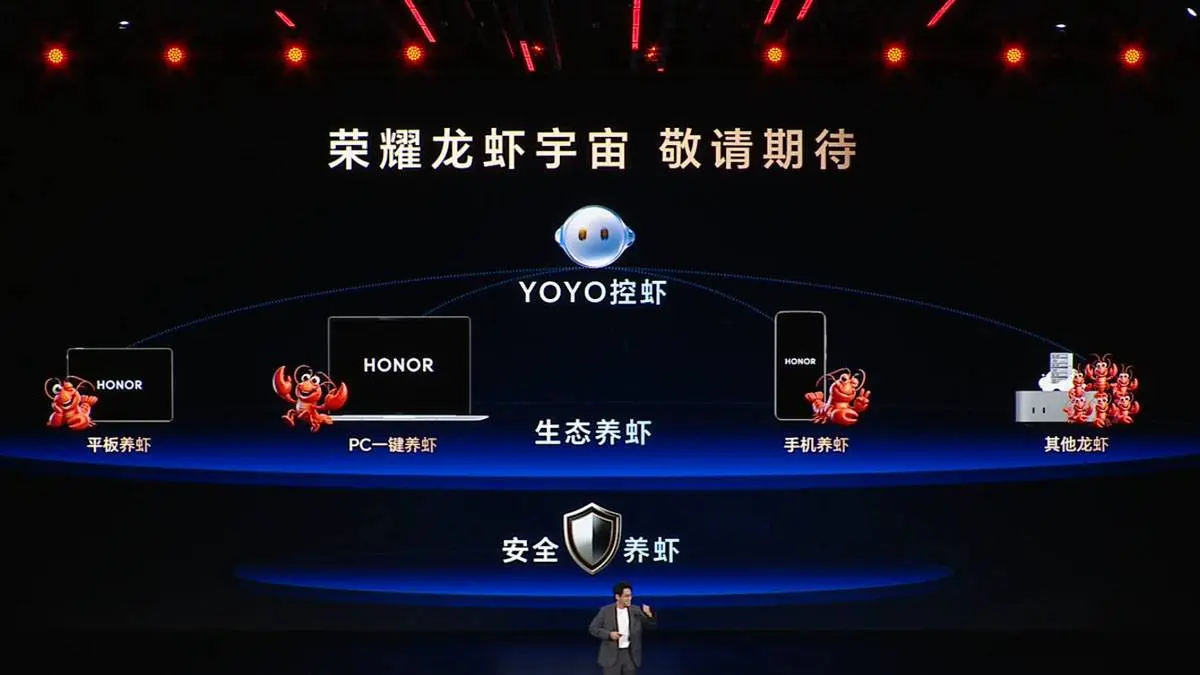
Honor has a habit of naming things unconventionally. The YOYO Claw — their latest self-developed platform — introduces what the company is calling a "Shrimp" laptop category. The branding is unusual. The underlying concept is actually interesting.

5 Key Takeaways:
- The YOYO Claw is Honor's attempt to create a new AI computing category that eliminates complex setup, reduces operational costs, and addresses privacy risks through a dedicated security layer
- It ships pre-configured with 5 main "shrimp" categories and 23 sub-categories — no API adaptation or manual coding required out of the box
- Intelligent task execution reduces token consumption by 50% compared to Honor's Open Claw solution, directly cutting the cost of running AI operations
- An "Independent Security Shrimp" layer automatically intercepts high-risk operations and requires mandatory secondary confirmation for any sensitive actions
- Honor is positioning this as a platform for both casual users and developers who want capable AI computing without traditional deployment friction.

What "Shrimp Computing" Actually Means
Strip away the branding and the YOYO Claw is addressing a real problem. Deploying AI tools on personal hardware typically involves API configuration, model management, and ongoing maintenance that most users simply don't want to deal with.

Honor's answer is a pre-configured environment. Five main categories, 23 sub-categories, all ready to run from the moment you open the device. No setup tunnel. No coding required. The system handles intelligent task deployment internally.
It's a similar philosophy to what made early Chromebooks compelling — remove the complexity, reduce the barrier. The difference here is that the target use case is AI-driven tasks rather than basic web browsing.

The Token Efficiency Argument
This is where the YOYO Claw makes its strongest practical case.
Running AI operations at scale burns tokens. Tokens cost money. Honor claims intelligent task execution judgment cuts that consumption by 50% versus their Open Claw baseline. For regular users running frequent AI tasks, that's a meaningful reduction in ongoing operational cost.

Whether that 50% figure holds across varied real-world workloads is something independent testing will need to confirm. But the direction is right — efficiency in AI execution is becoming a genuine competitive differentiator.

Security Without the Asterisks
The Independent Security Shrimp layer is a dedicated security module — not a software toggle buried in settings. It automatically flags and intercepts high-risk operations. Any sensitive action requires a second confirmation from the user.
That dual-layer approach is sensible for a device handling AI tasks that could touch personal data. It's also the kind of security architecture that enterprise buyers look for.

Unusual name. Practical ambition. The YOYO Claw deserves a closer look once real-world testing arrives.
Popular News


Latest News
Loading