Nokia and Deutsche Bahn Launch First 5G Rail Communication Trial
NokiaSunday, 21 September 2025 at 11:27
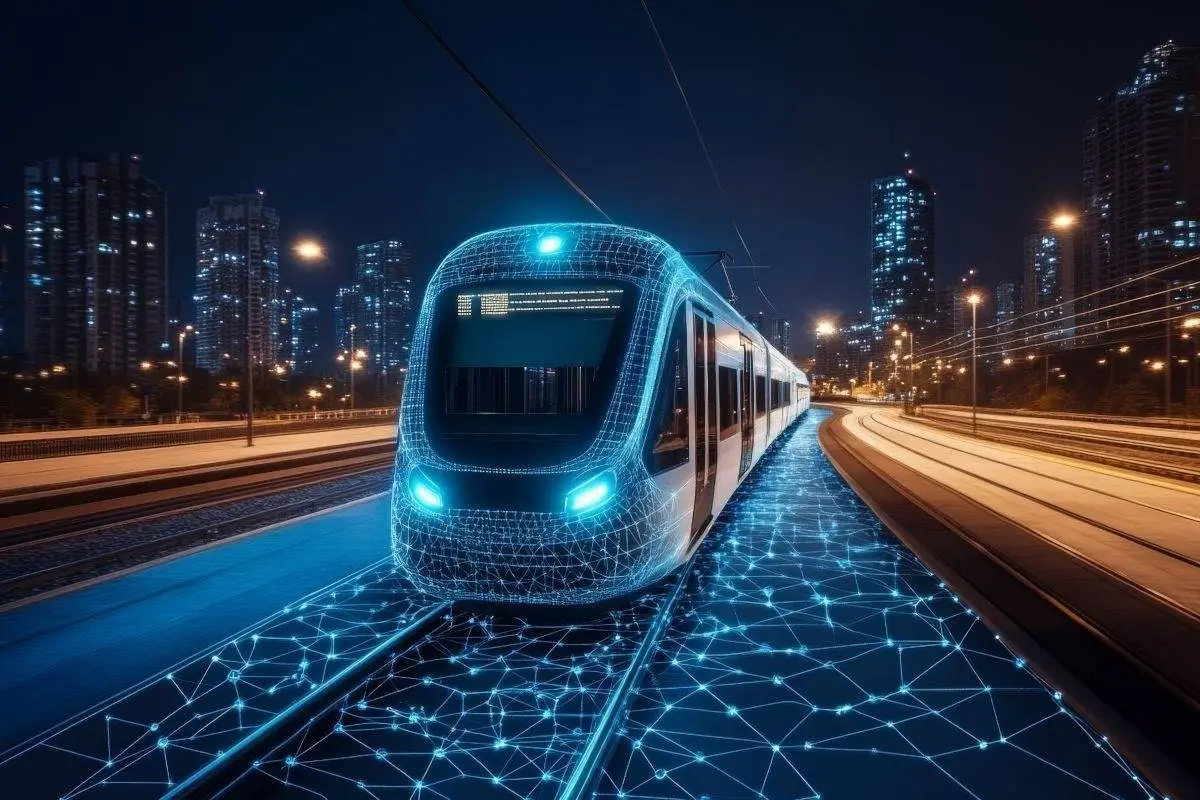
Germany has become the proving ground for a very different kind of 5G rollout. Instead of faster phones, this one is all about trains. Nokia and Deutsche Bahn are running what they say is the world’s first live test of a 5G-based railway communication system, taking place on outdoor tracks in the east of the country.

Beyond the Basics
The trial is built on the 1900 MHz band with a standalone 5G core, and it’s meant to replace a rail standard that has been running for decades. Across most of Europe, and in large parts of Asia, Africa and Australia, trains still rely on GSM-R, a 2G-era network built mainly for voice. North America, meanwhile, often falls back on basic two-way radio.
Jochen Apel, who heads enterprise business at Nokia, told Fierce Network that 2027 is the year when rail operators could begin actual rollouts. The first order of business will be voice. “That’s the basic service they always need,” he said. Right behind it comes the European Train Control System Level 2, a framework that allows automation of signaling and steering. Both are already part of GSM-R, so they need to work seamlessly before the industry can think bigger.
Why It Matters
The bigger picture is what excites companies. Once 5G is in place, operators can start adding tools like predictive maintenance and high-quality video links between train staff. Those aren’t essential for safety, but they could improve reliability and day-to-day operations.

Analyst Asad Khan of SNS Telecom & IT notes that GSM-R won’t disappear overnight. Europe has set 2035 as the cut-off year, giving rail networks a long transition window. In the meantime, some have tried to bridge the gap with 4G LTE. France’s Société du Grand Paris, for example, has its own LTE system for the Grand Paris Express, covering stations and depots. Nokia itself has helped with a 4G project in Delhi for India’s National Capital Region Transport Corporation. Similar systems are already running in China and Australia.
That’s why the German trial matters. It shows that FRMCS, the 5G successor to GSM-R, is no longer a blueprint — it’s on real tracks, with real trains. There’s still almost a decade before 5G becomes the norm for railways, but the starting signal has been given.
Key points
- World-first test: Nokia and Deutsche Bahn are running the first live trial of a 5G-based Future Railway Mobile Communication System (FRMCS) in eastern Germany.
- Technology setup: The trial uses the 1900 MHz band with a standalone 5G core.
- Why it matters: Most railways still depend on the old 2G-based GSM-R system or even two-way radio in places like North America.
- Timeline: Nokia expects initial deployments by 2027.
- First applications: Mission-critical voice communication comes first, followed by the European Train Control System (ETCS) Level 2 for automated signaling and steering.
Popular News




Latest News
Loading