OPPO Pad Mini Is Real, It's Launching April 21, and It Has a Flagship Chip Inside
OppoMonday, 13 April 2026 at 09:35
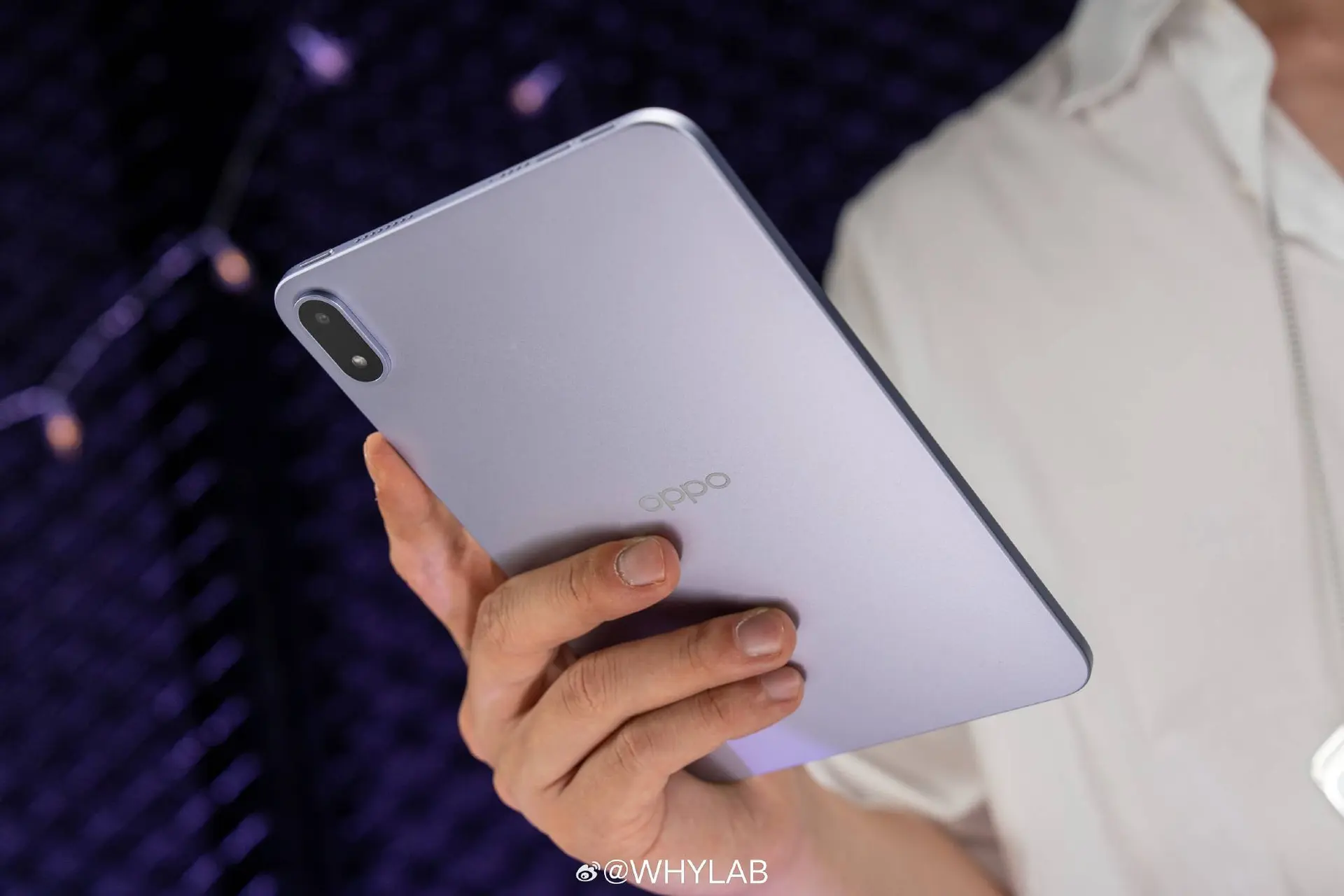
The compact Android tablet market has been waiting for someone to actually try. OPPO is trying.
Summary
- The OPPO Pad Mini officially launches in China on April 21, 2026, alongside the OPPO Pad 5 Pro and the Find X9 Ultra — powered by the Snapdragon 8 Gen 5, making it the first compact Android tablet to run this 3nm chipset.
- The 8.8-inch LTPO OLED panel features a 3:2 aspect ratio, 2,880×1,920 resolution, 144Hz adaptive refresh rate, and approximately 1,800 nits peak brightness — display specifications that directly challenge the iPad Mini.
- An 8,000mAh battery with 67W fast charging is housed in a chassis measuring just 5.39mm thick (some sources cite 6.9mm — final dimension unconfirmed) and weighing approximately 279 grams.
- The device is configured with up to 16GB of RAM and 512GB of storage, with a 13MP rear camera and 8MP front camera, running Android 16 out of the box.
- Global availability has not been confirmed; OnePlus is expected to rebrand the Pad Mini for international markets as the OnePlus Pad Mini.

The input framing — "a scaled-down Pad 5 Pro" — understates what this device actually is. The Pad Mini has its own distinct identity: a compact flagship-grade slate with a Snapdragon 8 Gen 5, not a budget compromise with a smaller screen.

Why the Snapdragon 8 Gen 5 in This Form Factor Is Significant
Most compact tablets take one of two routes: put a mid-range chip in a small body and call it a day, or jam a flagship processor in without solving the thermal management problem. OPPO's approach here appears to be the latter route done properly. Geekbench scores for the OPD2515 model — confirmed as the Pad Mini — show a single-core score of 2,762 and a multi-core score of 9,037. That's genuinely flagship territory.

The 3:2 aspect ratio is the quiet design decision that matters most for everyday usability. Most tablets optimize for 16:10 video playback; 3:2 optimizes for reading, web browsing, and document work. It's a deliberate productivity-first choice in what looks like a media-consumption device. I suppose that dual positioning is exactly what makes the Pad Mini interesting.

The Display Is the Actual Argument Against the iPad Mini
Peak brightness of approximately 1,800 nits on an LTPO OLED panel with 144Hz adaptive refresh and 2,880×1,920 resolution — at 8.8 inches — is a display specification that doesn't exist in this size class anywhere else right now. The iPad Mini 7 uses an LCD panel. That gap is what OPPO is pointing at.

At 279 grams and 5.39mm thick (thickness still disputed across sources — treat with some caution until official confirmation), the physical portability argument is straightforward. It genuinely fits in a large pocket. That's not marketing language; it's a geometry observation.
What's Still Unclear
Global pricing, international launch markets, and the exact thickness figure all remain officially unconfirmed. The OnePlus Pad Mini rebrand for markets outside China is widely expected but not yet official. Both details matter significantly for buyers outside the Chinese market.
Popular News


Latest News
Loading