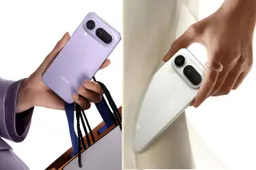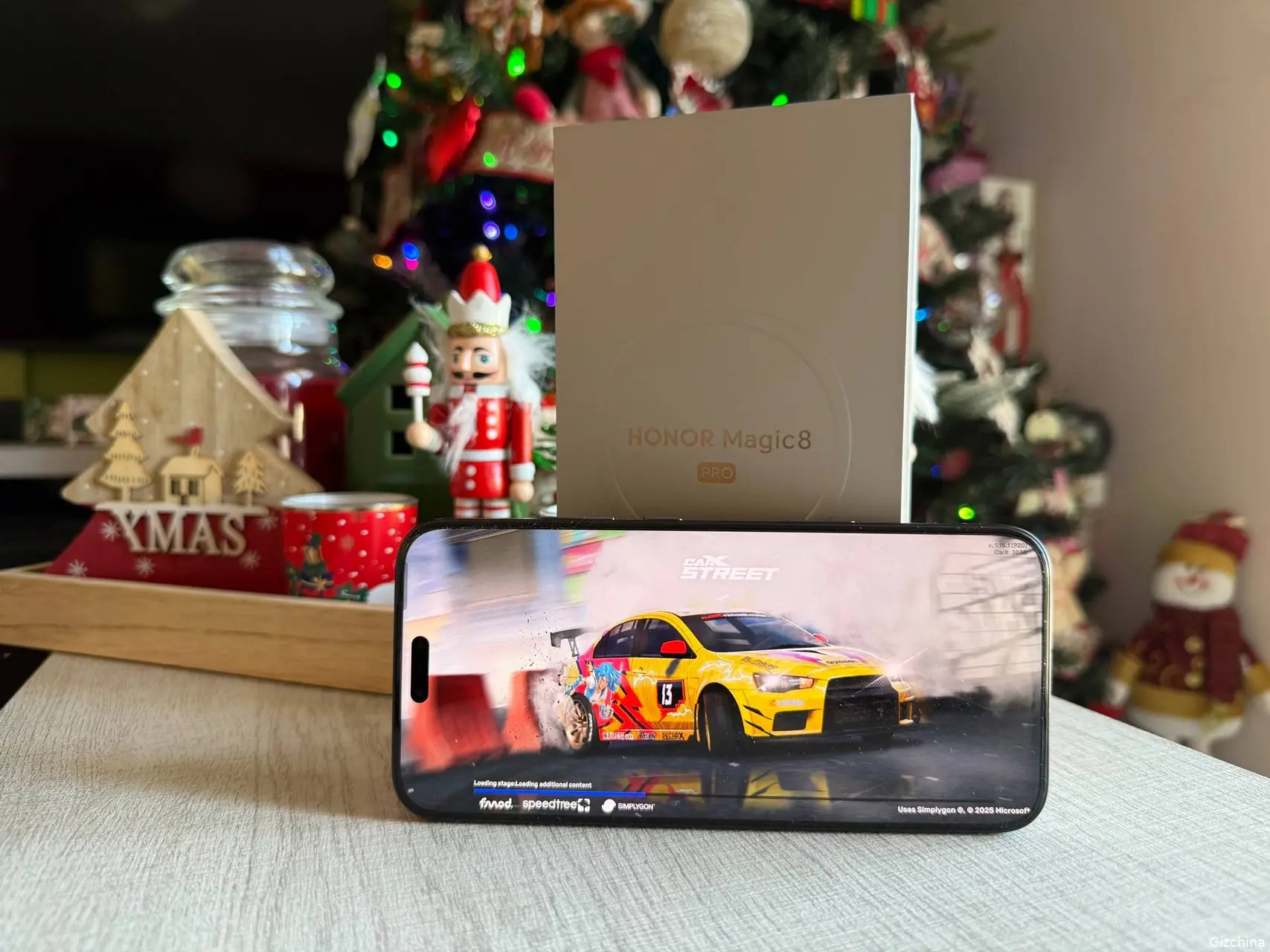
It is a strange time to be someone who genuinely cares about smartphones. We have reached a point where the differences between a "great" phone and a "good" phone are so incredibly small that you almost need a magnifying glass—or a very expensive laboratory—to find them. Most of the time, we are just looking at slightly faster chips, slightly brighter screens, and cameras that can see a bit better in the dark. Honor seems to understand this reality better than most. With the new Magic 8 Pro, they haven’t really tried to reinvent the wheel. Instead, they have taken their existing wheel, polished it until it reflects the sun, and added a massive battery that makes you wonder why everyone else is still stuck in 2023. I’ve been using the Magic 8 Pro as my primary device for a while now, and honestly, it feels less like a gadget and more like a very reliable tool that happens to look like a piece of jewelry.

Key Points
- Unrivaled Battery Life: The 7100mAh silicon-carbon battery sets a new industry standard, easily lasting two full days for most users.
- Pro-Grade Eye Protection: A 6.71-inch OLED with 4320Hz PWM dimming makes it one of the most comfortable displays for long-term daily use.
- Impressive Zoom Performance: The 200MP periscope lens delivers incredible detail at 10x zoom, though digital processing takes over at higher levels.
- Refined Premium Design: The matte finish and "anthracite - black" aesthetic provide an expensive feel, though the 219g weight is noticeable.
- AI-Centric Features: Running MagicOS 10 on Android 16, the phone offers unique AI tools like deepfake detection and a dedicated camera control button.

HONOR Magic8 Pro Specifications
- 6.71-inch (1256 x 2808 pixels) 1.5K 1-120Hz LTPO quad curved OLED Screen with HDR10+, up to 1800 nits global peak brightness, up to 6000 nits HDR peak brightness, 4320Hz High-Frequency PWM Dimming, Rhino Glass protection
- Octa Core Snapdragon 8 Elite Gen 5 3nm Mobile Platform with Adreno 840 GPU
- 12GB / 16GB LPDDR5X RAM with 512GB / 1TB UFS 4.0 storage
- Dual SIM
- Magic UI 10.0 (Based on Android 16)
- Rear Cameras: 50MP Wide (1/3″ f/1.6)+50MP 122° Ultra Wide Camera (f/2.0) with 2.5cm macro + 200MP Telephoto Camera (1/1.49″, f/2.6, 3.7X Optical Zoom, 100x Digital Zoom, OIS); 4K video 60fps recording; Rear single LED flash
- Front Camera: 50MP Front Camera (f/2.0), 3D Depth camera; 4K 60fps video recording
- Dust and Water Resistant (IP68 + IP69 + IP69K)
- Ultrasonic fingerprint sensor, infrared sensor
- Dimensions: 161.15×75× 8.32mm; Weight: 219g
- Dual Stereo Speakers with DTS:X Ultra sound effects
- 5G SA/NSA, Dual 4G VoLTE, Wi-Fi 7 802.11be (2.4GHz/5GHz) 2×2 MIMO, Bluetooth 6.0, eidou (B1I+B1C+B2a+B2b quad-band), GPS (L1+L5 dual-band), GLONASS (G1), Galileo (E1+E5a+E5b triple-band), QZSS (L1+L5 dual-band), NavIC (L1+L5 dual-band), A-GNSS, USB Type-C USB 3.2 GEN1, NFC
- 7100mAh (typical) battery with 100W wired SuperCharge and 80W wireless charging Support

The Look and the Feel of the Thing
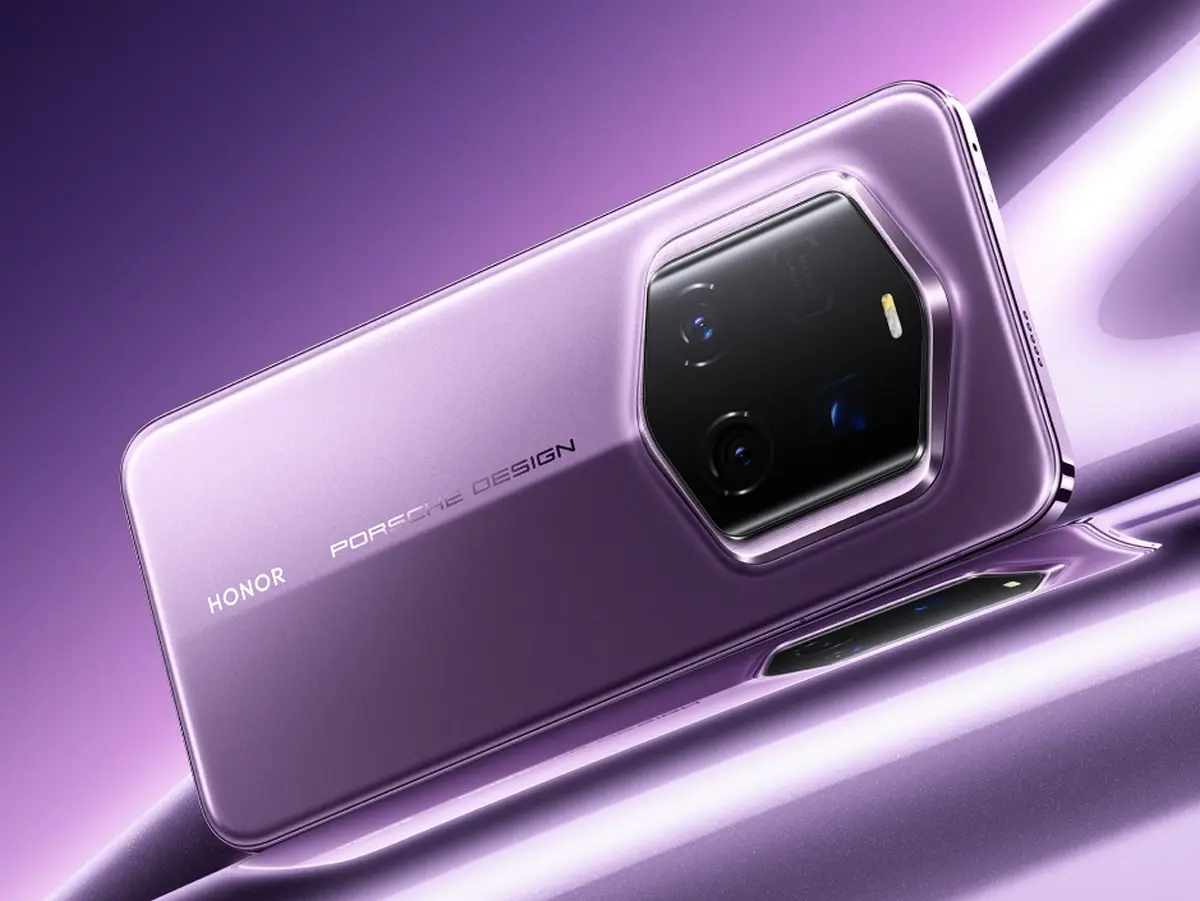
The first thing I noticed when I pulled this out of the box was the finish. My unit is the "Black," which is a very descriptive name for what is essentially an anthracite-matte colored phone. It’s elegant. It doesn’t scream for attention like some of the glossy, fingerprint-magnet phones we’ve seen in the past. It feels expensive, which is good, because at S$1,499, it certainly is. The curves are smooth, maybe a little too smooth for some. If you are the kind of person who likes the sharp, industrial edges of a Samsung Ultra or an iPhone, this might feel a bit slippery in the hand. I think I dropped it onto my couch three times in the first hour just because the matte back is so soft to the touch. It has a pebble-like quality that is pleasing, but perhaps a bit precarious if you aren't a fan of cases.

It weighs about 219 grams. That is not light by any stretch of the imagination. You feel it in your pocket, and you definitely feel it when you are lying in bed trying to scroll through a long article before sleep. But there is a benefit to that weight. It feels solid. It feels like it could survive a few knocks. It has those IP68, IP69, and IP69K ratings, which basically means you could probably drop it in a puddle or get caught in a tropical downpour and the phone would be totally fine. I didn't actually test the high-pressure water jet protection, mostly because I don’t have a high-pressure water jet sitting in my apartment, but it’s nice to know it’s there for people who might be a bit more adventurous—or clumsy—than I am.

That New Button on the Side
One of the big talking points this year is the dedicated button on the right edge. It’s a camera control, but Honor likes to talk about it in the context of their AI ecosystem. It feels very much like a reaction to what Apple did recently, and I suppose that’s just how the industry works now. You can use it to slide your zoom or click the shutter. In practice? It’s a bit of a mixed bag for me. I found myself using it for quick snapshots when I was walking the dog and only had one hand free, but for more "serious" photos, I almost always went back to the on-screen controls.

There is a bit of muscle memory you have to build up. Sometimes I’d press it and nothing would happen because I didn't press hard enough, and other times I’d accidentally trigger the zoom when I just wanted to focus. It’s a cool addition, and I think it’s a necessary one for a "Pro" phone in 2025, but it hasn't fundamentally changed how I take photos. It’s just... there. It’s a nice option to have, but it's not the reason you buy this phone.

A Screen That Actually Cares About Your Eyes
The 6.71-inch OLED display is, quite frankly, gorgeous. It’s sharp, it’s vibrant, and it gets incredibly bright. Honor claims it hits 6000 nits at peak brightness. Now, let's be real: that is a number so high it sounds fake. In reality, you aren't going to see 6000 nits unless you are looking at a tiny white dot in a high-quality HDR movie while standing under direct sunlight, but the point is that I never once struggled to read a text message or check a map while standing outside at noon.
What I actually appreciated more than the raw brightness was the "Eye Comfort" technology. I spend way too much time staring at screens, and the high-frequency PWM dimming really does make a difference if you are sensitive to screen flicker. It’s one of those things you don't really notice until you switch back to a phone that doesn't have it, and suddenly your eyes feel "heavy" after twenty minutes of reading. It’s a subtle thing, but for a professional who lives on their phone, it’s a huge win. The colors are accurate, too, provided you remember to switch to the "Professional Color Mode" in the settings. Out of the box, it’s a bit too blue for my taste, but that’s an easy fix.

Performance and the 7100mAh Beast
Under the hood is the Snapdragon 8 Elite Gen 5. It is fast. I mean, of course it is fast. Everything at this price point is fast these days. Apps open before your finger even leaves the glass. I played some heavy games and edited a few 4K video clips, and the phone barely broke a sweat. It gets warm, sure, but never "I need to put this down" hot. With 12GB of RAM, I haven't seen a single app reload in the background for days.
But the real story here isn't the speed; it's the battery. Honor put a 7100mAh silicon-carbon battery in here. For context, most flagships are still stuck at 5000mAh. This is a massive jump. I’m not a light user—I have five email accounts syncing, I listen to music all day, and I take way too many photos of my son's LEGO creations. With the Magic 8 Pro, I was regularly getting through two full days without reaching for a charger. It’s incredibly liberating. You just stop looking at the battery percentage. When you do need to charge, the 100W wired charging is so fast it feels a bit like magic. I plugged it in while I took a shower, and by the time I was dressed, I had enough juice to last another full day.


Let's Talk About Those Cameras
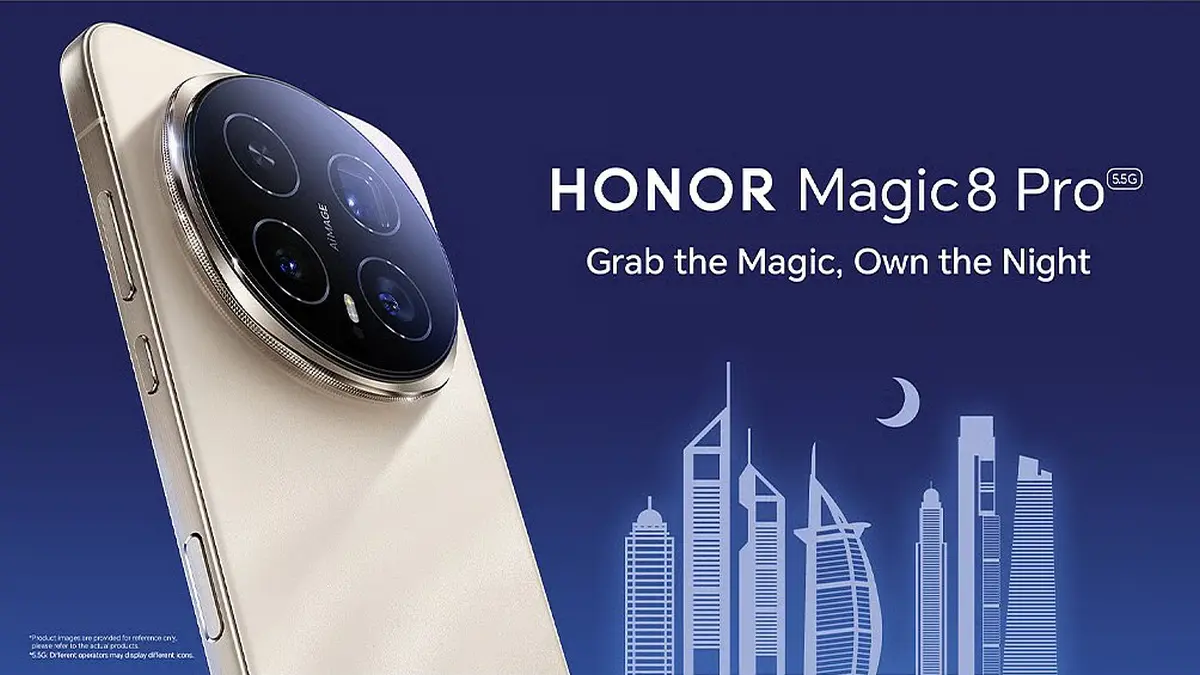
The back of the phone is dominated by a huge circular module. It has a 50MP main sensor, a 50MP ultrawide, and a massive 200MP periscope zoom lens. Let's start with the good: the 200MP zoom is incredible for social media shots. If you stay around 3.7x to 10x zoom, the detail is staggering. I took a photo of a bird in a tree from about twenty feet away, and I could actually see the individual feathers. It’s impressive tech, no doubt about it.
However, it’s not perfect. No camera is. Once you go past 10x, the software starts to take over in a big way. It uses AI to "guess" what the details should look like. Sometimes it works well, but other times it makes things look like a watercolor painting. I wouldn't bother with the 100x zoom unless you just want to see if there is a person in a window a mile away. It's more of a party trick than a tool.
The low-light performance is another strong point. I took some shots in a very dimly lit bar, and the phone managed to pull out colors and details that my eyes couldn't even see. But here is the contradiction: under artificial LED lights, the white balance can get a bit wonky. I’ve had photos of my dinner turn out way too yellow or even slightly greenish. You can fix it in the "Pro" mode, but that feels like a chore when you just want a quick snap of your pasta. Also, I really miss the variable aperture from the Magic 6 Pro. Removing it feels like a step backward for "pros" who want to control the background blur naturally. It’s a strange omission for a phone that is otherwise so focused on photography.

The Software and the AI of It All
MagicOS 10 is based on Android 16, and it is full of AI features. Some are genuinely useful, like the deepfake detection that warns you if a video call looks suspicious. That’s the kind of AI I actually want. Others, like the AI Memories that curate your photos into little movies, feel a bit like clutter. The interface itself is very smooth, though it definitely takes some "inspiration" from iOS. If you’ve used an iPhone, you’ll feel right at home with the pill-shaped cutout at the top that expands for notifications. Is it a copy? Maybe. Is it useful? Definitely.
One thing that annoyed me slightly was the redundancy in some of the settings. There are three different ways to do almost everything, and sometimes the AI "suggestions" get in the way of what I actually want to do. I think I spent the first two days just turning off various "smart" pop-ups. It’s a bit like having a very helpful assistant who won't stop talking while you’re trying to work. Eventually, you find the "off" switch, and then it’s a great experience.
Is It Worth Your Money?
So, where does that leave us? The Honor Magic 8 Pro is a powerhouse, plain and simple. It has the best battery life of any flagship I’ve tested this year, a screen that won't give you a headache, and a camera that can see in the dark. It isn't perfect—the white balance issues and the missing variable aperture are small but real frustrations for someone paying S$1,499.
If you are a fan of the brand, this is a no-brainer upgrade. The battery life alone is worth the price of admission. If you are coming from a Samsung or an Apple device, the transition is easier than ever, but you have to be okay with a phone that is a bit heavy and very curvy. I like it. It feels like a phone that was built for people who actually use their devices all day, rather than just people who want a thin piece of glass to show off at a party. It’s a workhorse in a tuxedo.
loading
Popular News

Latest News
Loading