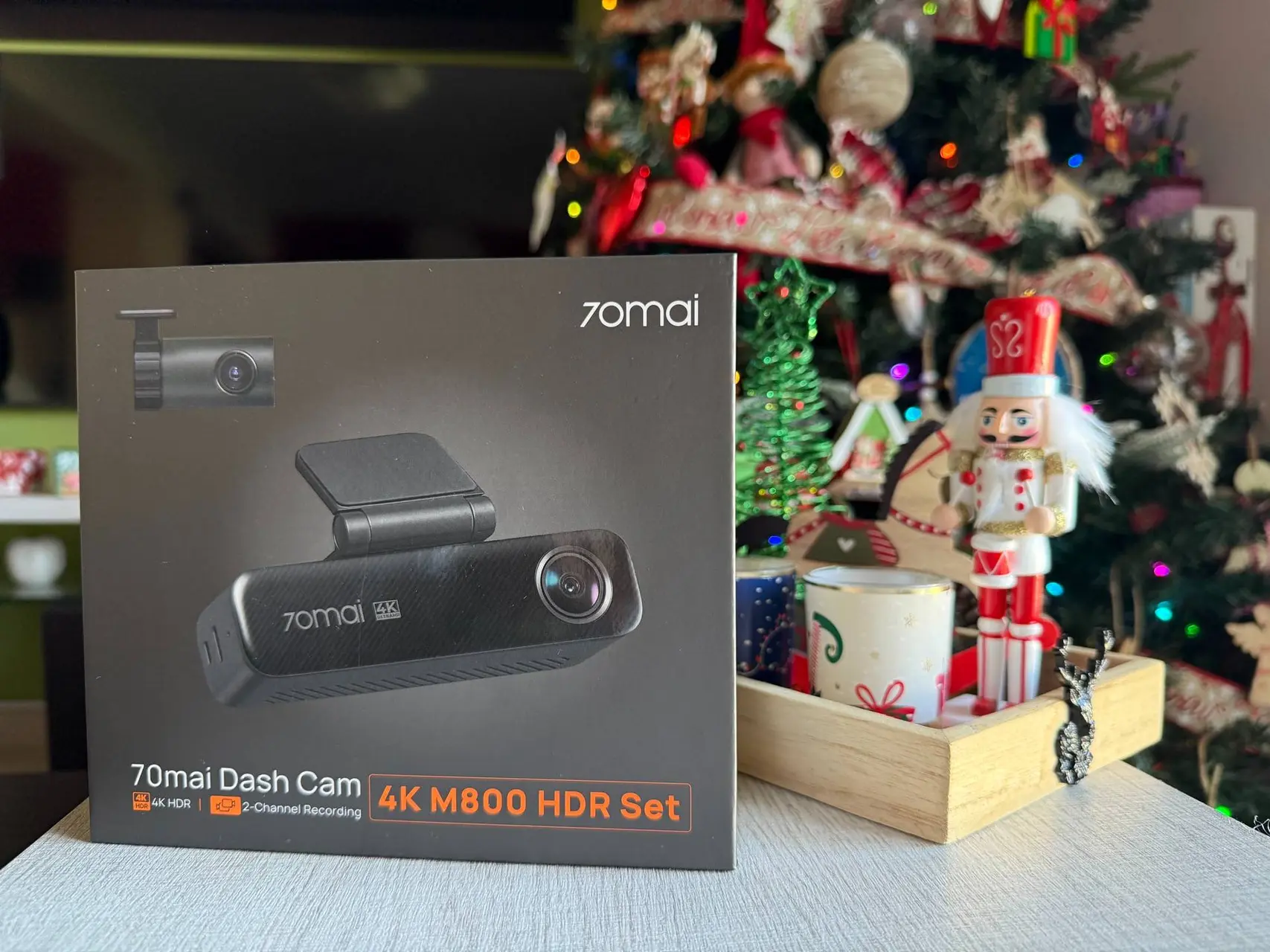
I’ve spent the last decade testing gadgets that promise to make my life easier, and if there’s one category that usually fails the "stress test" of daily reality, it’s dash cams. You know the story. You buy a car, and the dealership throws in a "premium" recorder that costs a fortune on paper but produces video so grainy it looks like a security feed from 1994. Or worse, you buy a cheap one online, and the SD card dies the one time you actually need the footage.

This is why I was genuinely curious about the 70mai M800 Dash Cam. On paper, it hits all the high notes: 4K resolution, the latest Sony sensor, and—blessedly—built-in storage. But as any tech editor will tell you, specs are just numbers until you’re trying to read a license plate through a rain-streaked windshield at 10 PM.
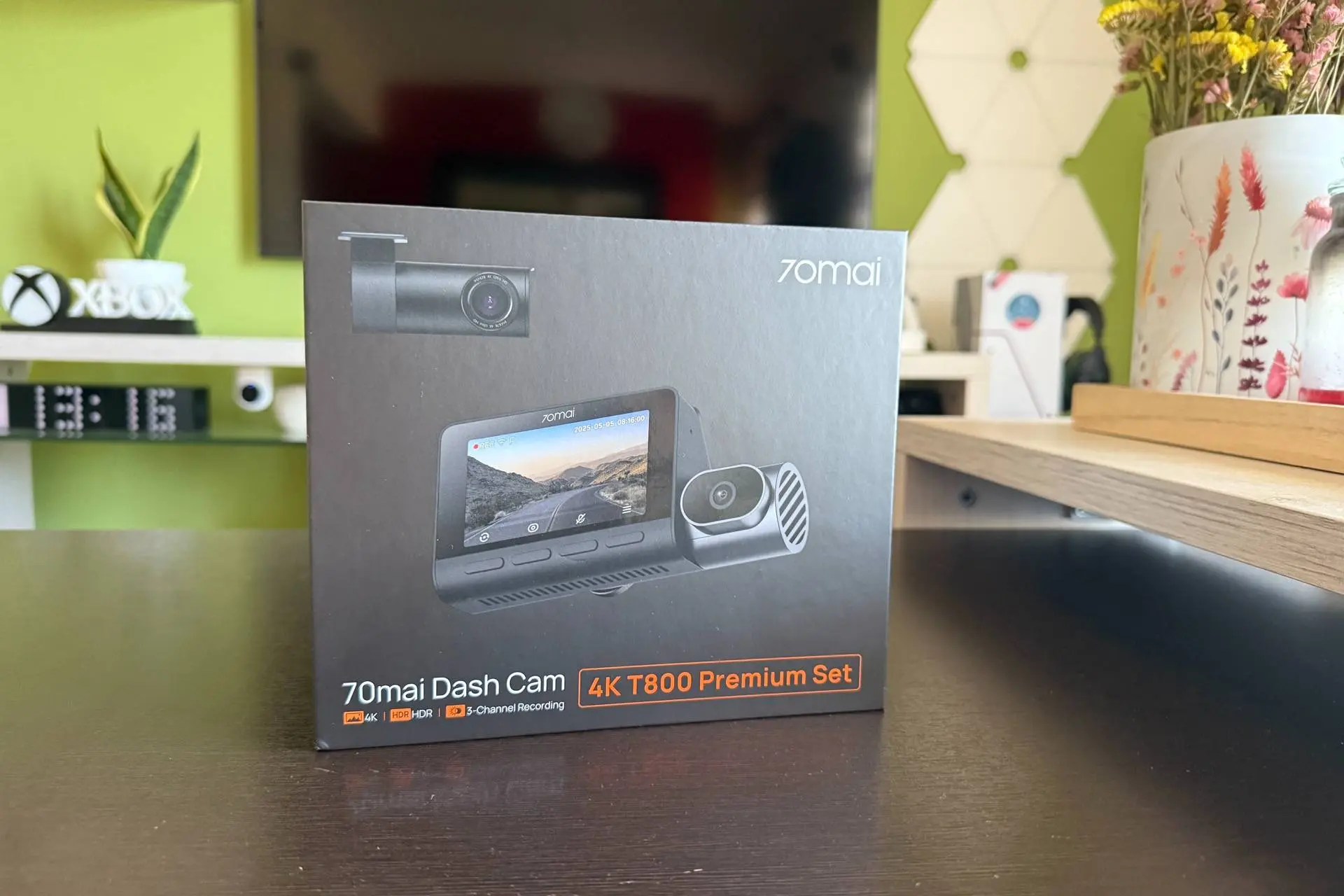
After living with the M800 for several weeks (and after having reviewed the T800 model), I think I’ve finally found the sweet spot between "too much tech" and "just enough security." Here is how it actually holds up in the wild.

Key Points
- Sony STARVIS 2 IMX678 Sensor: Delivers industry-leading 4K low-light clarity and high dynamic range.
- Built-in eMMC Storage: Eliminates the common "SD card failure" issue with integrated, high-speed memory.
- Screenless Stealth Design: A compact wedge shape that fits discretely behind the rearview mirror.
- 4G LTE & 5G Wi-Fi Connectivity: Enables remote parking alerts, live tracking, and lightning-fast video downloads.
- Advanced AI ADAS: Includes real-time warnings for lane departures, collisions, and pedestrian detection.

The "Screenless" Gamble: Why Smaller is Better
The first thing you notice about the M800 is what’s missing. There is no screen. For some, that’s a dealbreaker. We are used to seeing that little glowing rectangle in our peripheral vision. However, after about two days, I realized that a screen on a dash cam is mostly a distraction.
The M800 uses a "wedge" design. It’s small—small enough to tuck behind my rearview mirror so I literally can't see it while driving. This is a massive win for cabin aesthetics. It doesn't block my view, and it doesn't look like a bulky piece of plastic stuck to the glass. Instead, it feels like an OEM part of the car.

I’ll admit, the setup took a few extra minutes because you have to do everything through the 70mai app. You use your phone as the viewfinder to aim the lens. It felt a bit fiddly at first, perhaps because I'm used to just hitting buttons on the device itself, but once it was set, I never touched it again.
The Tech Under the Hood: Sony STARVIS 2
If you care about image quality, the only spec that really matters here is the Sony IMX678 sensor. This is the STARVIS 2 tech everyone is buzzing about. Why? Because it handles dynamic range in a way that older sensors simply can't.

In my testing, the 4K footage was remarkably crisp. During a bright afternoon drive, the M800 managed to balance the harsh sunlight on the hood of my car with the shadowed details of the trees on the side of the road. But the real test is at night.
Most dash cams "blow out" license plates because of your own headlights reflecting off the silver paint. The M800’s HDR (High Dynamic Range) is surprisingly smart. I watched back some footage of a car merging fairly quickly in front of me at night. Not only was the plate readable, but I could even see the driver’s silhouette. It’s not "cinematic" in the sense of a Hollywood movie, but for insurance purposes, it is exactly what you need.
The Death of the "Memory Card Error"
I think my favorite feature—and I say this with a surprising amount of emotion—is the built-in eMMC 5.1 storage. If you’ve owned a dash cam before, you’ve probably seen the dreaded "Memory Card Error" message. SD cards aren't really built for the constant heat and write-cycles of a dash cam. They fail. Often.

The M800 (at least the 128GB version I tested) has that memory soldered directly onto the board. It is faster and much more reliable. I didn't have to worry about buying a "High Endurance" card or wondering if the camera was actually recording. It just works. The peace of mind alone is worth the price of admission.
Staying Connected: 4G and 5G Wi-Fi
The M800 is "smart," but not in a gimmicky way. It supports 5GHz Wi-Fi, which sounds like tech-babble until you try to download a three-minute 4K clip to your phone. On older 2.4GHz cameras, this would take five minutes. On the M800, it’s done in seconds.

Then there’s the 4G LTE option. If you get the 4G hardwire kit, the camera stays "alive" even when the car is off. I received a notification on my phone while I was at dinner because someone walked too close to my car for too long. I was able to pull up a live view of my car from the restaurant. Is it a bit paranoid? Maybe. But in a crowded city parking lot, it’s a nice safety net.
The ADAS System: Helpful or Annoying?
Like many modern cameras, the M800 has an Advanced Driver Assistance System (ADAS). It tells you when you’re drifting out of your lane or when the car in front of you has started moving at a green light.
In my experience, ADAS is a mixed bag. The "pedestrian detection" is actually quite impressive; it caught a cyclist I hadn't fully noticed in my blind spot. However, the lane departure warnings can get a bit chatty on narrow city streets. I ended up turning the sensitivity down in the app. It's great for long highway road trips where fatigue might set in, but for a five-minute trip to the grocery store, it can be a little much.
Real-World Nuances
I noticed a few small things that didn't make the marketing brochure. For one, the camera gets warm. Not "melting" hot, but noticeably warm to the touch after a long drive. 70mai says the serrated vent design handles the heat, and I didn't experience any shutdowns, but it’s something to keep an eye on if you live in a place like where the summer is HOT.

Also, the voice control is surprisingly good. Saying "Take Photo" actually works without me having to shout. It’s a small touch, but it’s safer than fumbling for a button when you see something interesting on the road.
Installation: Not for the Faint of Heart
If you want the full experience—the parking monitoring and the 4G remote view—you have to hardwire this thing to your fuse box. 70mai provides the cables, but if you aren't comfortable pulling apart your car’s trim, you’ll want to pay a professional to do it. I spent about 45 minutes tucking wires into the headliner and A-pillar. It’s not hard, but it requires patience.
Final Verdict: Is it Worth It?
The 70mai M800 isn't the cheapest 4K camera on the market, but I'd argue it's one of the best valued. You’re paying for the sensor and the reliability of the built-in storage.
If you just want a "set it and forget it" device that hides away and gives you elite-level footage when things go wrong, this is probably it. It doesn't try to be a GoPro; it tries to be a reliable witness. And in 2025, that’s exactly what a dash cam should be.
Popular News


Latest News
Loading