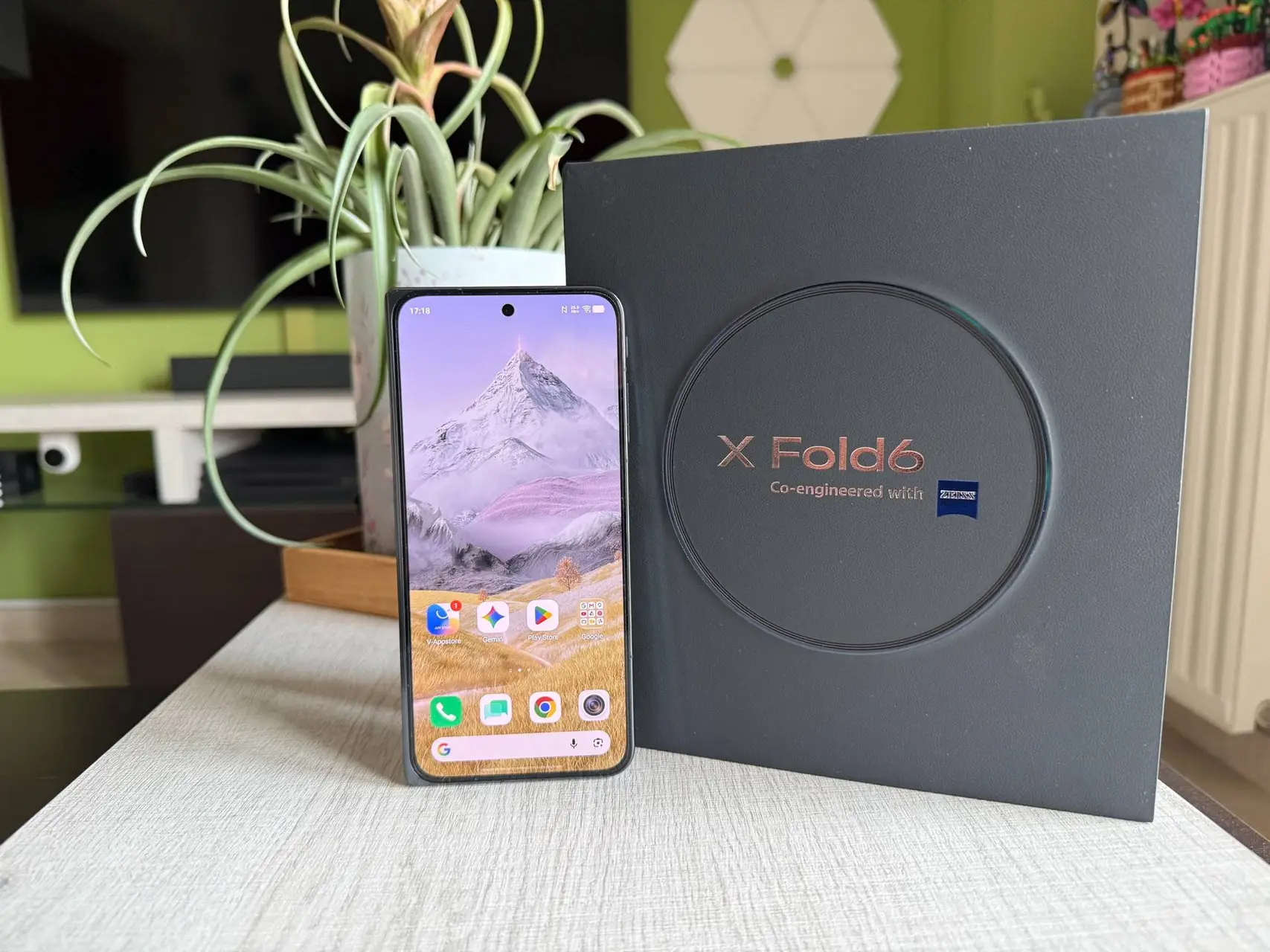
The vivo X Fold6 aims to solve one of the biggest problems with foldable phones. It wants to give you a great smartphone and a small tablet in one device, without forcing you to make too many compromises. With two large displays, a 200MP main camera and a huge battery, it has plenty going for it.

I had the vivo X Fold6 in my hands for two weeks. That gave me time to look beyond the specs and focus on daily use. A foldable must do more than open into a large screen. It must also feel good in the hand, take great photos and last through a busy day.
The X Fold6 gets many things right. The outer screen feels like a normal phone, while the inner display makes work and entertainment more enjoyable. The camera system is also promising, and the large battery gives vivo an edge over many rivals.

Still, this is an expensive phone, and not every feature is perfect. Here is what stood out during my two weeks with the vivo X Fold6.
Design: A foldable built for daily use
The vivo X Fold6 weighs 228 grams and measures just 4.4mm thick when fully open. That is impressive for a device with two screens, a complex hinge and a large battery. It is not light, but the design feels well balanced for this type of phone.
The 6.51-inch outer screen is one of its best features. It has a familiar shape, so typing messages, checking emails and browsing the web feel natural. You do not need to open the phone every time you want to do something simple.

The hinge feels solid, while the crease in the inner screen is less distracting than on many older foldables. You can still see it from some angles, but it does not take much away from the experience.
The camera island is another story. It is large and stands out on the back. I would prefer a cleaner design, but I would not want vivo to use weaker cameras just to make the phone look thinner.
The IP58/IP59 ratings add protection against dust and water under set test conditions. This is welcome on a device that costs so much, although it does not make the phone waterproof in every situation.

The main drawback is its weight. You will notice it during long periods of one-handed use. Still, the X Fold6 feels like a proper phone when closed, and that matters more than a few millimetres here or there.
Displays: Two screens with a clear purpose
The inner screen measures 8.02 inches and uses LTPO AMOLED technology. It has a resolution of 2,504 x 2,312 pixels and a refresh rate of 120Hz. The result is a sharp display with smooth motion and plenty of room to work.
Watching videos is great, but the extra space is more useful than that. Reading long articles, editing documents and using several apps become easier. You have more room to see what you are doing, without having to switch between screens all the time.

The outer screen measures 6.51 inches and has a resolution of 2,528 x 1,120 pixels. It also supports a 120Hz refresh rate, HDR10+ and Dolby Vision. In other words, it feels like a proper flagship display, not a small screen you use only when the phone is closed.
vivo claims peak brightness of up to 5,000 nits under certain conditions. This is not the brightness you should expect across the whole screen at all times, but it points to a panel built for bright scenes.

The crease is still there, yet it is no longer the main thing I notice. For me, the real benefit is having a phone that works well in both forms. You can use the outer screen for quick tasks and open the device when you need more space.
Performance: Fast enough for almost anything
The vivo X Fold6 uses the MediaTek Dimensity 9500 Super, built on a 3nm process. The global version comes with 12GB of RAM and 512GB of UFS 4.1 storage.
Some buyers may prefer a Snapdragon chip in a phone at this price. I understand that, but the name of the processor is only part of the story. What matters is how well the phone handles real tasks.
The Dimensity 9500 Super has the power needed for demanding apps, games and heavy multitasking. Apps open quickly, and the phone has enough memory to keep many of them ready in the background.
This is even more useful on a foldable. You can keep several apps open on the large screen and move between them with ease. The extra space would be less useful if the phone struggled to keep up.

Heat is also worth watching. A thin foldable has less room for cooling than a regular phone, and long gaming sessions can put more stress on the system. Still, the hardware offers plenty of power for daily use.
I would not judge the phone by one benchmark score. What matters is how it feels over time, and the X Fold6 has the hardware to handle demanding tasks without fuss.
Cameras: The 200MP sensor is not the whole story
The vivo X Fold6 has a 200MP main camera with an f/1.7 aperture and optical image stabilization (OIS). The camera system also benefits from vivo's work with ZEISS, with a focus on colour, detail and image quality.
The main sensor has a large 1/1.4-inch imaging area. This gives it a strong base for detailed photos, although megapixels alone do not guarantee better results. The lens, image processing and lighting all play a part.
The other rear cameras are just as important. You get a 50MP ultrawide camera with a 119-degree field of view and a 50MP telephoto camera with 3x optical zoom and OIS.

The telephoto camera is a real plus. Some foldables cut corners on zoom, even at high prices. A dedicated 50MP lens gives you more options for portraits and distant subjects, without relying only on digital zoom.
The ultrawide camera is useful for landscapes, buildings and group photos. The main camera should also offer plenty of detail in good light, while OIS helps reduce blur when light levels drop.
The two front cameras have 20MP sensors. They are fine for video calls, but I would use the rear cameras for selfies whenever possible. You can frame the shot on the outer screen and get better results from the main sensor.
The phone also supports video recording at up to 8K at 30fps and 4K at 60fps from the rear cameras. That gives you plenty of options for clips and social media.
The camera hardware looks strong, but I would not judge it by the 200MP figure alone. What matters is how well the phone handles different scenes. Still, the mix of main, ultrawide and telephoto cameras makes the X Fold6 a more complete package than many foldables.
Battery life: A big battery in a slim body
The vivo X Fold6 packs a 6,900mAh battery. That is a large capacity for a foldable and a clear advantage on paper. Two screens and powerful hardware need plenty of energy, so this is a welcome choice.

The extra capacity is most useful when you spend long periods on the inner display. Reading, browsing, taking photos and switching between apps all use power. A large battery gives you more room to do these things without thinking about charging so often.
Of course, capacity is only part of the story. Screen brightness, mobile signal and gaming can all affect battery life. Real-world results will vary with how you use the phone.

Charging is handled by 80W wired and 40W wireless options. The wireless speed is useful for quick top-ups at a desk or bedside stand. The wired speed is good, though some rivals charge faster.
I like that vivo has put battery life ahead of an ultra-thin design. A foldable should let you enjoy the big screen without making you worry about power all day.
Software: Making the big screen useful
The global vivo X Fold6 runs Android 17 with OriginOS 7 Fold. It includes Google Play and the usual Google apps, so you can start using it without extra setup.
The software matters because a large screen is only useful if the apps can make good use of it. OriginOS 7 Fold supports Multi-Split Screen, which lets you run up to four apps on the inner display at once.
You can keep a browser, email, notes and another app open at the same time. Origin Workbench also gives you quick access to apps, while drag-and-drop tools let you move text and images between supported apps.
vivo Office Kit adds links to Windows PCs and Macs. These include file transfers, clipboard sync and screen sharing. For people who work across devices, these tools can make the phone more useful.
vivo promises five major Android updates and seven years of security updates for the global model. That is a strong commitment for an expensive phone.
One detail matters if you plan to import the device. The Chinese version uses Android 16 and OriginOS 6 Fold, while the global model comes with Android 17 and OriginOS 7 Fold. Check the exact version, warranty and network support before buying.

Price and competition
The vivo X Fold6 has a European launch price of €2,200 (around $2,550) for the global version with 12GB of RAM and 512GB of storage. That puts it firmly in the premium market.
At this price, buyers expect excellent cameras, strong battery life and software that makes full use of the hardware. The Samsung Galaxy Z Fold8 Ultra and Honor Magic V6 are key rivals, each with its own strengths.

The vivo stands out with its 200MP main camera, large battery and useful multitasking tools. However, its price makes it a hard sell for anyone who does not need a foldable.
If you plan to buy one in Greece, check the seller, warranty and exact model before placing an order. At this price, support after the sale matters just as much as the hardware.
Verdict: Is the vivo X Fold6 worth buying?
After two weeks with the vivo X Fold6, I believe its biggest strength is balance. It combines two excellent screens, a strong camera system, fast performance and a large battery in one device.
It is not perfect. The phone is heavy, the camera island is large, and wired charging could be faster. The price will also make many buyers think twice.

Still, vivo has built a foldable that feels useful rather than just impressive. You can use it like a normal phone, then open it when you need more space. That is the main reason to buy this type of device.
Would I recommend it? Yes, if you will use the large screen. If you mainly send messages, browse social media and take casual photos, a regular flagship will make more sense.
But if you read a lot, work on the move or want a phone that can also act as a small tablet, the X Fold6 deserves a place on your shortlist. It shows how useful a foldable can be when the screen, battery and cameras work together.
loading
Popular News

Latest News
Loading