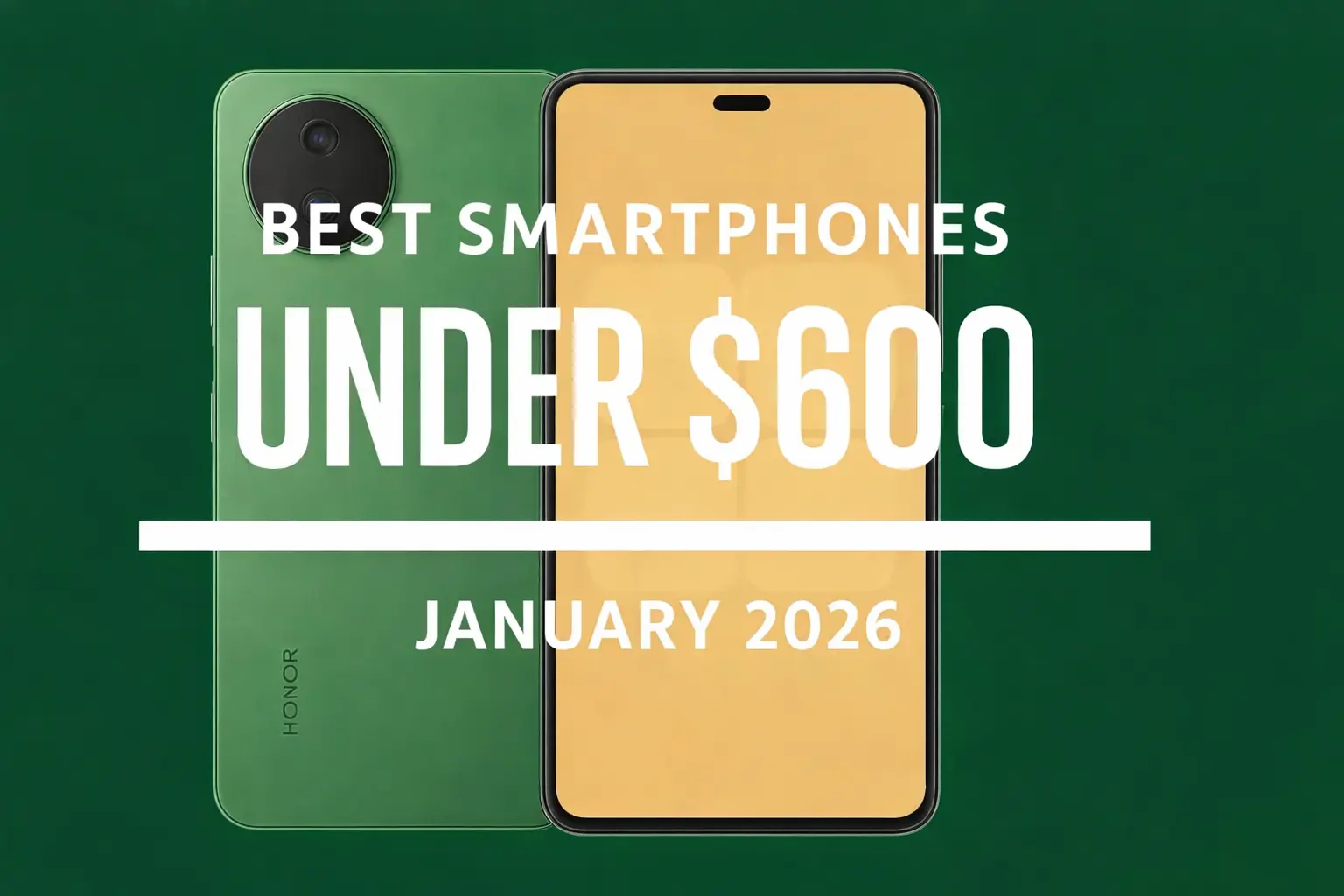
Mobile phones under $600 now offer strong
value in 2026 and there are now several options that comes with fast CPU, good
displays, decent camera and big battery. This makes choice harder, not easier.
Specs may look close, yet daily use can feel very different. This article
reviews phones that stand out in this price range. Each phone earns a place by
doing some things better than others. The aim is to help buyers pick a phone
that fits daily needs without waste or regret.
OnePlus 13R
There are a
few solid phones out there, but man, the OnePlus 13R just gives off good vibes
in my book. At just $469, it's one of the cheapest on this list, but don't
sleep on it—it packs legit flagship tricks. Like pretty much every top dog
these days, it rocks a big 6.78-inch AMOLED screen pushing 2780 x 1264 pixels.

The display has fluid images and videos,
thanks to its flexible refresh rate from 1Hz to 120Hz. This feature also helps
to save the battery of this device. In terms of brightness, the screen gets up
to 4500 nits. With this, even under high sunlight, you get to see the smallest
details in the screen.
A solid display is handicapped without a
strong CPU, and OnePlus did not disappoint in this regard. It equipped the 13R
with the flagship 4nm SD8 Gen3 SoC coupled with 12GB or 16GB of RAM and 256GB
or 512GB of internal storage.
In the camera department, there is a 50MP main
camera, not the biggest in the market but just enough for good images and
videos. Thankfully, this device supports OIS which makes images and videos more
stable. It also has a 50 MP 2 x zoom lens, and an 8 MP wide lens.
Its images look sharp in good light and video
reaches 4K at 60 fps. The 16 MP front camera handles calls and clips well.
A 6000 mAh battery powers the phone and
supports 80 W fast charge. It also has IP65 seal, stereo sound, and a screen
finger scan. At $469, it offers strong speed and screen value.
Read also


Xiaomi 17
The Xiaomi 17 gets real close to flagship territory without
crossing that $600 line. It's got a 6.3-inch OLED screen at 2656 x 1220 pixels,
with refresh rate sliding from 1 to 120Hz—peaks at 3500 nits so you can
actually see it outside in bright light.

Powered by the Snapdragon 8 Elite Gen 5 on 3nm, you pick 12GB or
16GB RAM with up to 1TB storage—day-to-day stuff flies, even if you're piling
on apps and tasks.
Cameras are where it shines: three 50MP rear shooters, main one's
got OIS and Leica tuning, ultrawide for groups, 2.6x tele for reach—handles 8K
video too. Selfie cam's 50MP with 4K support.
Battery's a hefty 7000mAh with 100W wired, 50W wireless, even
reverse charging; IP68 rating, stereo speakers, and premium feel all around
make that near-$600 price feel like a steal.
OnePlus Turbo 6
OnePlus Turbo 6 is all about packing
serious horsepower and a monster battery without charging you an arm and a leg.
That 6.78-inch AMOLED screen runs 2772 x 1272 pixels, and some versions crank
the refresh rate to 165Hz for super fluid motion.

You've got two chip flavors: the
regular Turbo 6 rocks Snapdragon 8s Gen 4, while the Turbo 6V steps down to
Snapdragon 7s Gen 4—RAM from 8GB to 16GB with up to 512GB storage keeps
everything snappy.
Cameras are straightforward—a 50MP main
with OIS plus a basic 2MP monochrome on back for 4K/60fps video; 16MP front
does 1080p fine.
But man, the star is that 9000mAh
battery—it goes forever on a charge with 80W fast top-up, IP69K rating shrugs
off water like nothing, and at around $300 it's a ridiculous deal for power
users.
Google Pixel 10
If you're into killer cameras and software
that just works without any junk, the Pixel 10 is your phone. 6.3-inch AMOLED
screen does 1080 x 2424 pixels with either 60 or 120Hz refresh—peaks at 3000
nits for HDR too.

Under the hood, you've got the Tensor G5 chip
on a 3nm process, 12GB RAM, and up to 256GB storage—Android 16 just flies
smooth with those quick Google updates straight from the source.
Rear cams are a 48MP main, 13MP ultrawide, and
10.8MP with 5x zoom; shots come out looking real with killer detail and
balanced lighting, plus 4K/60fps video no sweat. Selfie cam handles 4K too.
The phone includes IP68 seal, stereo sound,
face unlock, and a screen finger scan. Battery size is 4970 mAh with wired and
wireless charge support. Price can rise high, but good deals place it near
$600.
iPhone 16e
iPhones don't come cheap, and yeah, the
16e ain't some fire sale either—but it's the bargain base option in the whole
16 lineup if you're dead set on Apple's world.

That thing's got this sharp 6.1-inch
OLED screen, 2532 by 1170 pixels at 460 ppi—bright enough at 800 nits for
regular messing around, and it cranks to 1200 nits when HDR kicks in to really
make those videos shine.
It's powered by that slick 3nm A18
Bionic with two high-speed cores and four for saving juice, so apps fire up
quick, everything moves smooth as hell, iOS 18 just works without the bloat,
and you're looking at years of updates that keep it relevant way past most
other phones.
Back camera's solid 48MP wide-angle
with stabilization and 2x zoom—pulls in good detail and colors whether it's
sunny or dim; shoots 4K at 60 with HDR too. Selfie's a 12MP shooter that
matches on video, and Face ID? Snaps you in fast and secure.
Toss in IP68 for not freaking out over
splashes, punchy stereo speakers, barely 167 grams so it feels nice in hand,
and a battery good for 26 hours straight video—solid pick at $599 for anyone
who wants the Apple ease, tight security, and stuff that doesn't crap out quick.
Final notes
Phones under $600 now cover many needs. Some
focus on camera quality, others on speed or long battery life. There is no
single best phone for all users.
The right choice depends on daily use. Users
who care most about camera work should look at the Pixel 10 or Xiaomi 17.
Buyers who want speed and fast charge may prefer the OnePlus 13R. Those who
want long battery life at low cost will find the Turbo 6 hard to beat. Users
who want long update support and ease may prefer the iPhone 16e. A good choice starts with clear needs, not
just specs.
Popular News


Latest News
Loading