Valve Is Back in the Game: A New Steam Machine, Controller, and VR Headset Are Coming
gaming consoleThursday, 13 November 2025 at 15:52
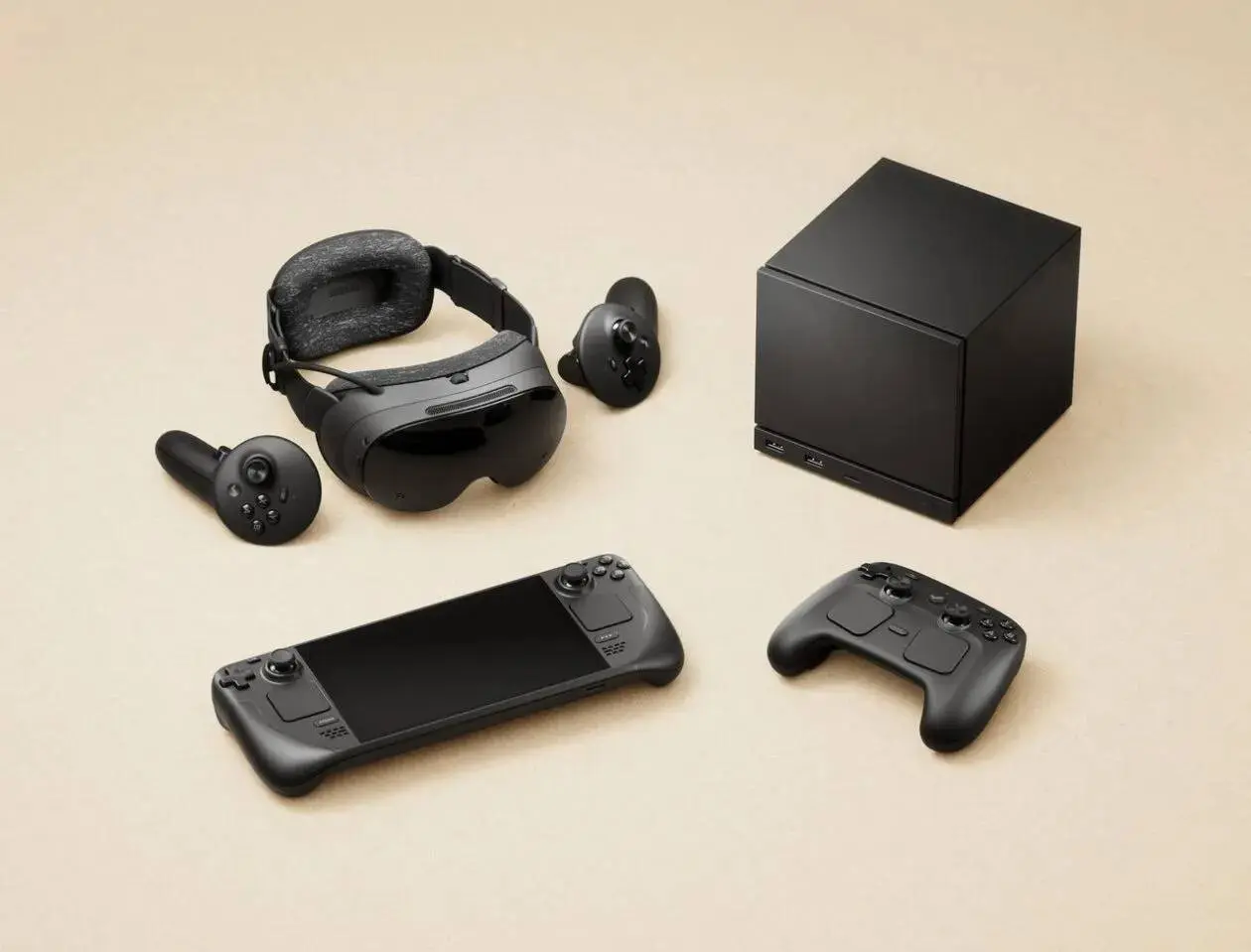
After years of quiet, Valve is stepping back into hardware — and not timidly. The company has just revealed a new Steam Machine, a Steam Controller, and a fresh VR headset called Steam Frame. All three run on SteamOS 3, and together they show that Valve hasn’t given up on its dream of bringing PC gaming to the living room.
The Steam Machine itself looks compact — a six-inch matte black box — but inside, it hides some serious muscle: an AMD Zen 4 CPU (six cores, twelve threads) paired with RDNA3 graphics, 16 GB of DDR5 memory, and up to 2 TB of NVMe storage. In practice, that means it should handle 4K at 60 fps without breaking a sweat. It’s quiet, efficient, and, in a very Valve way, still completely open. You can use it like a console or flip straight into desktop mode for regular PC work.

A Second Try, a Different Market
Valve has tried this before, back in 2014, and it didn’t go well. Too expensive, too confusing, too soon. But the gaming world has changed. With the Steam Deck proving there’s demand for flexible hardware, Valve now sees another shot — and this time it looks far more confident.

Pricing hasn’t been announced yet, though early chatter suggests something above the old $499 entry point but well below the 2014 high-end tier. Launch is expected in early 2026.
A New Controller That Actually Feels Right
The original Steam Controller divided people. Some loved its trackpads, others hated them. Valve says this version fixes that. The new controller combines dual haptic motors, magnetic TMR joysticks, and touch-sensitive pads, while an internal six-axis IMU enables precise motion control. There’s USB-C charging and roughly 35 hours of battery life — a big step forward for anyone who remembers swapping AAs every week.

Steam Frame: A True Wireless VR Headset
Then there’s the Steam Frame, arguably the most interesting reveal. It’s completely wireless, powered by Qualcomm’s Snapdragon 8 Gen 3, and uses 2160 × 2160 LCD panels per eye, up to 144 Hz, with a 110-degree field of view. That’s high-end spec territory. The trick, though, is dynamic foveated rendering — the headset only renders what you’re directly looking at, saving battery and boosting smoothness.
It even runs SteamOS 3 on its own, meaning it doesn’t need a PC. That’s a big statement: Valve wants VR that works anywhere.
Why Now Makes Sense
Industry analysts seem to agree that Valve’s timing is surprisingly good. “This feels like the right moment,” said analyst Brandon Sutton, noting that PlayStation and Xbox are shifting toward streaming and subscription ecosystems. Others compare the idea to the Steam Deck — niche at first, but with cult-level staying power.
Of course, as always, the price will decide everything. Valve can build powerful, elegant hardware — but if it costs too much, it risks being another tech curiosity rather than a breakout hit.
A decade after its first failed attempt, Valve seems ready to try again. This time, the company isn’t chasing consoles — it’s quietly building its own category.
Key Takeaways
- Valve returns to living-room gaming with a compact Steam Machine running SteamOS 3.
- Hardware includes AMD Zen 4 and RDNA3 for smooth 4K/60 fps gaming.
- A redesigned Steam Controller focuses on accuracy and haptics.
- Steam Frame is a standalone wireless VR headset powered by Snapdragon 8 Gen 3.
- Analysts call Valve’s comeback “smartly timed” — if the pricing lands right.
Popular News


Latest News
Loading