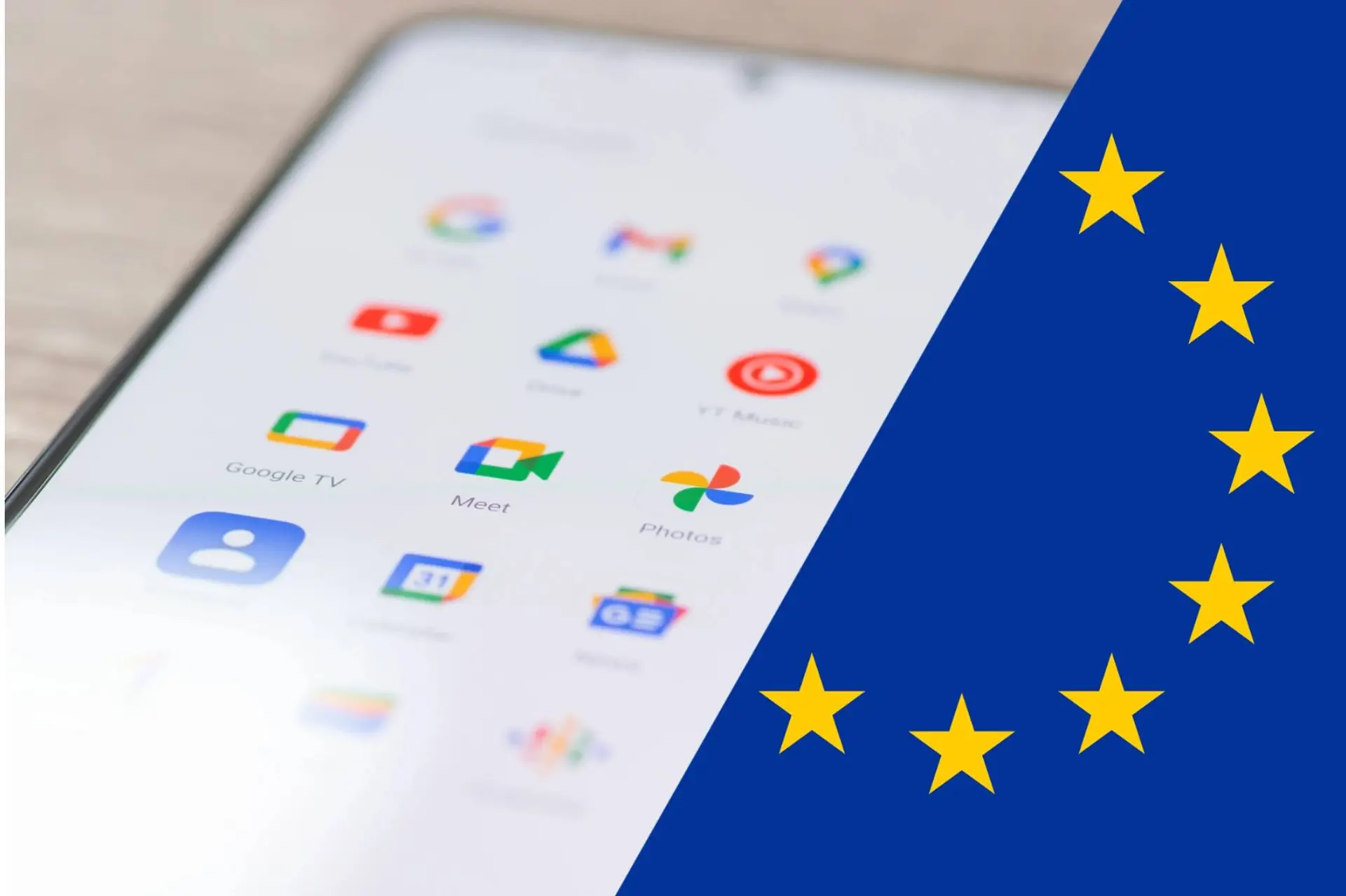
The European Commission issued two binding decisions against Google on July 16 under the Digital Markets Act. The orders are significant. Google must open Android's system features to third-party AI assistants on equal terms with Gemini — and share anonymized search data with rivals. Google is unhappy and has said so publicly.

Summary
- Two binding DMA decisions: First targets Android AI access — third-party assistants must get the same system-level features as Gemini. Second targets search data — Google must share anonymized query, click, and ranking data with rivals.
- 60% of EU Android users affected: The Commission found that 60% of EU users find third-party AI assistants less attractive than Gemini specifically because those assistants can't access the same Android functions.
- Voice activation required: Third-party AI assistants must be activatable by voice, similar to "Hey Google," and must be able to take actions in apps — booking taxis, suggesting chat replies, reading location history.
- Deadlines: Search data sharing by end of 2026. Android AI interoperability changes by June 2027.
- Google pushed back hard: Kent Walker called the decisions a threat to "vital privacy and security guardrails for millions of Europeans."
What Google Has to Do — and When
The Android ruling is the more operationally complex of the two. Right now, Gemini has deep hooks into Android: it can read messages, access location history, interact with other apps, trigger system functions, and respond to voice commands. Third-party assistants — ChatGPT, Claude, Perplexity, and others — can be set as defaults but can't do most of that. The EU's decision says that has to change by June 2027.
The search data ruling has an earlier deadline. By January 2027, Google must begin sharing anonymized search data with some rivals. The Commission specified that only vetted companies with genuine plans to improve their search offerings are eligible — and Google retains the right to assess whether a specific applicant poses privacy or security risks before granting access. A pricing formula and transparent access process are also laid out in the ruling.
Read also
Google's Objection
Google fiercely opposed the decision, warning that granting deep, system-level permissions to external apps bypasses hardware safety guardrails and risks a security catastrophe. The company's global affairs president Kent Walker described the decisions as undermining privacy protections — framing the dispute as a security issue rather than a competition issue. The Commission disagrees. Its position is that privacy and security protections can be maintained while still granting equal access.
For EU Android users, the practical outcome — if Google complies — is that setting Claude, ChatGPT, or any other assistant as default becomes genuinely useful rather than a cosmetic choice.
What This Means in Practice
The assistant could respond to voice commands, read context from apps, and take actions on your behalf. Currently, that only works reliably with Gemini.
For Google, this is a fundamental challenge to one of its most valuable competitive advantages: the integration between its AI services and the Android platform it controls. The June 2027 deadline gives the company roughly eleven months to comply.
Popular News





Latest News
Loading