Meta VR Glasses Weigh Just 100g and Are the First IMAX Enhanced VR Device
MetaThursday, 24 September 2026 at 10:34
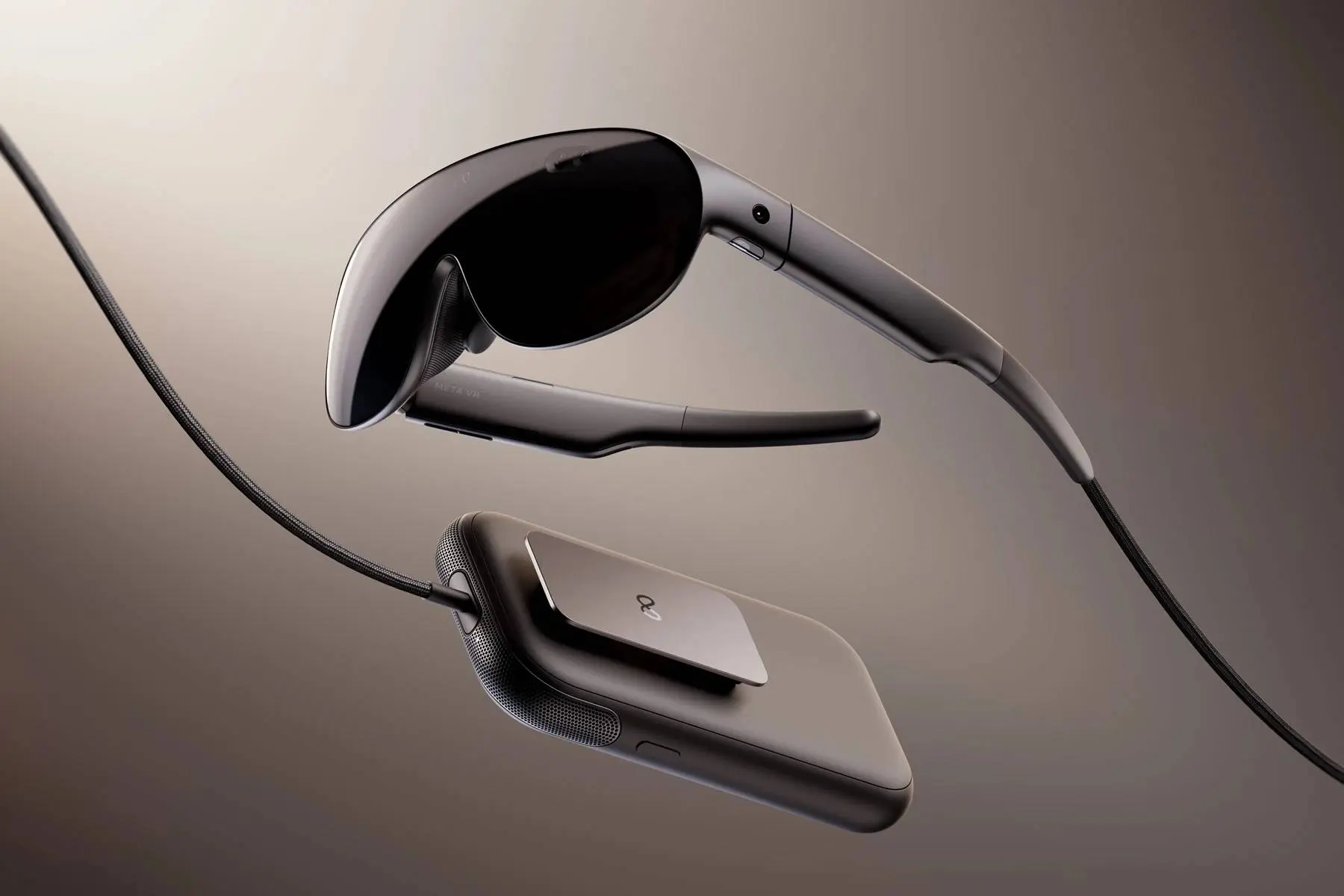
Meta has unveiled a very different kind of VR device. The new Meta VR Glasses look more like a pair of glasses than a traditional headset, and they weigh only about 100 grams.
That is the headline feature. Meta has moved the processor, battery and storage into a separate pocket-sized device called the puck. The glasses connect to it with a thin optical cable.
Meta says this design makes the glasses about five times lighter than the Quest 3. The company wants users to wear them for a full movie, a work session or a gaming session without the weight of a normal VR headset becoming a problem.

The glasses weigh around 100 grams
The Meta VR Glasses use a magnesium alloy frame. There is no large strap or heavy computer sitting on your face. The main unit holds the displays, cameras and sensors. The separate puck handles the heavy work.
That puck weighs around 300 grams. It also contains the Snapdragon Reality Elite chip, 12GB of RAM and 128GB of storage. There is also a microSD slot, with support for up to 1TB of extra storage.
So the complete system is not a 100-gram computer. That is worth making clear. Still, moving the heavy parts away from your face could make a big difference during long sessions. This is probably the most interesting idea behind the new device.
A 5K micro-OLED display
Meta has also gone big on the display. The VR Glasses use two micro-OLED panels with a resolution of 2,412 × 2,288 pixels per eye. They run at up to 120Hz and offer 37 pixels per degree.
That should make text much sharper than on many older VR headsets. The displays also support HDR and Dolby Vision. Meta says the glasses use custom pancake lenses that were designed for this small form factor. There is one trade-off, though.
The field of view is around 70 degrees horizontally and 66 degrees vertically. That is much narrower than the Quest 3.
So the smaller design comes with a compromise. You get a much lighter device, but you do not get the same wide VR view as a traditional headset.
The first VR device with IMAX Enhanced
This is another major part of the launch. Meta VR Glasses are the first VR device to receive IMAX Enhanced certification.
Meta is using this to turn the glasses into a personal cinema. Users will be able to watch selected movies in 3D and, in supported content, use the wider IMAX aspect ratio. Meta also says Disney+ will offer selected 3D movies on the platform. Other services, including Prime Video, YouTube, ESPN, Plex and Crunchyroll, are also being added to the platform.
This is where I think the 100-gram design makes the most sense. Wearing a heavy VR headset for a 20-minute demo is one thing. Wearing it through an entire movie is very different.

If Meta can make these glasses comfortable enough for two-hour sessions, the cinema idea could be one of their strongest uses.
No controllers are needed for many tasks
Meta is also pushing hands-free control. The glasses track your eyes and hand movements, so you can open apps, control content and move around the interface without holding a controller.
More than 75 games are expected to support hand gestures at launch. Xbox Cloud Gaming will also bring access to a much larger game library. Controllers will still be an option for games that need them. But the idea is that you do not have to carry them around for everyday use.
That makes sense for a device designed to look and feel more like glasses.
It can become a private office
Meta is not positioning the VR Glasses only as a gaming product. The company says they can create a multi-screen virtual workspace around you. You can place several large virtual displays wherever you want.
There is another clever feature. Any flat surface can become a virtual keyboard or touchpad. You can still see your real desk through the color passthrough system while using the virtual screens.
This could make the glasses useful on a plane, in a hotel or even in a coffee shop. For me, this is probably more convincing than the usual VR productivity pitch. A light device that gives you several private screens could be genuinely useful when you do not have room for a laptop setup.
Battery life is around three hours
The external puck also contains the battery. Meta claims up to three hours of continuous high-resolution video playback. The puck supports 45W fast charging, and the system can remain connected to power while in use.
Three hours is not class-leading battery life. But Meta is clearly aiming at specific use cases rather than all-day wear. A movie, a flight or a work session fits the claimed battery life much better than a full day of mixed reality.
Meta is also adding AI
The Meta AI assistant is built into the operating system. Users can control the glasses with voice commands, eye movements and hand gestures. Meta says the system can open apps, play content, change the workspace and answer questions.
There is also a new Hologram feature for video calls. It can create a more realistic digital version of the user, complete with facial expressions and spatial audio.

That feature will be interesting to watch, although I suspect the cinema and workspace features will matter more to most buyers.
Price and release date
Meta VR Glasses will cost $1,299.99 in the US. The company plans to launch them in spring 2027. Meta has not yet announced final pricing for every market.
At $1,299.99, these are not cheap. They are also not trying to compete directly with the $600 Quest 3. The VR Glasses are a more premium product, with a very different design and a much higher focus on comfort.
A very different Meta headset
The Meta VR Glasses are one of the more interesting VR products Meta has shown in years. The 100-gram glasses are the main reason. Moving the processor and battery into a separate puck is a simple idea, but it solves one of the biggest problems with traditional VR headsets: weight on your face.
There are trade-offs however. The field of view is smaller, the battery lasts around three hours and you still have to carry the puck.
But the overall idea makes sense. For me, the most exciting part is not gaming. It is the combination of a personal IMAX-style cinema and a private multi-screen workspace in something that looks much closer to normal glasses than a VR headset.
At $1,299.99, Meta still has to prove that this lighter form factor is worth the premium. But if the comfort is as good as Meta claims, the VR Glasses could show us where the next generation of personal VR devices is heading.
Popular News


Latest News
Loading