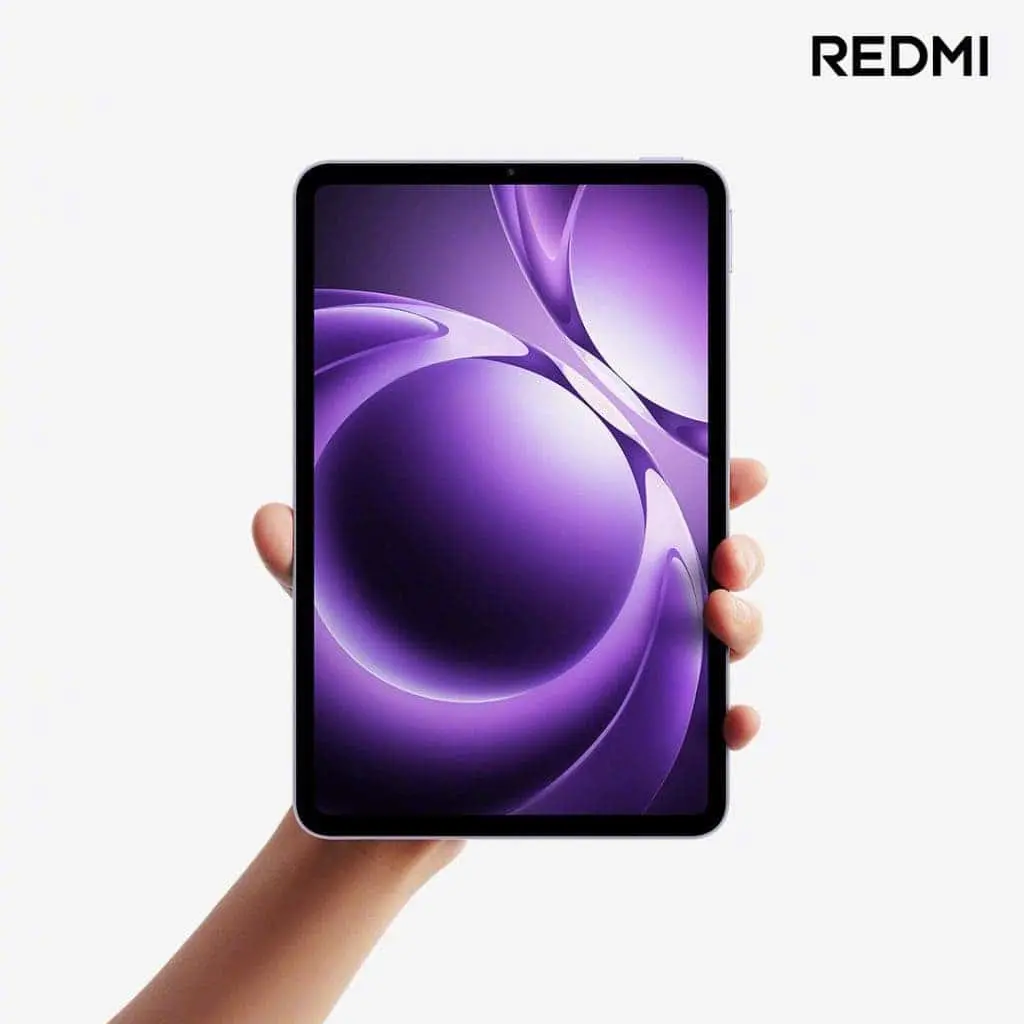
The leak phase is over. This is a confirmed product with a confirmed launch date.

Summary
- Redmi has officially confirmed the K Pad 2 launches in China on April 21, 2026, alongside the K90 Max and Redmi Book Pro 2026, powered by the Dimensity 9500 with a 15,300mm² vapor chamber cooling system.
- The 8.8-inch LCD display runs at 165Hz with 3K resolution, 1,100 nits peak brightness, and a 540Hz touch sampling rate — with Redmi specifically tuning the panel for gaming performance.
- A 9,100mAh battery with 67W fast charging, dual X-axis vibration motors, and Sound by Bose-tuned full-range dual speakers round out the core hardware package.
- The metal unibody chassis comes in Space Silver, Deep Black, and Electric Purple, with Redmi claiming support for 165fps gameplay in select titles.
- Expected launch price is over CNY 3,000 (~$440), positioning it directly against the Lenovo Legion Tab Gen 5; internationally, it's expected to appear as the Xiaomi Pad Mini 2, following the first-generation K Pad's global rebranding.
The compact tablet segment has been unusually competitive in 2026. Lenovo's Legion Tab Gen 5, Nubia's RedMagic gaming tablet, and now this. Redmi isn't being subtle about who the K Pad 2 is aimed at.
The Display Choice: LCD at 165Hz vs. Everyone Going OLED
Here's the discussion worth having. The K Pad 2 sticks with LCD rather than upgrading to OLED, which has drawn mixed reactions. The argument for LCD here is straightforward: at 165Hz with 1,100 nits peak brightness and a 540Hz touch sampling rate, the panel prioritizes motion clarity and gaming responsiveness over color depth and contrast. OLED would look better for movies. LCD at 165Hz feels better during gameplay — particularly at the frame rates this device is targeting.

The 1880×3008 resolution at 8.8 inches delivers a sharp image regardless. At the expected price point, LCD also keeps costs in check in a market where memory prices are already pushing everything upward.
Bose on a Tablet: Actually More Interesting Than on a Phone
The Sound by Bose integration — confirmed officially by Redmi — uses full-range drivers with a 2CC audio cavity, promising clear treble, rich detail, and deep bass. It's the same partnership that debuted on the K90 Pro Max, but applying it to a tablet format gives the speakers more physical space to work with. Dual 1620-unit symmetrical drivers mean equal volume from both sides regardless of how you hold the device. For a tablet primarily used for media consumption and gaming, this matters more than it would on a phone.

The dual X-axis motors are a companion addition — haptic feedback on tablets is often an afterthought, so the explicit inclusion of dual motors at specified 0815 dimensions signals Redmi is taking the tactile experience seriously.

Thermal Architecture and the Centralized Chip Layout
The 15,300mm² vapor chamber is large even by flagship phone standards, let alone for an 8.8-inch tablet. Redmi specifically mentions a centralized chip layout — placing the Dimensity 9500 at the geometric center of the board rather than offset toward one edge — as a heat distribution strategy. The practical goal is maintaining 165fps frame rates in supported titles across extended gaming sessions without throttling, which requires both the large VC and consistent airflow architecture.
Popular News


Latest News
Loading