It’s rare that a gaming tablet surprises me anymore. I’ve used just about everything—from bulky Android slabs to the sleek iPad Pro—but the RedMagic Astra caught me off guard. It doesn’t scream for attention the way most gaming hardware does. Instead, it feels quietly confident. Compact, sharp, and powerful enough to make you question what exactly a “tablet” should be in 2025.

I’ve been daily-driving the 16GB RAM / 512GB storage version for about three weeks now, and I can safely say: this isn’t just another niche device built for benchmarks. It’s one of the few tablets that genuinely nails the balance between portability, performance, and polish—though, of course, it’s not without flaws.
Design & Build: Understated with a Wink
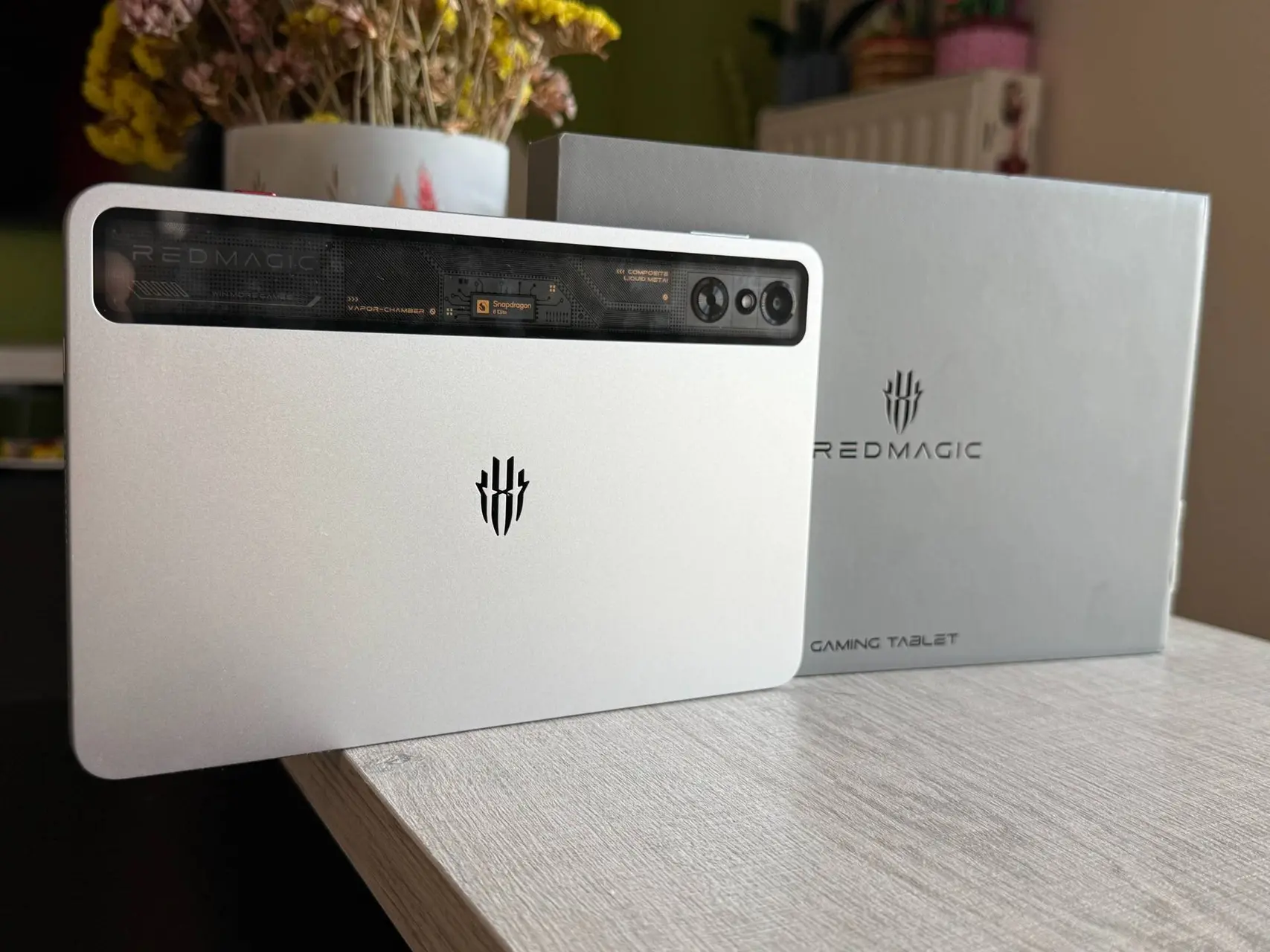
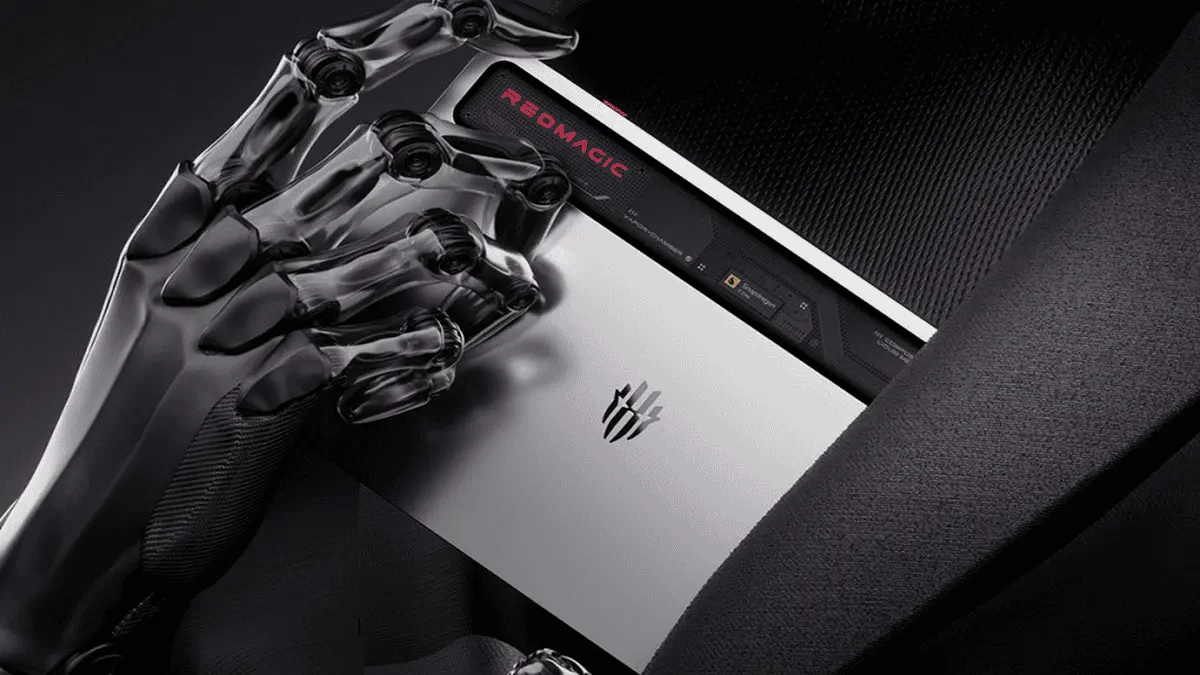
At first glance, you might mistake the Astra for a minimalist productivity tablet. Matte gray finish, sharp corners, thin bezels. But then the light hits that subtle glass window on the back, and you see a hint of circuitry—gold streaks and faint Snapdragon branding peeking through. It’s like a little wink that says, “Yes, I game.”

It feels premium too. The aluminum frame doesn’t flex, the 6.9mm thickness makes it ridiculously easy to handle, and despite being lighter than most 10-inch tablets, it feels solid in hand. I’ve tossed it into my backpack without a case more times than I’d like to admit, and it hasn’t picked up a single scratch yet.

RedMagic’s design language has always leaned into the “gamer” aesthetic, but the Astra tones that down beautifully. It’s confident without being loud. The kind of device you can pull out at a coffee shop without getting side-eye from people wondering why your tablet looks like a spaceship.

That said, I did miss one thing: no SD card slot. For a device this performance-driven, that’s an odd omission. I keep my larger Steam Deck stuffed with games on expandable storage, and it feels limiting that I can’t do the same here.
Display: OLED Brilliance That Genuinely Impresses
The first time I fired it up, I caught myself saying “wow” out loud. The 9.06-inch OLED panel on the Astra is flat-out gorgeous. The 2400x1504 resolution, 165Hz refresh rate, and peak brightness of 1600 nits make everything look alive. Games like Diablo Immortal and PUBG Mobile feel fluid in a way that’s almost hypnotic.

Even movies pop. Colors are vibrant but not oversaturated. Blacks are deep, and details stay crisp even under harsh daylight. Watching Blade Runner 2049 on this thing was kind of perfect—especially that scene with all the orange haze.
The touch sampling rate is insane too. RedMagic says it’s 2000Hz, and honestly, I believe them. I never felt even the slightest delay between touch and response. It’s one of those things you don’t think about until you go back to a slower screen and realize how spoiled you’ve become.

If I had one gripe, it’s that adaptive brightness sometimes overreacts in dim rooms. You’ll be reading or playing late at night, and the screen suddenly drops brightness by 10–15%. It’s not a dealbreaker, but it’s a small reminder that RedMagic’s software still has rough edges.

Performance: Snapdragon 8 Elite Does Its Thing
This is where things get interesting. The Astra runs on Qualcomm’s Snapdragon 8 Elite, paired with that 16GB LPDDR5X RAM, and it shows. This thing flies.
I ran benchmarks mostly out of curiosity, but I didn’t need numbers to feel what it could do. Call of Duty Mobile stayed locked at its max frame rate. PUBG: New State ran buttery-smooth even during 100-player chaos. I pushed Genshin Impact at high settings for nearly two hours, and while the device did warm up, it never throttled noticeably.
To RedMagic’s credit, their vapor chamber cooling system seems genuinely effective. I’m not saying it stays cold—it doesn’t—but it keeps heat evenly distributed. You don’t get that uncomfortable “hot corner” that many gaming phones suffer from.

For kicks, I even docked it via its USB-C 3.2 Gen 2 port to an external 4K monitor and a mechanical keyboard. It worked shockingly well. With some cloud gaming through GeForce NOW and a few emulators, the Astra started feeling less like a tablet and more like a micro-console.

Still, I did notice the RedMagic OS 10.5 feels a little… half-finished. It’s based on Android 15, but with a few quirks. Some menus still label the device as a “phone.” Others have translation oddities. It’s not buggy, but you can tell software polish isn’t quite on par with Samsung or Google.

Audio: Loud Enough, Just Not Deep Enough
Audio is where the Astra’s compact size finally shows its limits. Dual stereo speakers—yes—but only just.
They’re loud, no question about that. Watching YouTube or playing a quick round of Honkai: Star Rail on the couch, I rarely felt the need for headphones. Dialogue is clean, mid-tones are fine, and clarity is good. But when you start looking for bass, there’s not much there.

RedMagic’s larger Nova tablet has a four-speaker setup, and you can definitely hear the downgrade here. Bass notes sound flatter, explosions lack that low-end rumble, and if you accidentally cover the bottom speaker with your hand while gaming (which you will), the sound goes instantly muffled.
I get it—there’s only so much you can fit into a 9-inch chassis—but for a gaming device, it’s still a weak spot. I’ve been using my Sony XM5s via Bluetooth most of the time anyway, but it’s something to keep in mind.

Battery Life: Compact but Surprisingly Capable
I wasn’t expecting much here. An 8,200mAh battery in a small tablet with an OLED display and high refresh rate usually means short endurance. But somehow, the Astra manages to stretch its legs.

In my regular routine—some gaming at night, YouTube in the morning, emails, and maybe a movie or two—it lasted around two and a half days on a single charge. When I gamed heavily, say two hours of Genshin Impact plus streaming, it dropped to about a day and a half. That’s still solid.
Charging is quick too. The 65W USB-C charger takes it from zero to full in roughly 50 minutes. It’s not quite laptop-fast, but definitely faster than the iPad Air or Galaxy Tab S10.

Camera that does the job!
The camera setup on the RedMagic Astra feels more like an afterthought than a headline feature — and that’s fine. You get a 13MP rear shooter and an 8MP front camera, both serviceable for quick snapshots or video calls but nothing close to flagship quality. Photos in daylight are decent, with fair detail and accurate color, but low light brings noticeable grain and soft edges. The front camera does well enough for Zoom meetings, though it tends to overexpose backgrounds. Honestly, it’s a camera you’ll use out of convenience, not creativity — which makes sense for a tablet that’s clearly built for gaming first.
Software & Usability: The RedMagic OS Puzzle
RedMagic OS 10.5 feels like a weird mix of ambition and leftover design choices. The core Android 15 experience is smooth, clean, and responsive—but RedMagic’s own apps? Hit or miss.
The Game Space feature is a good example. You flip a little red toggle on the side and it launches a full dashboard showing your installed games, FPS counters, performance modes, and even system temps. It’s handy. But it also looks like something from 2019—blocky fonts, dated icons, and a few UI inconsistencies.
There’s also a bit too much bloatware. Nothing malicious, just filler apps you’ll immediately uninstall. Thankfully, everything’s removable. Still, I wish they’d take a page from Nothing OS or Pixel UI: simple, minimal, confident.
Real-World Use: Portable Power Done Right
Here’s what’s funny: the Astra’s best feature isn’t its raw performance—it’s its form factor.
I’ve carried tablets before that felt like they were fighting me for space in my bag. The Astra? It just fits. On a plane, on a couch, or in bed, it’s easy to hold for long sessions. It’s small enough to use in portrait without feeling awkward but big enough for a solid gaming experience.

I used it during a recent trip as both a Netflix viewer and a remote workstation (via Chrome Remote Desktop), and it handled both with ease. Honestly, I’ve barely touched my laptop since.
The 16GB of RAM seems like the sweet spot. Multitasking never stutters. You can run two apps side-by-side—Discord and YouTube, for example—without breaking a sweat.

Still, it’s not perfect. The lack of microSD is frustrating, especially since 512GB can fill up faster than you think if you’re downloading large game files or media. And the absence of a headphone jack still stings, though I’ve mostly adapted.
Verdict: A Small Beast That Earns Its Place
The RedMagic Astra isn’t trying to be everything. It’s not a productivity powerhouse like the iPad Pro, and it’s not a cheap entertainment slate either. It’s a performance-first, compact gaming tablet for people who care about speed and display quality above all else.

At €649.00 for the 16GB/512GB version, it’s not cheap. But when you compare it to what else is out there—especially in the Android space—it’s actually kind of unmatched. The iPad Mini feels slower. The Galaxy Tab S9 FE feels cheaper. The Astra? It feels like a tablet made by people who actually play games!
If you’re the type who wants a portable gaming companion that doubles as a capable daily driver, I can’t think of a better option right now. It’s imperfect, sure. But it’s fun. And that’s something a lot of devices forget to be.
Final Thoughts
Pros
- Stunning OLED display at 165Hz
- Excellent performance with Snapdragon 8 Elite
- Solid build and comfortable grip
- Great battery for the size
- Super-fast USB-C 3.2 Gen 2 port
Cons
− No SD card or headphone jack
− Middling speakers
− Some rough edges in RedMagic OS
Popular News

Latest News
Loading