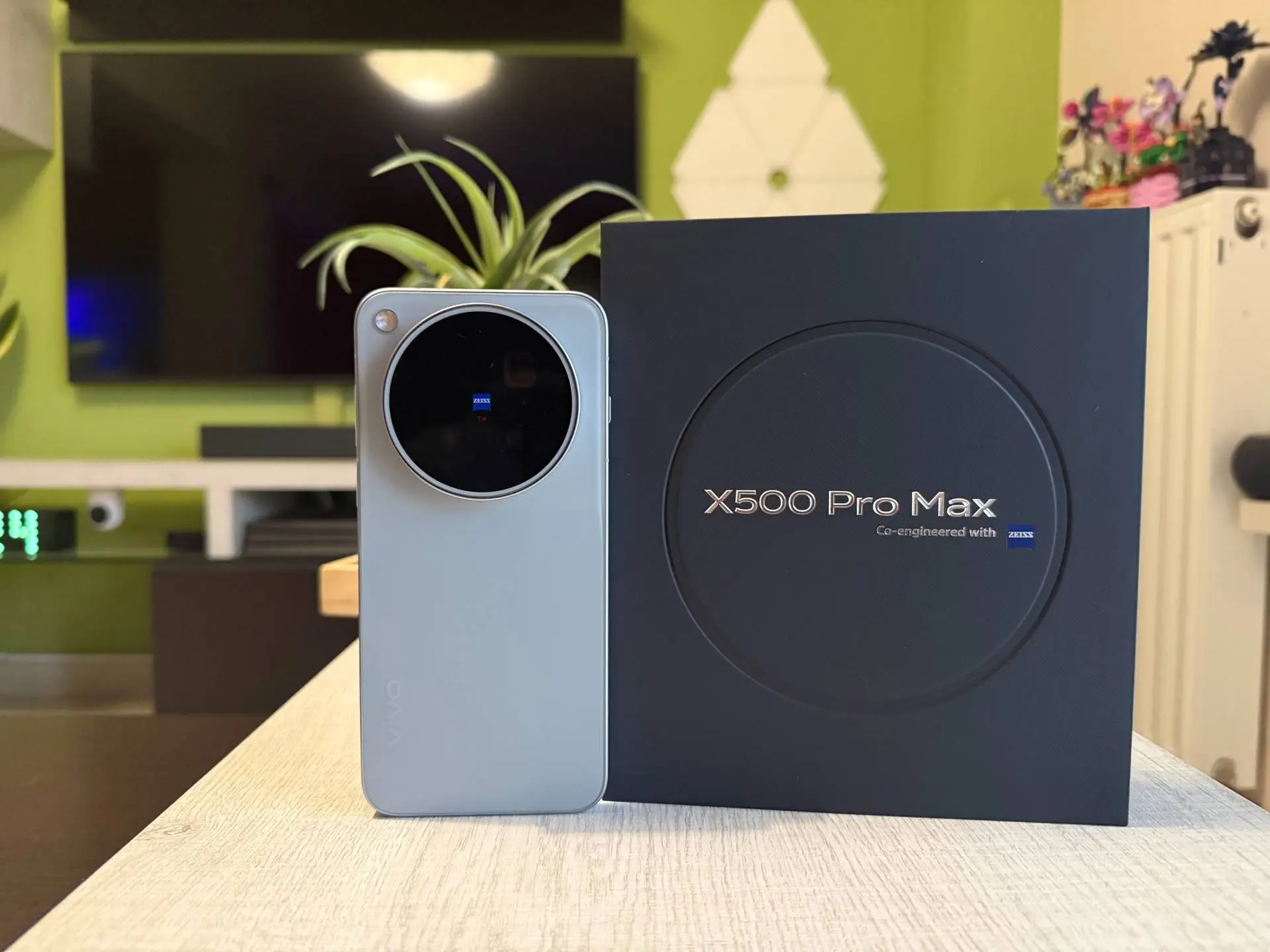
The Vivo X500 Pro Max is one of those smartphones that makes you stop and look twice. Not because it has the fastest processor or the biggest display, but because of what Vivo has done with its cameras. The company has taken mobile photography seriously for years, and its latest flagship shows just how far that idea can go.
The new model brings a Sony main camera sensor, a 200MP zoom camera and a range of photography tools that give users much more control over their pictures. It also packs a powerful MediaTek processor, a bright AMOLED display and a huge silicon-carbon battery.
On paper, this sounds like a dream phone. But there is more to a great flagship than impressive specifications. I wanted to see whether Vivo has managed to build a phone that does everything well, or whether it has focused too much on photography.
Let's take a closer look, shall we?

vivo X500 Pro Max specifications
- 6.36-inch (2750 x 1260 pixels) 1.5K / 6.85-inch (3168 x 1440 pixels) AMOLED with HDR10+, Dolby Vision, 1-144Hz refresh rate 8T LTPO display, up to 4500 nits peak brightness
- Octa-Core Dimensity 9600 Pro 2nm processor with Mali-G2-Ultra-NX GPU
- 12GB LPDDR5X Ultra RAM, 256GB / 512GB / 1TB (UFS 4.1) storage
- Android 17 with Origin OS 7
- Dual SIM (nano + nano)
- 50MP camera with 1/1.28″sensor, f/1.57 aperture, OIS, 50MP ultra-wide-angle camera with f/2.0 aperture, 50MP 1/1.95″ Sony LYT610 ZEISS APO periscope telephoto camera with f/2.52 aperture, OIS, 3.5x optical zoom, telephoto macro (X500 Pro) / 200MP 1/4″ Samsung HP0 APO periscope telephoto camera with f/2.67 aperture, OIS, 3.5x optical zoom (X500 Pro Max), Zeiss T* coating, ZEISS optics, VS1 & V3+ imaging chips
- 50MP front-facing camera with f/2.0 aperture
- In-display ultrasonic fingerprint sensor, infrared sensor
- USB Type-C audio, Stereo speakers, Hi-Fi audio
- Dimensions: 163.32×76.82× 7.95 mm (Black) | 8.12 mm (Gray, Orange);Weight: 225g (Black), 229g (Gray, and Orange)
- Dust and Water resistance (IP68 + IP69)
- 5G SA/NSA, Dual 4G VoLTE, Wi-Fi 7 802.11 be, Bluetooth 6.0, GPS: L1+L5, Beidou: B1C+B1I+B2a+B2b, GLONASS: G1, Galileo: E1+E5a+E5b, QZSS: L1+L5, NavIC: L5, USB Type-C 3.2 Gen1, NFC
- 7800mAh (X500 Pro Max) battery with 90W ultra-fast flash charging, 40W wireless charging and reverse wireless charging

Design and Display: Familiar Looks, Better Details
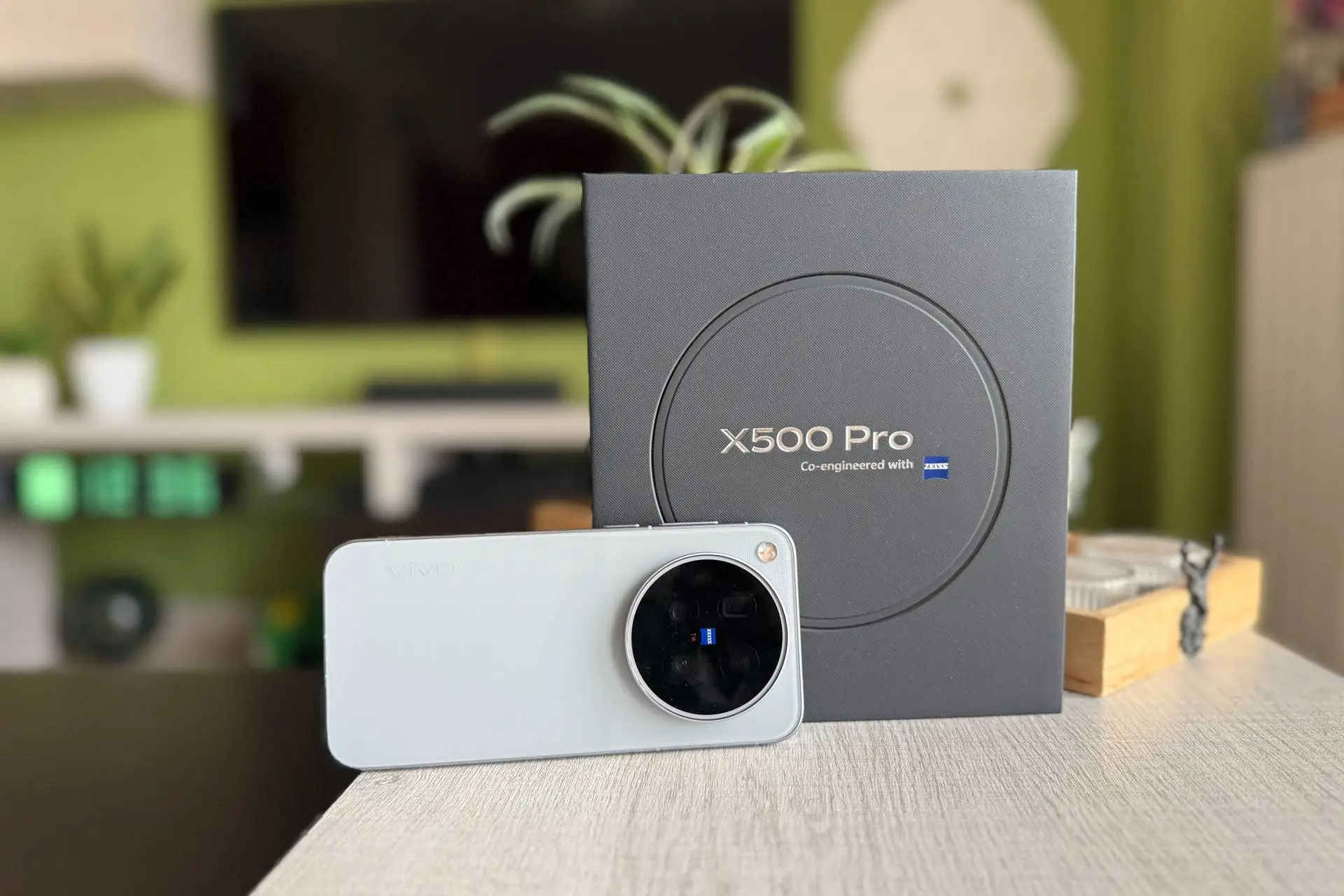
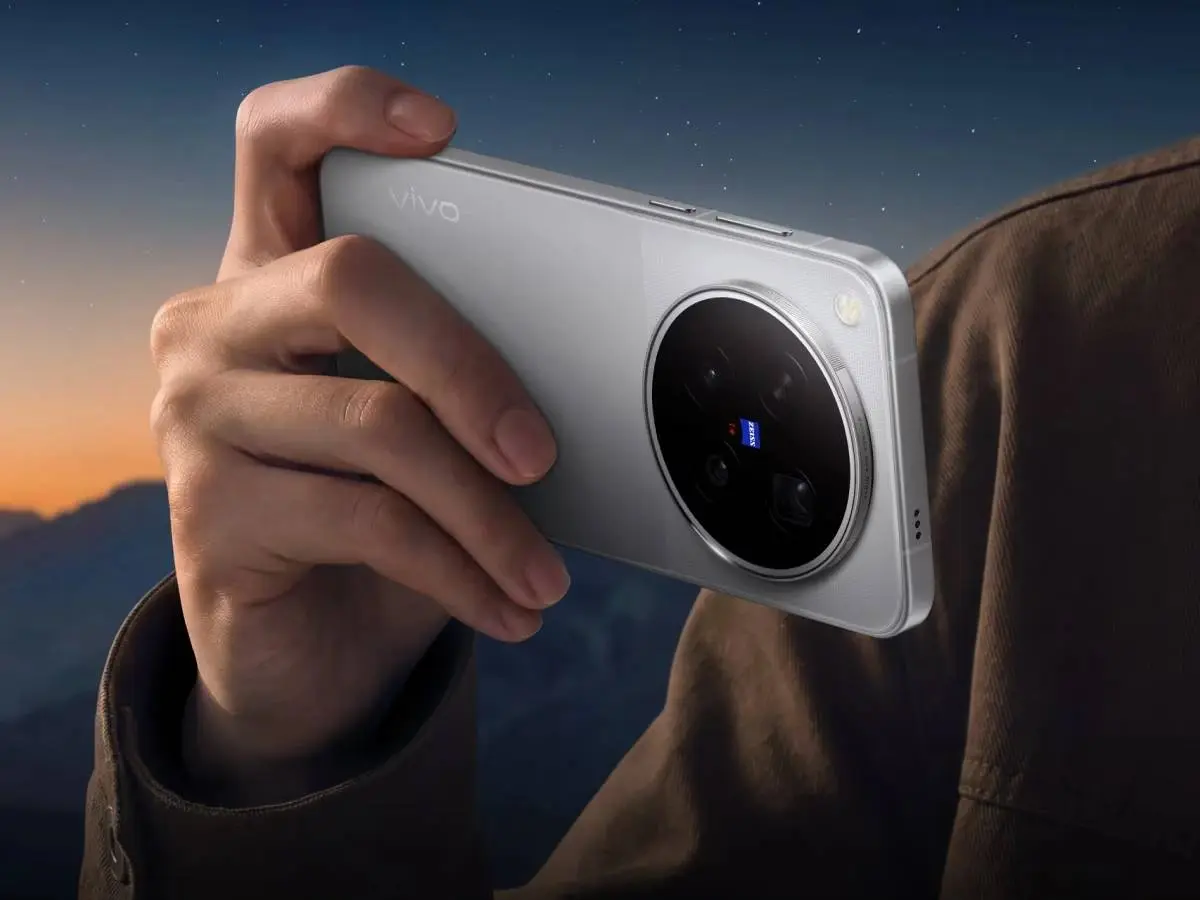
Vivo has kept the design language that made its previous flagships easy to recognise. The large circular camera module remains the main feature on the back, and it gives the phone a look that feels closer to a compact camera than a regular smartphone.
The X500 Pro Max measures 163.3 x 76.8 x 8.1mm and weighs 225 grams. It is not a small or light phone, but that is hardly surprising given the camera hardware inside. The build feels premium, while the overall design keeps things simple rather than trying too hard to stand out.
One feature I really like is the Action Button on the left side. You can assign one function to a long press and another to a double press. It is a small addition, but it can make everyday use easier.

The front is home to a 6.8-inch AMOLED display with a 144Hz refresh rate. Brightness is excellent, colours look rich and the panel offers several settings for people who are sensitive to screen flicker or strong light.
However, I am not convinced that 144Hz makes much sense on a smartphone. The difference between 120Hz and 144Hz is hard to notice during normal use. I would much rather see manufacturers spend more time improving brightness, colour accuracy and battery life.
Camera: Vivo Has Raised the Bar Again
Let's get to the main reason why this phone deserves attention. The camera system is where the Vivo X500 Pro Max really stands out, and it is not just about putting large numbers on a specification sheet.

The main camera uses a 50MP Sony LYT-L910 sensor with a 1/1.28-inch size, optical image stabilisation and an f/1.6 aperture. It also uses LOFIC technology, which helps the sensor handle very bright and very dark areas in the same picture.
In simple terms, this means the camera can keep more detail in difficult lighting. Bright skies are less likely to lose their detail, while darker parts of a photo have a better chance of looking natural. It is a useful improvement, especially when taking pictures outdoors or at night.
The results are impressive. Photos have plenty of detail, strong colours and good contrast. Vivo also manages to create a natural sense of depth, which makes portraits look more like pictures taken with a proper camera.
The 200MP periscope camera is just as interesting. It offers 3.5x optical zoom and uses a large Samsung ISOCELL HP9 sensor. This gives you more freedom when taking pictures from a distance, without having to rely on digital zoom alone.
I particularly like the fact that Vivo has not treated the telephoto camera as a secondary feature. It is a major part of the experience, and the results show why. You can take detailed close-up shots, capture distant subjects and experiment with different portrait styles.

There is also a 50MP ultra-wide camera and a 50MP front camera. This completes a very capable setup, although the ultra-wide camera is not quite as impressive as the main and zoom cameras.
Another detail worth mentioning is the range of photo styles. You can change the tone and saturation of your pictures, adjust existing filters or create your own looks. This is much more useful than having a long list of filters that all produce similar results.
Vivo also offers a Photography Kit with extra telephoto lenses. It is clearly aimed at people who want to experiment with extreme zoom, rather than the average smartphone owner. Still, I like seeing a manufacturer offer something different instead of adding yet another AI feature nobody asked for.

There is one area where the phone does not shine quite as brightly: video. The recording quality is good, but the gap between its photo and video performance is clear. Apple and Samsung still have an advantage here, especially for people who record a lot of video.

Vivo X500 Pro Max Photography Kit: Turning a Smartphone into a Real Camera
Vivo takes mobile photography a step further with its Professional Photography Kit, an accessory designed to make the X500 Pro Max feel much more like a traditional camera. The package includes an ergonomic camera grip with a physical shutter button, giving you a more secure hold and making it easier to take photos without touching the screen. You also get a filter adapter ring, which lets you attach external filters to control reflections, light and other effects.

I particularly like this approach because it adds something that software alone cannot offer: better handling and more direct control over the shooting experience. Of course, this is not an essential purchase for everyone, but for photography enthusiasts and content creators who want to get the most out of the phone's powerful camera system, it could make a real difference.

What's included
As you can obviously understand, the Vivo X500 Pro Max Professional Photography Kit is much more than a simple camera grip. It includes two ZEISS telephoto extenders: a 200mm Gen 2 lens and a 400mm Gen 2 Ultra lens, giving the phone much greater reach when photographing distant subjects. The package also comes with a dedicated photography case, an Imaging Grip with physical camera controls, a lens adapter, a mounting ring, a filter adapter ring for external filters, protective lens caps and a carrying strap. The grip makes the phone easier to hold like a traditional camera, while the physical controls offer a more natural way to shoot.
The two external lenses are the real highlight, though, as they turn the X500 Pro Max into a much more versatile photography tool, particularly for wildlife, sports and long-distance shots

Performance: MediaTek Is No Longer the Underdog
The Vivo X500 Pro Max uses the MediaTek Dimensity 9600 Pro, built on a 2nm process. It comes with up to 16GB of RAM and UFS 4.1 storage, with options ranging from 256GB to 1TB.
In everyday use, there is little to worry about. Apps open quickly, switching between tasks feels smooth and demanding games run well. This is a proper flagship processor, even if it does not win every benchmark.
Several tests show that the chip sits a little behind Apple's latest processor and Samsung's top Snapdragon hardware in some areas. It performs well in graphics tests, though, and offers more than enough power for almost anything most people will do with a phone.
AI performance is a different story. The processor falls behind its main rivals in certain AI tests, which suggests that MediaTek still has some work to do in this area.
Does this matter today? Not much for everyday use. However, AI features are becoming a bigger part of Android, so this is something Vivo should keep in mind for future models.
OriginOS 7: Plenty to Like, Some Work Still Needed
The phone runs Android 17 with Vivo's OriginOS 7 interface. It offers plenty of ways to change the look of the phone, along with useful features for multitasking and everyday tasks.

I like the persistent clipboard and the simple gestures for switching between apps. Vivo Share is another useful addition, as it allows users to share content with other Vivo devices and even iPhones through the EasyShare app.
The interface also has plenty of wallpapers, visual effects and options to personalise the home screen. It feels modern and offers more freedom than some competing Android interfaces.
However, not everything is perfect. Some settings are difficult to find, and a few menus have poor translations. There are also pre-installed apps, although the European version is more restrained than some regional versions.
For a phone that costs well above €1,500, I expect a more polished software experience. Vivo has made good progress, but OriginOS still needs a little work.

Battery Life: 8,000mAh Sounds Better Than It Performs
An 8,000mAh battery is one of the biggest selling points of the Vivo X500 Pro Max. It uses silicon-carbon technology, which allows manufacturers to fit more battery capacity into a phone without making it much thicker.
Charging is also fast. The phone supports 90W wired charging and up to 40W wireless charging with Vivo's own compatible charger.
But here is where things get interesting. Despite its huge battery, the phone does not last as long as I would expect from such a large cell. Testing showed that it can comfortably handle a full day of use, but it does not deliver the two-day experience that the capacity might suggest.

There is a small difference between the 8,000mAh capacity listed in the specifications and the 7,800mAh figure mentioned in the review's battery discussion. Either way, this is a very large battery.
I still consider it a positive feature, but I would like to see Vivo improve power management. A battery this large should give users a bigger advantage over regular flagship phones.

Audio and Everyday Use
The stereo speakers offer clear and balanced sound. They are not the loudest speakers around, and the bass could be stronger, but they work well for videos, music and everyday use.
Haptic feedback is another strong point. The vibration feels precise when typing, moving through menus or using the camera. These details may not look important on a specification sheet, but they help make a premium phone feel more complete.

Vivo X500 Pro Max Verdict: Should You Buy It?
The Vivo X500 Pro Max is a very interesting flagship, and I think its camera system is the main reason to consider it. The new Sony sensor, the 200MP zoom camera and the advanced photo controls create an experience that few Android phones can match.
It also has a great display, plenty of processing power and a battery that looks impressive on paper. There is a lot to like here.
Still, I would not call it a perfect phone. Video recording could be better, battery life does not match expectations and OriginOS needs more polish. These are not small details when you are spending more than €1,500 on a smartphone.

My personal take is that Vivo is doing something more interesting than simply chasing benchmark records. It is building a phone for people who enjoy taking pictures and want more control over the final result. That is a much better reason to buy a flagship than another AI feature or a slightly faster processor.
If photography is your top priority, the Vivo X500 Pro Max deserves serious attention. Samsung and Apple still have reasons to compete, especially in video and software, but Vivo has made one thing clear: the best camera phone does not have to come from either of those two brands.
Popular News

Latest News