Vivo X500 Pro and Pro Max Are the First Phones With MediaTek’s 2nm Dimensity 9600 Pro
VivoTuesday, 22 September 2026 at 10:27
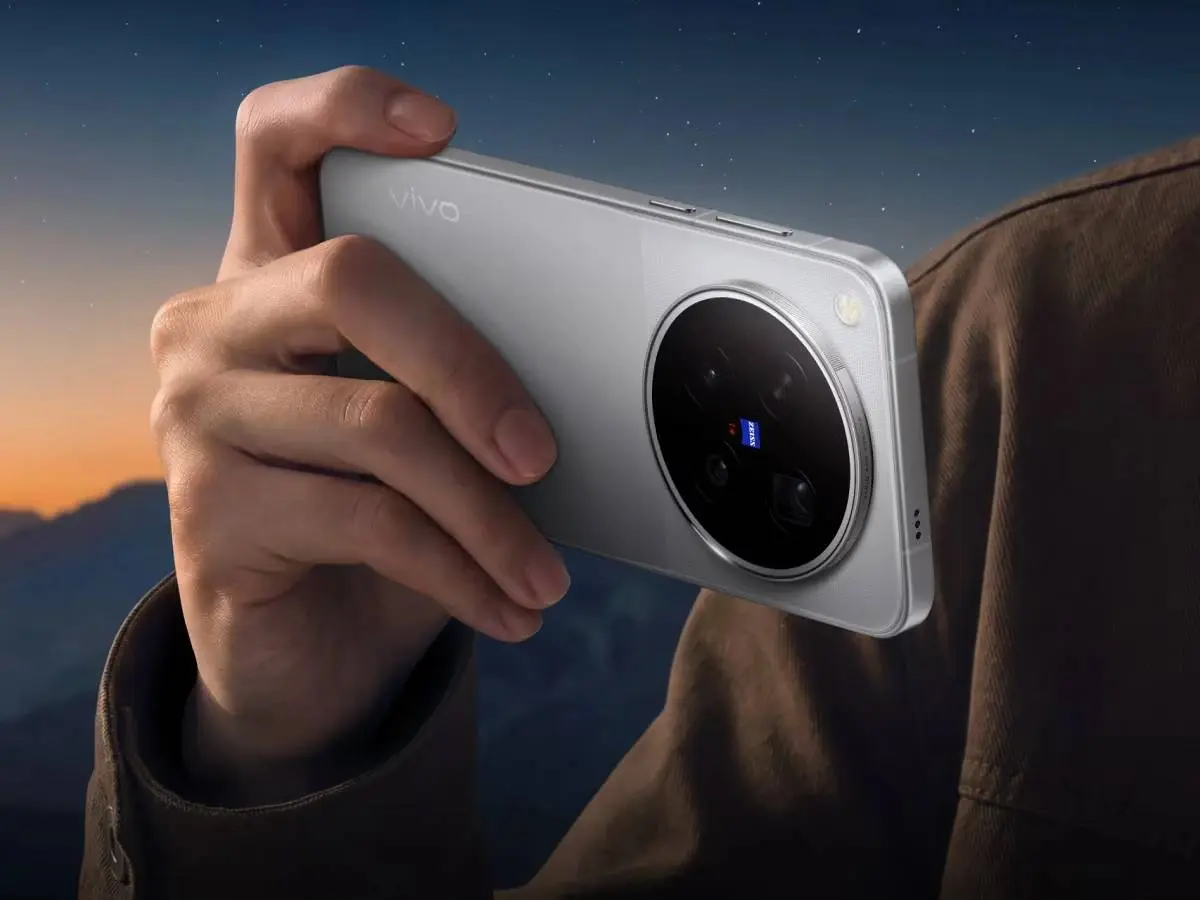
Vivo has officially launched the X500 Pro and X500 Pro Max in China, and both phones bring a major first to the Android market. After all they are the first smartphones to use MediaTek’s 2nm Dimensity 9600 Pro chipset.
The new phones also put a strong focus on cameras, with ZEISS optics, new imaging hardware and large silicon-carbon batteries. The Pro Max takes things even further with a 200MP super-telephoto camera and an 8,000mAh battery.

Vivo X500 Pro keeps things compact
The X500 Pro comes with a 6.36-inch OLED display. It uses BOE’s Q11 luminescent material and supports a 144Hz adaptive refresh rate with LTPO 8T technology.
The panel also supports Dolby Vision, HDR10+ and a minimum brightness of just 1 nit. Vivo says it has worked on the display at the chip level to improve brightness and color consistency.
Around the back, the phone has a 50MP main camera with Vivo's new BlueTouch 900 sensor. The company claims up to 17 stops of dynamic range, which should help in scenes with very bright and dark areas.
There is also a 64MP telephoto camera with an 85mm equivalent focal length, plus a 50MP ultra-wide camera. A 50MP Samsung JN1 sensor handles selfies.
The X500 Pro packs a 6,510mAh battery with 90W wired and 40W wireless charging.

X500 Pro Max takes the camera hardware further
The Pro Max is the more interesting model for me.
It has a much larger 6.85-inch 2K display with a resolution of 3168 × 1440 pixels. The BOE Q11 panel supports an adaptive refresh rate from 1Hz to 144Hz and offers 100% P3 color coverage.
The camera system is where Vivo really pushes the hardware. The X500 Pro Max has a 200MP ZEISS APO super-telephoto camera using Samsung's HP0 sensor with a 1/1.4-inch size.
It supports 4x in-sensor zoom and can work with Vivo's ZEISS G2 Ultra teleconverter. With the accessory, Vivo claims an equivalent focal length of 400mm.
The phone also uses several tracking systems to keep moving subjects in focus at long zoom ranges.
This is the kind of camera hardware that makes the Pro Max stand out. A 200MP telephoto is not new by itself, but combining it with a large sensor, ZEISS optics and a dedicated teleconverter gives Vivo a much more serious long-range camera setup.

The 2nm Dimensity 9600 Pro is the real headline
Both phones use MediaTek's new Dimensity 9600 Pro, which is built on a 2nm process. The chip uses a 2+3+3 all-big-core CPU design and has 34.5MB of cache. It is also the first mobile platform to support LPDDR6 memory and UFS 5.0 storage.
MediaTek claims a 17% increase in single-core performance and a 15% increase in multi-core performance compared with the previous generation. At the same time, peak multi-core power consumption is said to be 61% lower.
The chip also brings a new NPU 1090 for on-device AI. Vivo is using this hardware for features such as one-click highlight editing.
The imaging system is not handled by the MediaTek chip alone. Vivo combines it with its own Blueprint imaging chip, while the Dimensity 9600 Pro adds features such as 4K 120fps 10-bit Log video recording.
Read also

Price and availability
The Vivo X500 Pro starts at 6,499 yuan in China, while the X500 Pro Max starts at 6,999 yuan.
The X500 Pro Max will go on sale in China on September 24, followed by the X500 Pro on September 29. Vivo has not yet announced international pricing or a global launch date.
For me, the X500 Pro Max is the phone that deserves the most attention. The 2nm chip is an important milestone, but the combination of a 200MP super-telephoto, 8,000mAh battery and 2K display gives the Pro Max a much broader upgrade than just a faster processor.
Popular News


Latest News
Loading