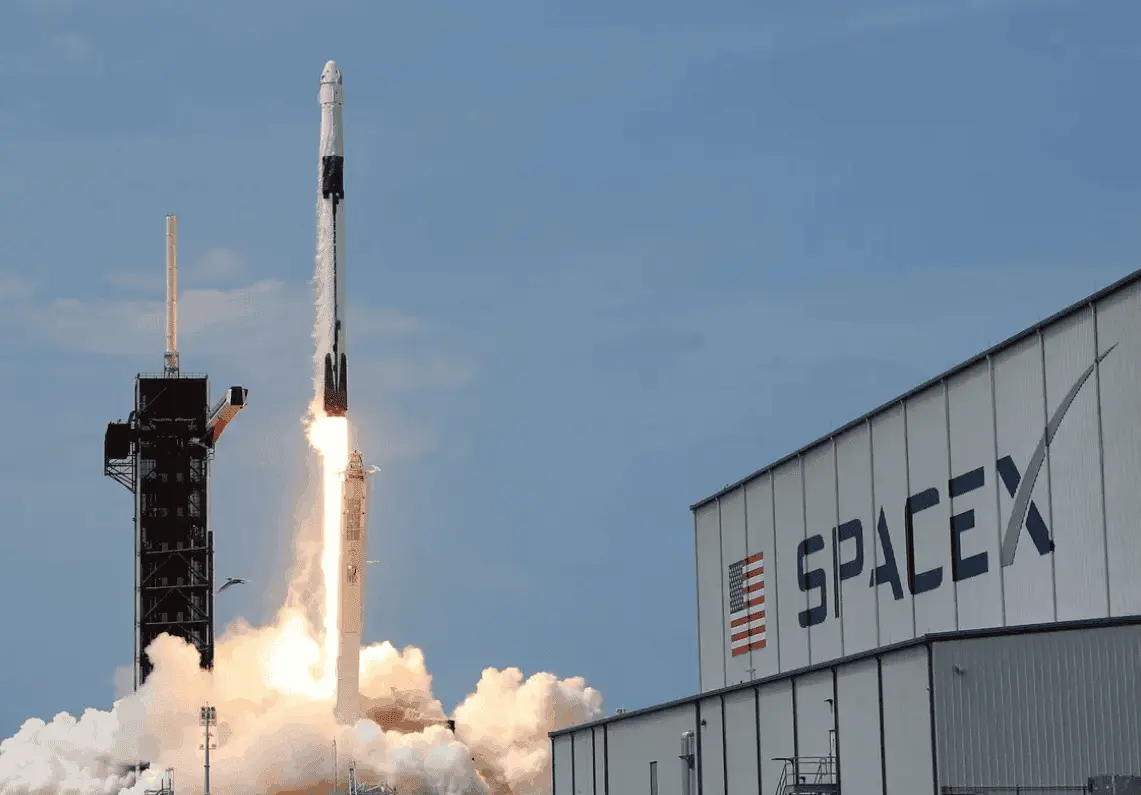
SpaceX is targeting September 18 for Starship Flight 14. The mission could mark a major change for the program.
For the first time, Starship will carry production Starlink V3 satellites. SpaceX CFO Bret Johnsen confirmed that the flight will generate revenue. He also said the company is moving from demonstration flights toward a regular production cadence.

A different kind of Starship flight
The 13 previous Starship flights focused mainly on testing the rocket. Flight 13 also carried 20 V3 Starlink satellites as demonstration payloads, but they were not part of an operational constellation.
Flight 14 is different. SpaceX plans to send production V3 satellites into orbit. It is also expected to be the first Starship flight to place satellites into a stable low Earth orbit.

The V3 satellites
Starlink V3 satellites are much more capable than the current generation. SpaceX says each one can provide more than 1 Tbps of downlink capacity. That is more than ten times the capacity of its V2 satellites.
They are also much larger. Falcon 9 cannot carry them, which makes Starship important for SpaceX's plans to expand the V3 network.
Flight 14 is expected to carry around 20 of these satellites.

The launch window
The current target is September 18 from Starbase, Texas. A tentative launch window runs from 12:15 to 14:14 UTC, or 20:15 to 22:14 Beijing time. There is also a backup window for September 19. The date is still not final, so another change is possible.

More approvals are still needed
The flight still depends on several regulatory steps. Those include approvals and filings related to the launch and the operation of the satellites.
That means September 18 should be treated as a target, not a guaranteed launch date.
Still, Flight 14 could be an important step for Starship. SpaceX is no longer using the rocket only to test hardware. It is now preparing to use Starship to deploy its own production satellites and support the wider Starlink network.

Popular News





Latest News
Loading