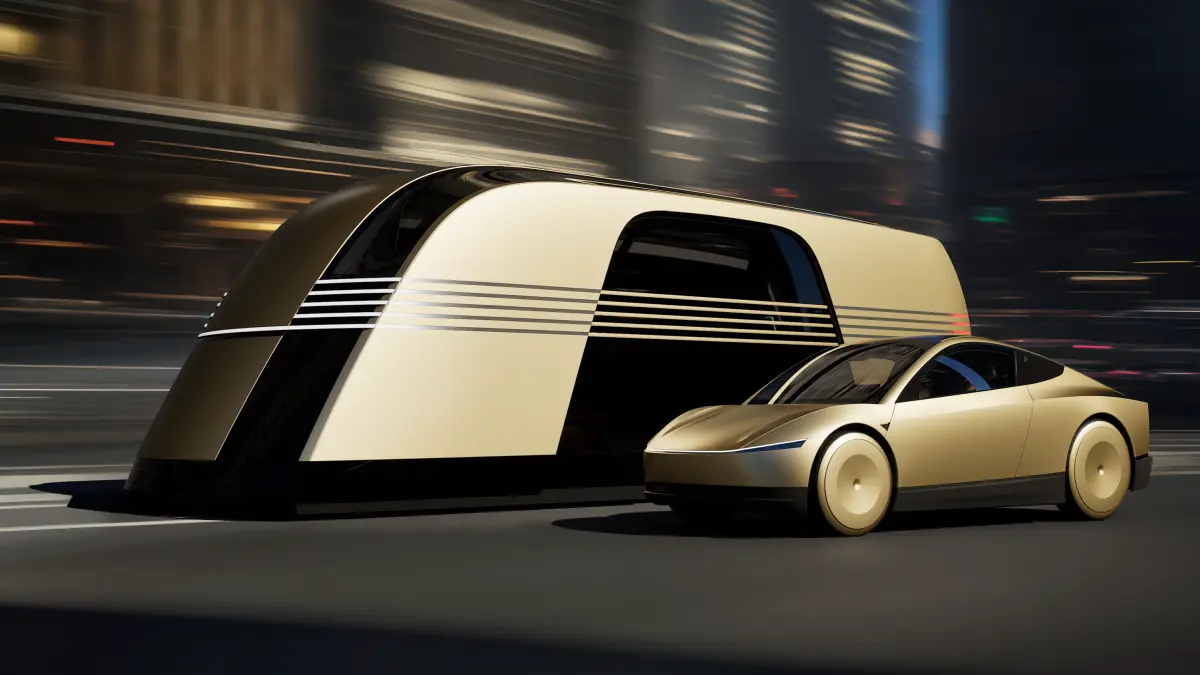
Tesla is finally addressing one of the biggest criticisms of its autonomous vehicle strategy: accessibility. While the company has been heavily hyping its sleek, two-seater Cybercab, a two-seat coupe with low clearance is practically useless for passengers who rely on permanent wheelchairs. However, a surprise confirmation from a senior Tesla official reveals that the EV giant is actively working on a solution to this exact problem right now in Texas.
The revelation came during a Washington, D.C. City Council hearing regarding a controversial bill on driverless taxi services. India Herdman, Tesla’s Senior Policy Advisor, dropped the bombshell that Tesla is officially developing a purpose-built, wheelchair-accessible autonomous vehicle.
Tesla’s Secret Project: A Purpose-Built Autonomous Vehicle for Wheelchair Users
According to Herdman, the project is far from just a concept on paper. "We know that paratransit can be very difficult, and people who are confined to wheelchairs permanently should still be able to move around freely, so that is an active product being built by Tesla in Texas," she told lawmakers.

This marks a massive shift for Tesla, which has historically lacked a formal mobility program or official support for adaptive vehicle conversions. By building a vehicle designed from the ground up for wheelchair users, Tesla is looking to make its upcoming ride-hailing fleet truly inclusive—and satisfy regulators who are increasingly worried that self-driving platforms will leave disabled passengers behind.
The Robovan Connection: What Vehicle Will It Be?
While Tesla has not officially revealed what this new vehicle will look like, we do not have to look far for a likely candidate. In October 2024, Elon Musk took the stage to unveil the Robovan (or "Robobus"), a large, steering-wheel-free vehicle designed to carry up to 20 people.

The Robovan is perfect for this. It has a very low, flat floor and huge sliding doors that make it easy to add automatic ramps and wheelchair locks. Tesla could build a brand-new car from scratch, but that is hard and expensive. It makes much more sense to just change the Robovan design, especially since Tesla likes to keep its factory lines as simple as possible.
Before we look at what this means for the future of the robotaxi rollout, here are the key takeaways from this surprise announcement:
- Official Confirmation: Tesla's policy team confirmed the "active" hardware development during a D.C. regulatory hearing.
- No Cybercab Fit: The recently teased Cybercab is too small and low to accommodate wheelchair roll-ins, creating a major gap in Tesla’s fleet.
- Giga Texas Bound: The new vehicle is actively being designed and prepped for production at Gigafactory Texas in Austin.
- The Robovan Advantage: Industry insiders expect Tesla to leverage the flat-floor Robovan architecture for this project.
Read also
We do not have a release date or a real car to look at yet. Even so, the news that Tesla is building this in Texas is a huge win for fair travel. If Tesla wants to rule the self-driving taxi world, its cars must be able to carry everyone. It cannot just build low sports cars that are hard to get into.
Popular News

Latest News
Loading