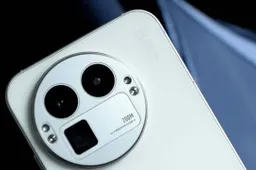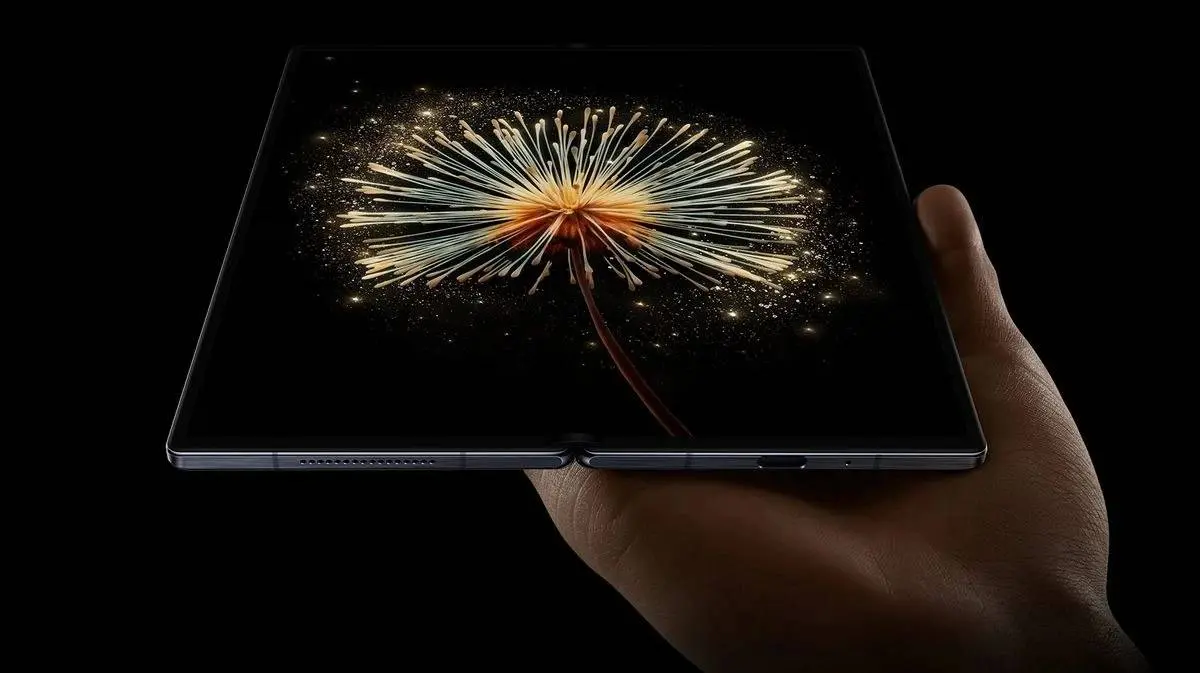
The price is up 10%. The chip is Xiaomi's own. The crease is nearly invisible. And you probably won't be able to buy it outside China.
Summary
- Digital Chat Station confirmed the Xiaomi Mix Fold 5 prototype retains a 7.5–7.6-inch book-style display with seamless crease technology, a 200MP Samsung S5KHP5 main camera, 6,000mAh battery with wireless charging, full water resistance, and a side-mounted fingerprint sensor.
- Expected pricing is approximately CNY 10,000 (~$1,380) — a 10% price increase over the Mix Fold 4's CNY 8,999 launch price, reflecting both component cost inflation and the premium associated with Xiaomi's in-house silicon.
- The Xring O3 chip powering the device is a complete architectural redesign over the Xring O1: the prime core breaks 4GHz for the first time at 4.05GHz, using a three-cluster CPU layout that removes the traditional "big core" configuration.
- The device is codenamed "Lhasa" with model number 2608BPX34C — the "2608" date code pointing to an August 2026 launch window, likely timed around Xiaomi Day on August 8. The "C" suffix confirms a China-only release.
- The official branding — Mix Fold 5 or Xiaomi 17 Fold — has not been confirmed, and the Xring O3 will not support global 5G bands in its current form, effectively confirming the international market is not in scope for this device.

The Xring O3 breaks the 4GHz prime core barrier that the Xring O1 couldn't quite reach — 4.05GHz versus 3.89GHz — and completely redesigns its CPU cluster architecture. For a second-generation in-house chip from a company that only entered custom silicon in 2025, that level of structural redesign is either very impressive or very ambitious.
What CNY 10,000 Means for Chinese Foldables
The Mix Fold 4 launched at CNY 8,999 (~$1,290) . The Mix Fold 5 is expected at CNY 10,000. That price increase isn't arbitrary — it's the collision of two pressures simultaneously. First, memory and component costs are running significantly higher in 2026 across every Chinese flagship. Second, Xiaomi is pricing for the engineering premium of its own custom silicon rather than buying a chipset from Qualcomm at market rates. The Xring O3 development costs are being amortized across a device that will likely ship in limited numbers to a premium audience.
For Chinese consumers specifically, CNY 10,000 now appears to be the threshold that flagship Android devices are beginning to approach or cross — a bracket that previously belonged almost exclusively to Apple's iPhone. Whether buyers follow Xiaomi into that price territory is one of the more interesting market questions of H2 2026.

The Xring O3: What 4GHz Actually Means
The original Xring O1 — which debuted in the Xiaomi 15S Pro in 2025 — had a prime core running at 3.89GHz. The O3 pushes past 4GHz to 4.05GHz. That's not a headline-grabbing jump on its own, but the architectural change underneath it is more significant: Xiaomi has moved to a three-cluster CPU layout that removes the traditional "big core" cluster entirely, replacing it with a configuration that prioritizes prime core performance and efficiency core density. The implications for sustained workloads and battery efficiency under load are meaningful, though real-world validation will require actual benchmark testing.
The O3 is also confirmed to not support global 5G frequency bands — a deliberate decision that keeps the chip optimized for China's specific network requirements and contributes to the China-only release strategy.
August, Xiaomi Day, and the Launch Strategy
The 2608 date code in the model number points to August 2026. Xiaomi Day falls on August 8 annually — a company-wide event Xiaomi has used to launch flagship products in previous years. The Mix Fold 3 launched in August 2023. The pattern fits. A Xiaomi Day unveiling with August availability would give the Mix Fold 5 a market window before the Samsung Galaxy Unpacked foldable lineup arrives in late July and settles into retail.
Popular News
Latest News
Loading