Xiaomi's 100W GaN USB-A Charger Bundle announced at Just $25
Xiaomi NewsWednesday, 29 April 2026 at 06:45
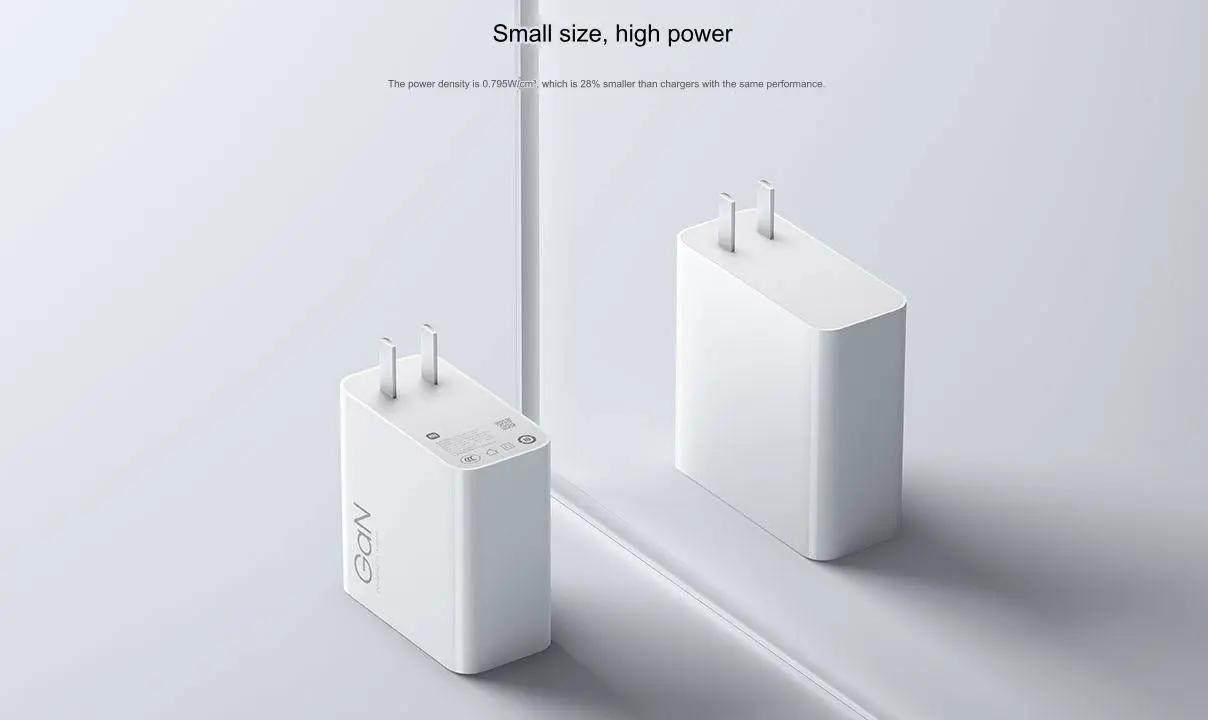
Xiaomi just listed a compact 100W GaN charger bundle on its Youpin platform at 169 yuan. That's $25 for the charger and a 1-meter USB-A to USB-C cable included in the box. For a triple-digit wattage GaN charger at that price, the value case is immediate.

The unusual part: it's USB-A, not USB-C.
Key Points
- Xiaomi 100W GaN USB-A charger bundle launches on Youpin at 169 yuan ($25) — includes charger and 1-meter 6A USB-A to USB-C cable
- Single USB-A port supports 5V/3A, 9V/3A, 11V/6.1A, and 20V/5A — GaN technology keeps the 106-gram body compact at 55.9 x 49.3 x 28mm
- Charges Xiaomi 17 Pro Max to 83% in 30 minutes — iPhone 17 Pro Max reaches 72% in the same window due to Apple's charging limits
- Safety features include overvoltage, overcurrent, overtemperature, short-circuit, undervoltage, and EMI protection — UL94-V0 fire-resistant casing
- Currently available in China via Youpin — no global launch confirmed

USB-A at 100W Is the Interesting Choice
Most high-wattage GaN chargers have shifted to USB-C as the primary port. Xiaomi going with USB-A at 100W is a deliberate call — one that makes this charger immediately compatible with the enormous installed base of USB-A cables without needing adapters. The included 6A cable is what unlocks the full 100W output. Use a lower-rated cable and the wattage drops accordingly.

The voltage configuration list — 5V/3A, 9V/3A, 11V/6.1A, 20V/5A — covers fast charging protocols across a wide device range. Anything that supports 20V input gets the full 100W. Devices with lower voltage ceilings charge at whatever their protocol allows.
Real-World Numbers That Hold Up
Xiaomi's claimed 83% in 30 minutes on the Xiaomi 17 Pro Max is a strong result for a phone that supports 100W natively. The iPhone figures — 72% for the 17 Pro Max and 70% for the 17 Pro in 30 minutes — reflect Apple's own charging ceiling rather than any limitation of the charger itself. Both results are genuinely fast regardless of which device you're charging.

The 63-67% figure for the standard Xiaomi 17 in 30 minutes is lower, reflecting that model's lower wattage support — the charger delivers what the phone can accept.
The Safety Spec Matters at This Wattage
A hundred watts through a budget charger without proper protection is a fire risk. Xiaomi built in six protection layers — overvoltage, overcurrent, overtemperature, short-circuit, undervoltage, and electromagnetic interference — alongside a UL94-V0 fire-resistant outer casing. At $25, having that safety infrastructure in place matters more than it would on a slower, cheaper charger.
No word on global availability yet. China-only for now via Youpin.
Popular News


Latest News
Loading