How Lynote Helps Tech Writers Organize Research And Build Better How-To Guides Without Sounding Like AI Filler
aiWednesday, 23 September 2026 at 03:37
A good tech how-to usually starts long before the first paragraph. Take something as simple as explaining how to improve Wi-Fi performance. A writer may need to test the settings on different routers, check the manufacturer's documentation, compare firmware versions, dig through support forums, and watch a video to confirm how a particular feature actually works. The finished article may take only a few minutes to read. The research behind it can take much longer. That creates a familiar problem for tech writers: they have a lot of information to organize, and even more to verify before publishing. Lynote is built around this part of the workflow.
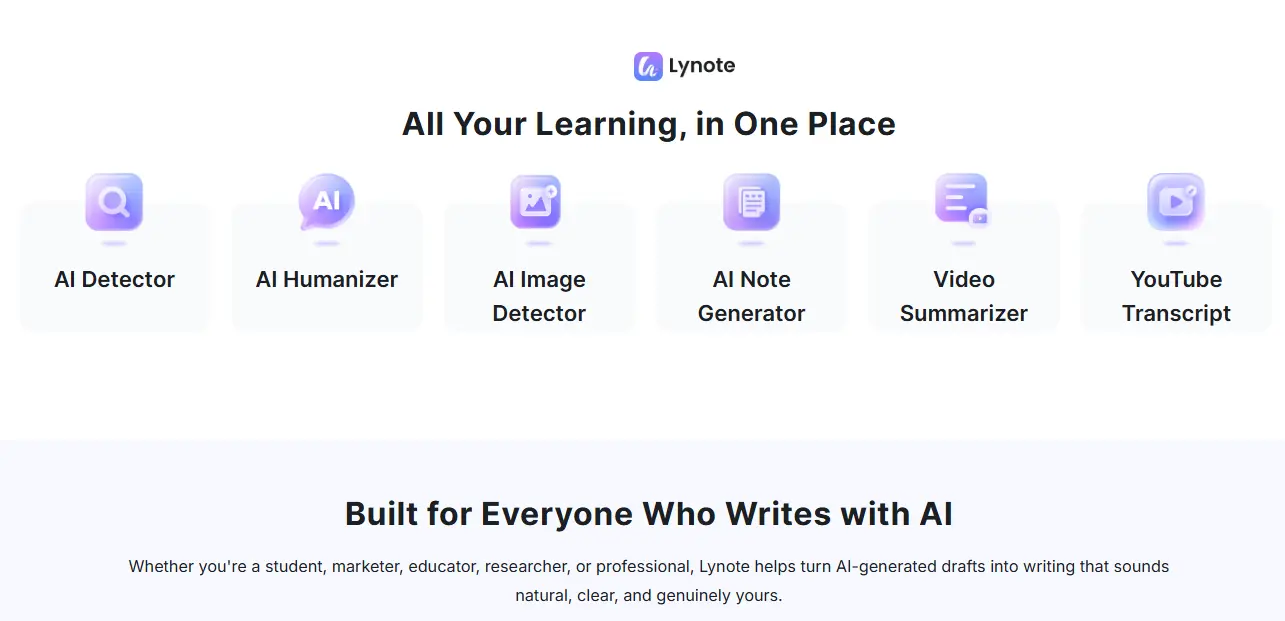
Its tools can turn information from documents, recordings, and videos into structured notes, while its AI text detector can provide another check once those notes have become a finished article.

For writers producing technical content regularly, having both parts of the process in one workflow can be useful.
Lynote: Turning Scattered Research Into Usable Notes
Most technology research isn't neatly organized. You might have a manufacturer's PDF open in one tab, a firmware changelog in another, a support forum bookmarked somewhere, and a YouTube video showing the setting you are trying to explain. Then there are your own notes from testing the device. Going back through all of that while writing is not only time-consuming. It also makes it easier to miss a small but important detail.
Lynote's AI note generator is designed to help with exactly this problem. It can process recordings, documents, and pasted video links and turn the material into structured notes.

For a guide writer, that means the information from several sources can be easier to review without repeatedly going back to the original material. This becomes particularly useful when the article depends on details such as firmware versions, menu locations, technical settings, or differences between device models.
A router setting, for example, may have moved after a firmware update. A smartphone feature may be available on the Chinese version of a device but placed somewhere else in the global software. These are small details, but they can determine whether a guide actually works for the reader. Organized notes make it easier to keep track of those differences before they disappear somewhere in a collection of browser tabs.
Keeping AI-Assisted Writing From Becoming Generic
AI tools can also make the next part of the process much faster. Once the research is organized, an AI writing tool can turn those notes into a first draft. That can be useful when a writer has a large amount of information but needs to turn it into a clear structure quickly.
The downside is familiar. Technical writing can become generic when the drafting process smooths away the details that made the original research useful. Instead of explaining what happened during testing, the article starts sounding like a general summary of the topic.
For a how-to guide, that is a problem. Readers aren't looking for another broad explanation. They want to know exactly where to find the setting, what it does, which version supports it, and what happened when it was actually tested.

This is where Lynote's AI text detector can be useful as an additional editing step. The tool analyzes writing patterns and looks at things such as rhythm, repetition, lexical variation, and predictability at the sentence level. It can identify sections that appear AI-written, AI-edited, or mixed.
That gives writers something more useful than simply looking at an overall AI score. If one section of a 1,500-word guide stands out, the writer can go back to that section and ask a simple question: Did the writing become too generic? The detector isn't a plagiarism checker, and it cannot determine how much work a person actually did. It is better viewed as another editing signal rather than a final judgment on the article.

Why This Matters Even More For Chinese Smartphones
The research problem becomes more complicated when writing about smartphones that have different versions for different markets. This is particularly common with Chinese smartphone brands. A device sold in China can have different firmware, settings, features, or software behavior compared with its global counterpart.
That means a writer may need to compare a Chinese-language forum post with an English support document and a demonstration video from another market. The sources may not always agree. That is where organized research becomes more valuable. Instead of simply keeping a general summary of each source, a writer can pull out the individual claims and compare them.

Maybe a feature exists only on one firmware version. Maybe the setting has moved. Maybe a software update changed the way it works. Those differences are often more useful to readers than the basic information found in every other article about the device. Lynote can help bring that information together, giving writers a structured starting point before they begin turning the research into an article.
Research First, Writing Second
The biggest benefit of this kind of workflow isn't about making AI write everything. It is about keeping the research intact while moving from source material to a finished article. A practical workflow could look something like this:
- Collect support documents, videos, forum posts, and other sources.
- Use Lynote to turn that material into structured notes.
- Test the relevant feature or setting yourself.
- Use the organized notes to build the first draft.
- Add the details and observations from your own testing.
- Check firmware versions, specifications, menu paths, and other technical details.
- Run the finished draft through Lynote's AI text detector.
- Rework sections that feel too generic or disconnected from the actual research.
This approach also makes the role of AI a little more practical. Instead of asking an AI tool to invent an article from a vague prompt, the writer gives it better source material to work with. Lynote helps organize that source material first, while the writer remains responsible for testing, fact-checking, and deciding what is actually worth telling the reader. That distinction matters. A guide can be grammatically perfect and still be useless if nobody checked whether the instructions work.

Making The Research Process Less Messy
Lynote makes this whole process way easier using two simple tools:
- An AI Note Generator: Takes scattered videos, PDFs, and forum posts and turns them into clean, organized notes.
- An AI Text Detector: Flags sections of your draft that sound too bland or generic so you can fix them.
It doesn't replace real testing or fact-checking, but it takes away the boring, repetitive work so you can write better guides faster.
And for technical guides, that is ultimately what matters. The goal isn't simply to produce another clean-looking article. It is to preserve the useful details from the research and turn them into instructions that someone can actually follow. For more coverage of AI tools and how they are changing technology research and writing, see Kemotech.
Popular News





Latest News
Loading