Apple is preparing a major expansion into the smart home market with a new AI-powered home hub designed to become the center of its connected device ecosystem. According to Bloomberg, the company’s strategy focuses on combining artificial intelligence, personalized experiences, and dedicated hardware to compete more aggressively with rivals like Amazon and Google.
The move comes as Apple reaches a historic financial milestone. The company’s market value recently exceeded $5 trillion for the first time after its stock price increased 1.8% to $342.89 per share.
Apple Smart Home Hub Coming Soon With AI Features
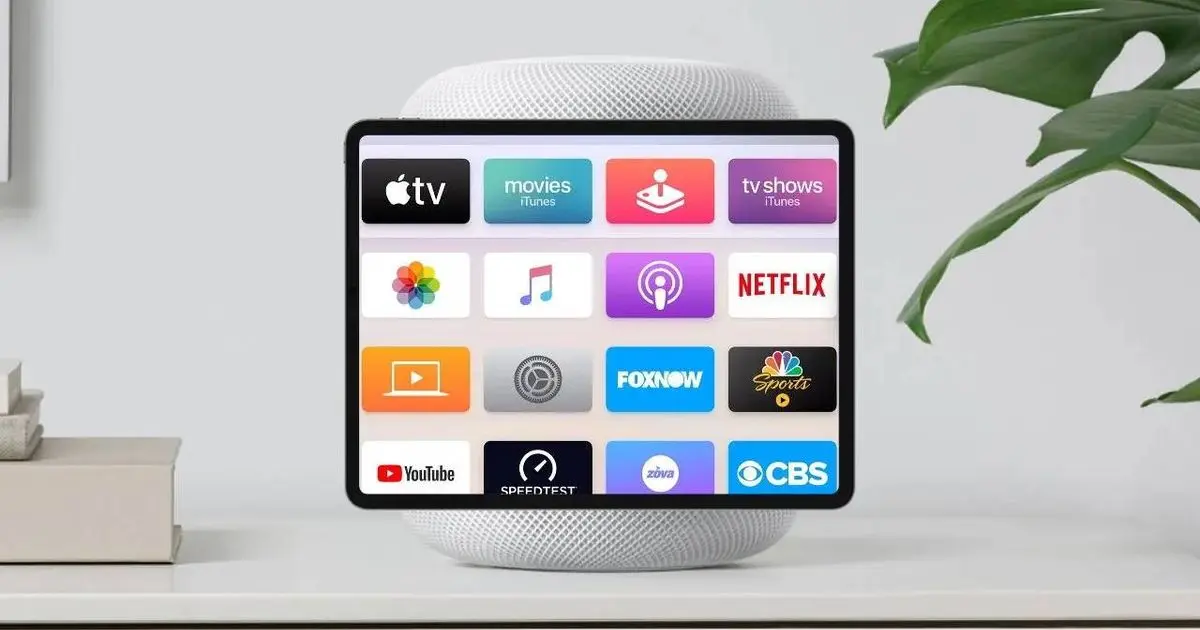
The main product behind Apple’s smart home push is a dedicated home hub expected to arrive between October 2026 and early 2027. The device will feature a square 7-inch display and operate on a new platform based on tvOS, while incorporating visual elements from iOS and watchOS.
The new system will support features such as:
- Desktop-style widgets
- App grid interface
- FaceTime video calls
- Smart home controls
- Home security monitoring
- Intercom functionality
The biggest highlight will be deeper Siri AI integration. The device is expected to use facial recognition to identify users and determine their positions relative to the screen. This will allow the hub to display personalized information automatically, including:
- Calendar events
- Notes
- Reminders
- Custom recommendations
The experience is designed to feel more like a personal assistant rather than a simple smart display.

Apple Home Hub Concept via MacRumors
Two Hardware Versions Planned
Apple reportedly plans to launch two versions of the smart home hub. The first model, known internally as J490, will feature a rounded base design inspired by the HomePod mini, with a display attached to a hemispherical structure. The second version, J491, will focus on flexible installation and is expected to support wall mounting through a magnetic attachment system. This approach would allow Apple to target both traditional home users and customers looking for a more integrated wall-mounted smart home solution.
Apple TV And HomePod Mini Receive AI Upgrades
Apple is also preparing updates for its existing smart home products. The next Apple TV, identified as J265, and the updated HomePod mini, known as B525, are expected to keep their current designs while receiving new processors capable of supporting advanced Siri AI features.
The reported pricing changes include:
- Apple TV: starting at $199
- HomePod mini: starting at $129
The processor upgrades could allow these devices to participate more actively in Apple’s AI-powered home ecosystem.
Apple’s Future Smart Home Plans
Apple’s smart home ambitions extend beyond a single hub device. The company is reportedly developing additional products that could expand its presence in the connected home market. The security camera would place Apple in direct competition with products like Amazon’s Ring ecosystem.

Read also


Key Points
- Apple is preparing a new AI-powered smart home hub.
- The device is expected to feature a 7-inch square display.
- The new hub will use a system based on tvOS with iOS and watchOS design elements.
- Apple plans to add advanced Siri AI features for smarter home control.
- The device may recognize users through facial recognition technology.
- The hub could show personalized content like calendars, notes, and reminders.
- Apple is reportedly developing two versions of the smart home hub.
- One model may include a HomePod mini-style base design.
- Another version could support wall mounting with a magnetic system.
- Apple is also preparing AI upgrades for Apple TV and HomePod mini.
- Future plans include a robotic home hub with a larger display.
- Apple is working on a smart security camera system to compete with Ring.
- The company wants AI to become the center of its smart home ecosystem.
Apple Wants AI To Become The Center Of The Home
With these new devices, Apple appears to be shifting from simply supporting smart home accessories toward creating a complete AI-powered home platform. By combining Siri improvements, personalized displays, security features, and future robotic hardware, Apple aims to make the smart home hub a central part of everyday life.
If successful, this strategy could position Apple as a stronger competitor in a market currently dominated by Amazon and Google, while bringing its ecosystem approach beyond smartphones, computers, and wearable devices.
Popular News


Latest News
Loading