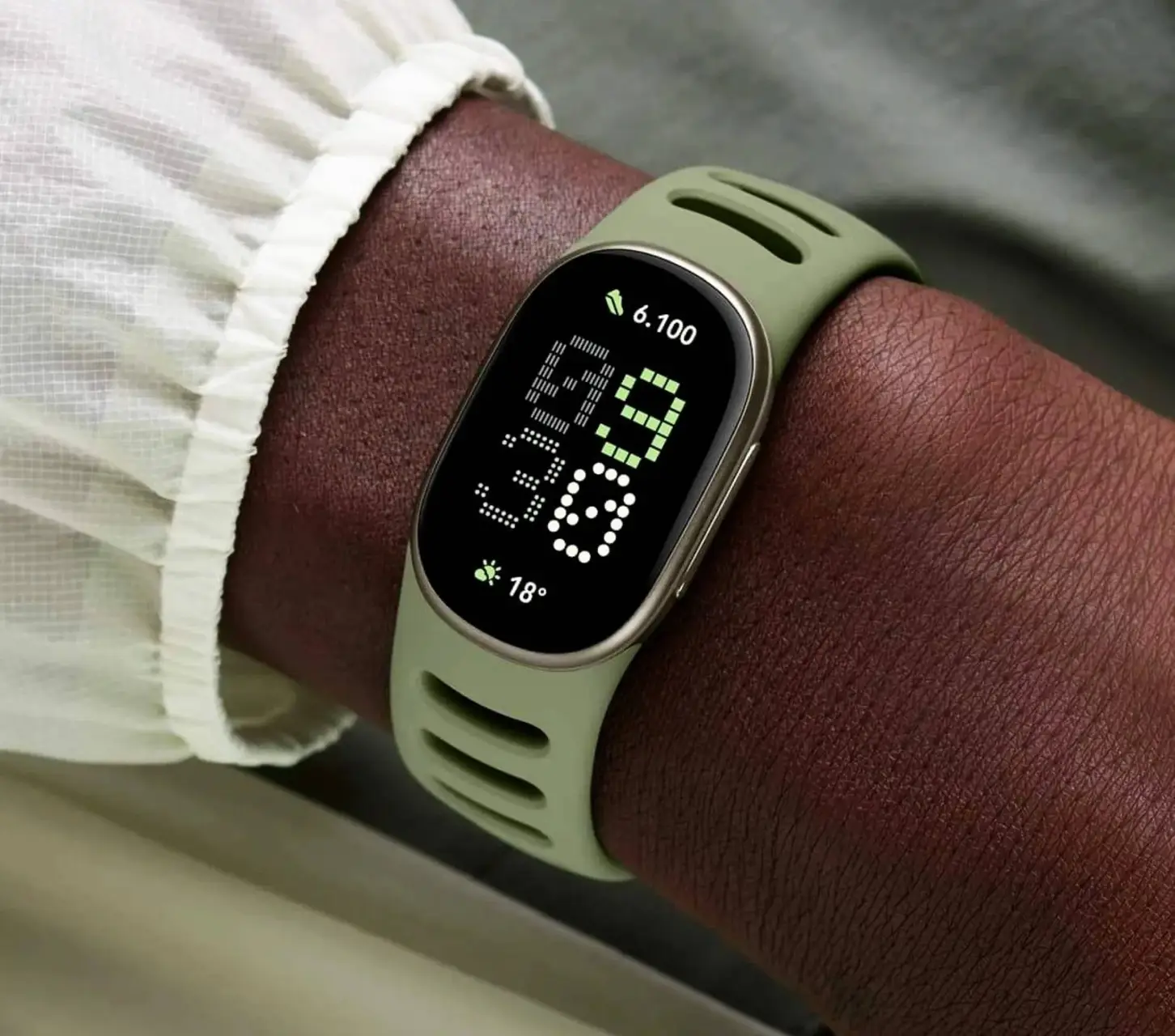
Google has announced the Fitbit Edge, a new fitness tracker that follows the Charge 6 from 2023. It costs $179.99 in the US and €179.99 in Europe. Pre-orders are open through selected retailers, with sales starting on October 27.
The Edge sits between the screen-free Fitbit Air and the Pixel Watch 5. It is aimed at people who want to check their health data and control workouts from their wrist without buying a full smartwatch. The price is higher than the Charge 6's launch price, though, so the new features will need to make a convincing case.
A Larger Display and a Replaceable Battery
The Fitbit Edge has a 1.34-inch Hybrid OLED display with an always-on mode. Google says the screen offers 46% more display area than previous fitness trackers and remains readable in direct sunlight.

Its aluminum body is 11.5mm thick and has a physical button. Battery life is rated at up to seven days, but using the always-on display can cut that to around two days.
One welcome change is the user-replaceable battery. Google has also designed the tracker with repairability in mind. Charging is magnetic and uses USB-C, as it does on the Fitbit Air.

GPS, ECG, and Health Tracking
The Edge has built-in GPS. Google claims it is up to 40% more accurate than the GPS in the Charge 6. The other sensors cover heart rate, blood oxygen, skin temperature, movement, altitude, and ambient light. The tracker can also record ECG readings and monitor sleep and daily activity.
Some features can warn users about possible irregular heart rhythms. These alerts are not a substitute for medical advice or testing.
The device has an IP68 rating and is water-resistant to a depth of 50 meters. It also includes Google Health Coach, which provides personalized advice and workout plans. However, some advanced features will not be available at launch. Google lists several additions, including features planned for fall 2026, and some tools require a Google Health Premium subscription.

Some Features Will Arrive Later
The listed specifications do not mention Wi-Fi or cellular connectivity. The Edge therefore relies on a connected phone for data transfers and runs Fitbit OS rather than Wear OS.
Google Maps navigation, workouts started directly from the wrist, and Health Guardian alerts are due in a fall 2026 update. Buyers will have to wait for these features, and Google has not yet shown how quickly all of them will arrive.
The tracker comes in four color combinations: Obsidian & Matte Black, Olive & Satin Pyrite, Canyon & Champagne Gold, and Fog & Polished Silver. Google also includes three months of Google Health Premium with each purchase.
The replaceable battery and return of a proper display make the Edge an interesting option for people who want a dedicated fitness tracker. The main question is whether those changes justify the higher price, especially when some of its advertised features will not be ready on day one.
Popular News
Latest News
Loading