POCO Pad X1 Debuts This Month With Snapdragon 7+ Gen 3 Power and a Sharper 3.2K Display
pocoSaturday, 22 November 2025 at 00:33
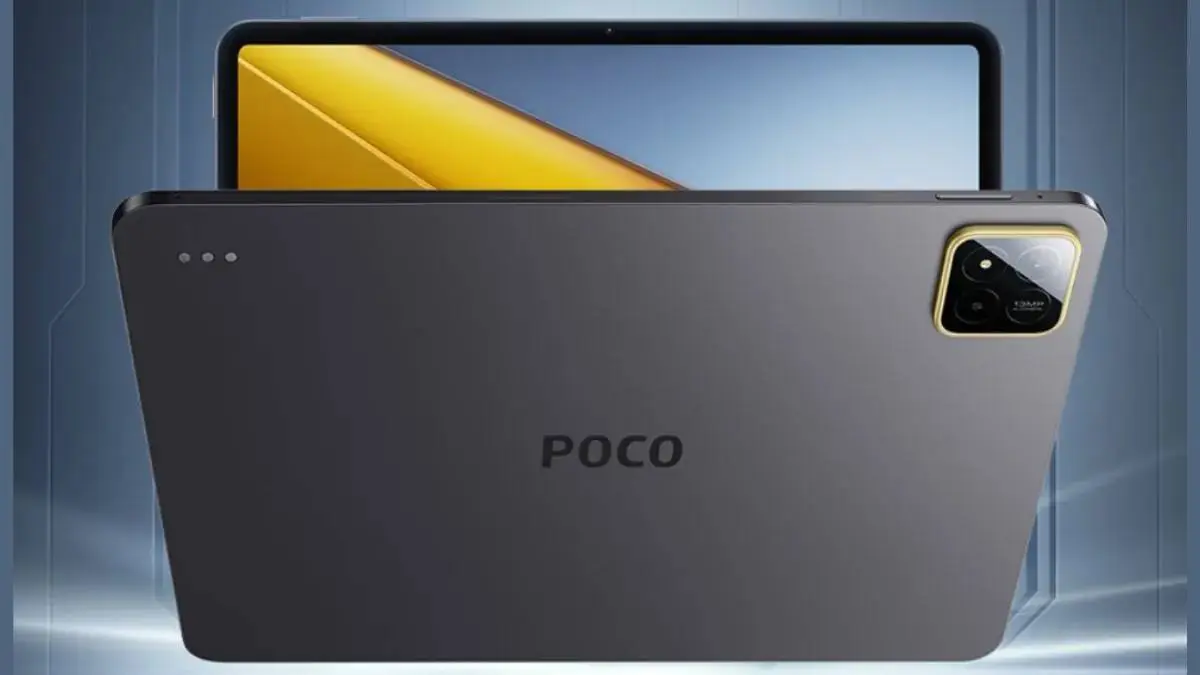
POCO appears ready to close out the year with a surprisingly polished update to its tablet lineup. The company is preparing to unveil the POCO Pad X1 on November 26, alongside the F8 Pro and F8 Ultra, and the early teasers already make it clear that POCO wants to push higher into the “serious productivity tablet” space. The combination of a Snapdragon 7+ Gen 3 and a 3.2K panel is unusual at this price tier, which is partly why the Pad X1 is attracting this much early attention.

A Familiar Formula, Now More Refined
POCO hasn’t fully reinvented the tablet, but the design is clearly more mature. Grey and Blue finishes, a square camera island with a 13MP main sensor, and a clean metal frame hint at the same design language we’ve seen across the brand’s recent devices. You get the usual speaker grilles, power key and one extra physical button that POCO hasn’t explained yet. Small touches like this often end up being shortcuts for productivity—something POCO has quietly been leaning into.
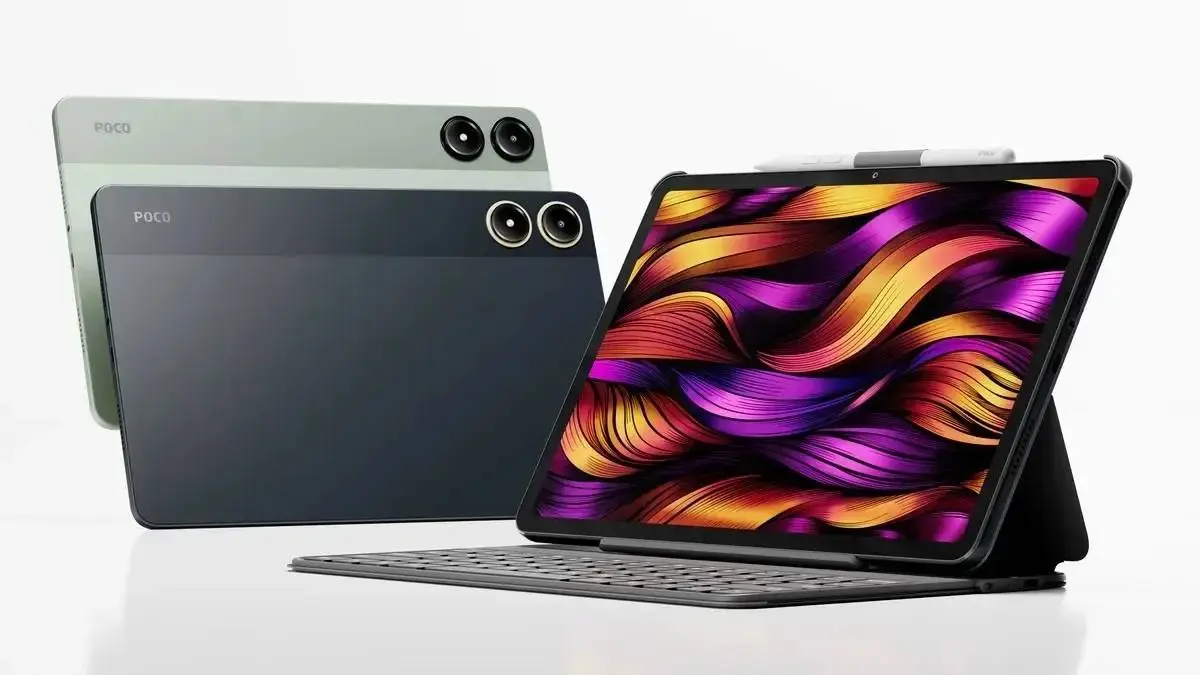
It’s worth noting that early benchmarks showed the device running Android 15 on 8GB of RAM, and the results lined up with what we expect from the Snapdragon 7+ Gen 3. If POCO keeps thermals under control, this chip should offer enough headroom not just for media, but also for light creative work. Android tablets have historically struggled in that area, but Qualcomm’s recent mid-range chips feel noticeably more responsive in multi-tasking—something I’ve personally appreciated on similar devices.
The 3.2K Panel Might Be the Real Star
What grabs attention here isn’t just the resolution but the full package around it. POCO calls the screen “crystal clear,” and the specs largely back that up: 3.2K resolution, 144Hz refresh rate, and Dolby Vision Atmos support. If the Pad X1 does inherit Xiaomi’s Nano Texture Display and anti-reflective treatment—as reports suggest—it could end up being one of the more comfortable LCD tablets for reading and extended use.
This also raises the obvious question: is the Pad X1 simply a reworked Xiaomi Pad 7? The similarities are too many to ignore. And to be fair, Xiaomi’s pad platform is strong enough that rebranding isn’t necessarily a bad thing. The Xiaomi Pad 7’s 11.2-inch screen with TÜV Rheinland low-blue-light certification and HDR10 support already performs better than most tablets in this segment.
Performance and Features Built on Proven Hardware
If POCO stays close to Xiaomi’s blueprint, we’re looking at a metal unibody chassis, Snapdragon 7+ Gen 3, up to 12GB of RAM, and 256GB of storage. The battery, likely around 8,850mAh with 45W charging, should give enough stamina for commuters or students who switch between streaming, note-taking and work apps throughout the day.

HyperOS 2 based on Android 15 is expected to bring features like AI Writing, AI Live Subtitles and Workstation Mode—tools that might actually make a difference on a larger screen. A quick opinion here: tablets often feel underutilised because of poor software adaptation, so seeing POCO embrace these productivity perks is refreshing.
Quad speakers, Wi-Fi 6E, Bluetooth 5.4, an IP52 rating and a slim 6.18mm profile round off the package. None of these are groundbreaking individually, but together they help the Pad X1 look like a very complete mid-range tablet.
Could This Be POCO’s Most Balanced Tablet Yet?
If POCO prices the Pad X1 aggressively—something the brand is known for—the combination of display quality, processing power and software tools could make it one of the more sensible tablet buys this season. It’s not aiming to compete with luxury flagship tablets, and honestly, it doesn’t need to. There’s a large audience that just wants a fast, reliable, reasonably priced Android tablet that doesn’t feel like a compromise.
Key Takeaways
- The POCO Pad X1 launches globally on November 26.
- It features a 3.2K, 144Hz display with Dolby Vision support.
- Powered by Snapdragon 7+ Gen 3, with Android 15 expected out of the box.
- Strong hints suggest it’s a rebrand of the Xiaomi Pad 7.
- Productivity-focused features like AI tools and Workstation Mode may give it an edge.
Popular News

Latest News
Loading