Redmi K100 Series Leaks Reveal High-End Performance and Advanced Hardware
RedmiMonday, 27 April 2026 at 11:02
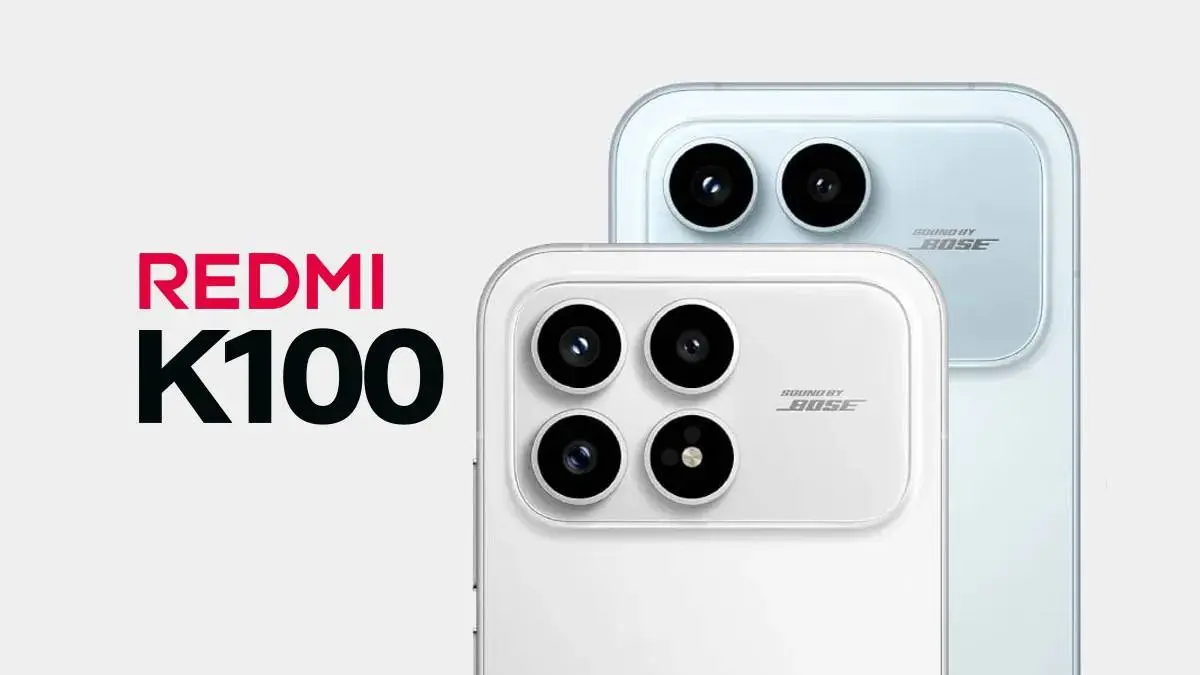
Xiaomi's Redmi K-series has followed a predictable rhythm for years — launch in China in October, rebrand globally under Poco shortly after. The K100 series is shaping up to follow the same pattern, with two distinct devices now appearing in multiple leak sources. The standard K100 and the Pro Max are not the same phone in different sizes. They target different chipsets, different price tiers, and — based on current leaks — different priorities altogether.

Summary
- Two models confirmed: Redmi K100 (codename "Athens," model Q11) and Redmi K100 Pro Max (codename "Songyuan," model Q11X), with distinct chipsets for each.
- K100 targets Snapdragon 8 Elite Gen 5: The standard model continues the K-series approach of using the previous generation's top chip at a more accessible price.
- K100 Pro Max targets Snapdragon 8 Elite Gen 6 Pro (SM8975): A 2nm chip with LPDDR6 RAM support — the higher-tier variant, not the standard Gen 6.
- 200MP camera for the Pro Max: Tipster Digital Chat Station leaked a 200MP main sensor on a 1/1.28-inch format, alongside a 50MP periscope telephoto.
- October 2026 China launch expected: Global versions anticipated as the Poco F9 Pro (K100) and Poco F9 Ultra (K100 Pro Max) in Q1 2027.

The Standard K100: Snapdragon 8 Elite Gen 5, Proven Formula
The Redmi K100, internally codenamed "Athens," is tipped to run the Snapdragon 8 Elite Gen 5 — the same silicon powering the current Redmi K90 Pro Max and a growing number of 2026 Chinese flagships. That's not a knock against it. The K-series has always positioned the standard model as a high-value performance phone rather than a spec ceiling chaser. What differentiates it from the K90 generation will likely come from display and battery improvements — though neither has been specifically leaked for this model yet. Xiaomi hasn't confirmed anything about the standard K100 beyond its codename and model number.
The K100 Pro Max: Where the Real Spec Jump Lives
The Pro Max is the headline device. Tipster Digital Chat Station posted a Weibo leak confirming that a Xiaomi sub-brand device — identified by multiple sources as the K100 Pro Max — is currently testing the Snapdragon 8 Elite Gen 6 Pro (SM8975). The distinction from the standard Gen 6 matters: the Pro variant is the only 2026 Qualcomm top-tier chip confirmed to support LPDDR6 RAM, which roughly doubles peak memory bandwidth compared to LPDDR5X. Combined with up to 1TB of UFS 5.0 storage, the memory subsystem alone represents a generational step up.

DCS was careful to note that the camera setup is not expected to be a headline feature — the focus is described as "core performance and upgraded display experience" rather than imaging. That said, a separate earlier leak from the same source suggested a triple camera setup headlined by a 200MP main sensor on a 1/1.28-inch format, alongside a 50MP ultra-wide and a 50MP periscope telephoto. These two DCS leaks aren't necessarily contradictory — "not a major camera upgrade" relative to flagship imaging leaders doesn't mean a 200MP sensor isn't present.
Pricing and Global Path
A price leak from the same Chinese source puts the K100 Pro Max starting at approximately CNY 5,000 — around $725 at current exchange rates. That's meaningfully higher than the K90 Pro Max and reflects the premium silicon inside. Globally, the rebranding pattern from previous K-series generations points to the K100 becoming the Poco F9 Pro and the K100 Pro Max becoming the Poco F9 Ultra, with a Q1 2027 international launch window.

What's Still Unknown
Display size, battery capacity, charging speed, refresh rate, and software version are all unconfirmed for both models. The Snapdragon 8 Elite Gen 6 and Gen 6 Pro haven't been officially announced by Qualcomm — both designations are leak-based placeholders. Official confirmation from either Xiaomi or Qualcomm is not expected until the Xiaomi 18 series launches in September, which will likely debut the Gen 6 first.
Popular News



Latest News
Loading