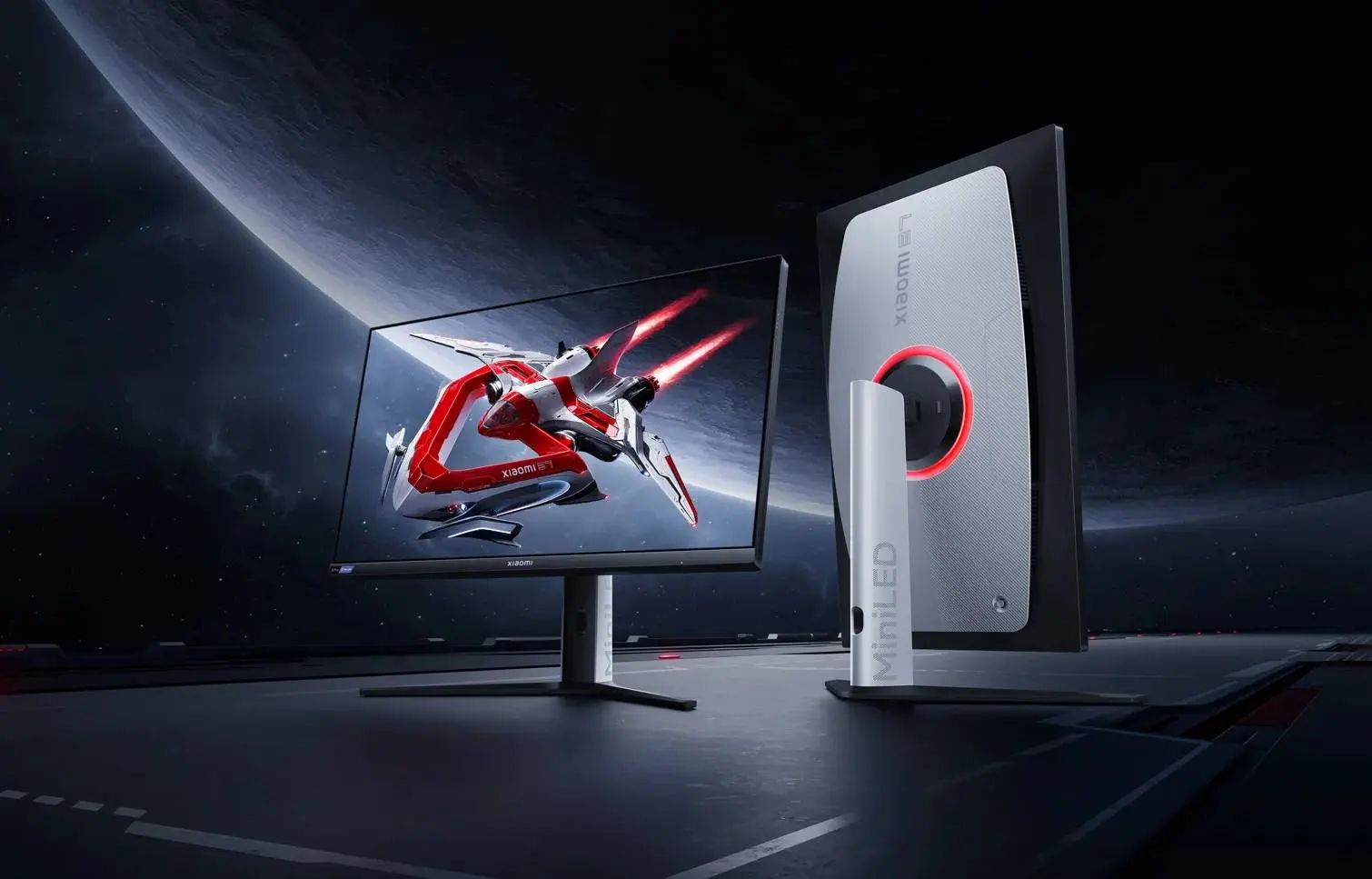
The monitor market is a stagnant pool of incremental upgrades and recycled panel tech. Most manufacturers just slap a "gaming" label on a standard IPS display, add some RGB lights, and hope we don’t notice the lack of innovation. But Redmi seems to have decided that mediocrity is no longer profitable. Their latest move involves the G Pro 27U and G Pro 32U. These aren't just screens. They are a calculated attempt to blur the line between a professional workstation and a high-end gaming rig. It is a bold, perhaps even desperate, play for dominance in a saturated market.

Summary
- Dual-mode switching allows 4K at 160Hz or 1080p at 320Hz.
- HyperOS 3 integration transforms the monitor into a smart TV.
- High-quality screens feature a remarkably low 2.6% reflectivity rate.
- Connectivity includes 90W reverse power delivery via USB Type-C.
- Competitive pricing starts at 2699 yuan for the 27-inch model.
The resolution shell game
Let’s talk about the dual-mode tech because it is actually quite clever. Most displays force you to choose between pixel density and raw speed. If you want 4K, you usually settle for lower frames. That said, these new Redmi units use LG Display’s dual-mode technology to bridge that gap. You can run high-detail workflows in 4K at 160Hz during the day. But here’s the catch. When the workday ends, you can flip a switch to drop the resolution to 1080p. Suddenly, you are pushing 320Hz. It is fast. Truly fast. I suppose competitive gamers will appreciate the utility, though most casual users might find the resolution drop a bit jarring at first.

Software or bloatware?
The inclusion of HyperOS 3 is the real wildcard here. Redmi wants these displays to be the center of your room. It is a dual-form experience. This means the monitor functions like a traditional PC display when connected to your rig, but it also doubles as a standalone smart TV. I'll admit I’m skeptical.
Most "smart" monitors are just slow, cluttered messes with terrible interfaces. Frankly, if HyperOS 3 doesn't offer a snappy, intuitive experience, it’s just more digital noise. However, the cross-device connectivity and the ability to run apps natively might actually save you from buying a secondary television for the office. It’s an interesting gamble.

Built for the glare
Glare is the silent killer of productivity. Redmi claims their low-reflection screen hits a reflectivity rate of just 2.6%. This is impressive. Most panels act like mirrors in a bright room. By reducing the bounce, they are promising a much more comfortable viewing experience during those long, caffeine-fueled nights. You also get a 90W Type-C port for reverse charging.
This is essential. It means one cable to rule them all. Your laptop stays charged while sending video to the screen. It is a clean, minimal setup that makes most competitors look ancient. The pricing is aggressive, but in this economy, it has to be.
Popular News
Latest News
Loading