TECNO’s “100 Portraits of Becoming” Looks Beyond Smartphone Photos to the People Behind Them
TecnoMonday, 28 September 2026 at 11:00
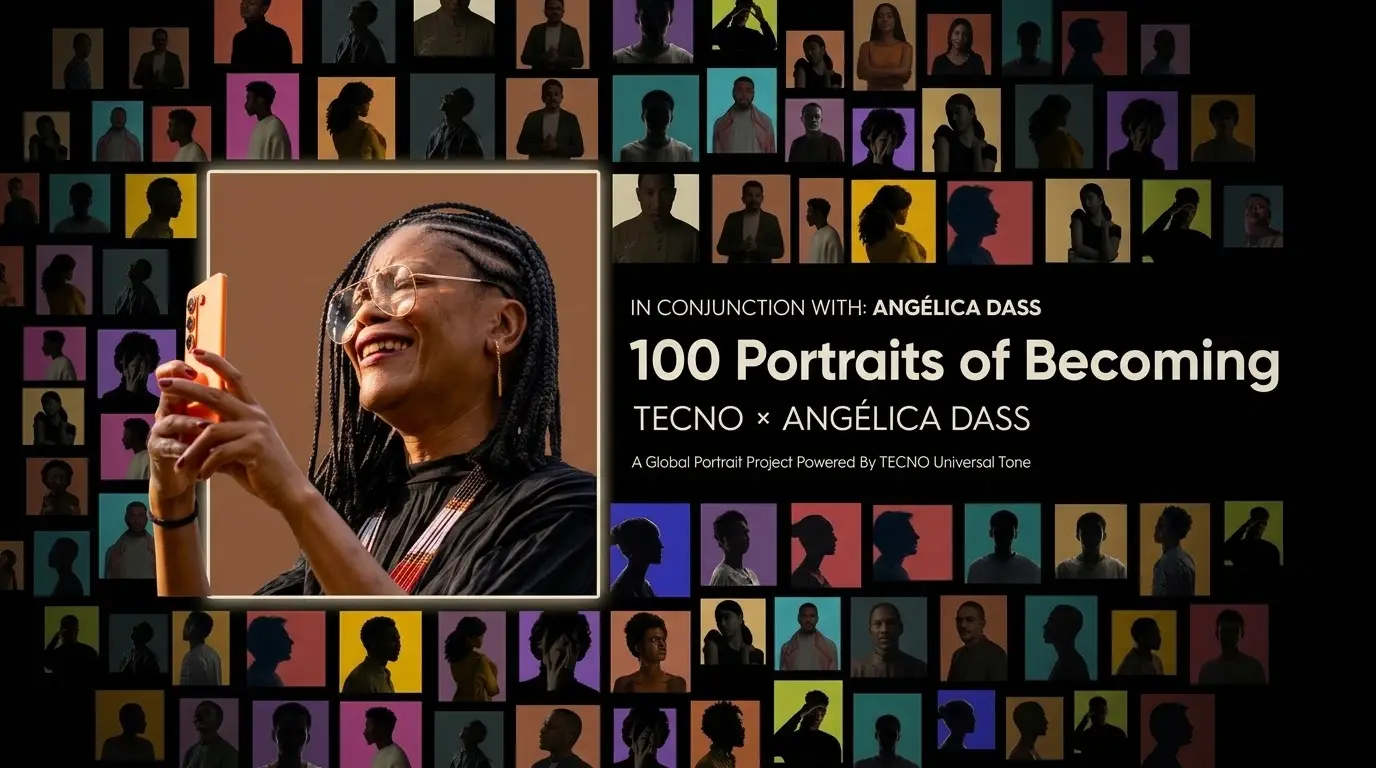
Smartphone cameras have become very good at making people look good. But there is another problem that is harder to solve: making sure they represent different people accurately. Skin tone is one example. Smartphone cameras have improved a lot over the years, but how a camera captures a person can still change depending on lighting, skin tone, and the phone's image processing. TECNO is now taking that idea further with a new project called “100 Portraits of Becoming,” created together with visual artist Angélica Dass.
Instead of focusing only on camera technology, the project looks at the people being photographed and the stories behind their faces. The two-year project will feature 100 people across Kenya, the Philippines, Saudi Arabia, Türkiye, and Brazil. The first 20 portraits, all from Kenya, are now available.

Angélica Dass is taking portrait photos with TECNO CAMON 50 Ultra 5G
Why This Is More Interesting Than Another Tecno Camera Campaign
At first glance, 100 portraits might sound like another photography campaign from a smartphone company. There is more to it, though. TECNO has been working on Universal Tone, its imaging technology designed to improve how smartphones reproduce different skin tones. The company is now connecting that technical work with a much broader question: what happens when cameras and AI become responsible for how people are seen?
Modern smartphones do much more than capture a photo. Software can recognize faces, adjust skin tones, identify objects, and automatically decide how an image should look. That makes accurate representation increasingly important. A camera shouldn't have to make everyone look as if they were photographed under the same conditions. Different skin tones, lighting conditions, and facial features should remain part of the image rather than being pushed toward one visual standard.
That is where the “100 Portraits of Becoming” project comes in. Rather than simply showing the portraits, TECNO and Dass are pairing them with the personal stories of the people photographed. The idea is to show that a face does not tell the whole story.

Angélica Dass on the set of 100 Portraits of Becoming
The First 20 Stories Come From Kenya
The first chapter takes place in Kenya and features 20 people with very different backgrounds. One of them is Alex Mutua Muli, who chose to build opportunities in his local community rather than leave for a larger city. After seeing farmers struggle to find reliable markets for their fruit, he co-founded Goshen Farm Exporters to connect local producers with larger markets.
Another participant, Alexander Odhiambo, took a different route. After a difficult start to his career, he and his friends started a software company from a small apartment in Nairobi. What began as an attempt to create opportunities for themselves eventually grew into a business serving markets across Africa.
Then there is Jelimo Cheboi, whose story is centered around skateboarding. After discovering the sport in 2022, she noticed there was little space for women in the local scene. She later co-founded GirlSkate Nairobi, turning a WhatsApp group into a community where girls and women could skate and connect.

Alex, Alexander & Jelimo’s Portraits
These stories are quite different, but that is exactly the point. The project does not try to use one person to represent Kenya, women, young entrepreneurs, or any other large group. Instead, it treats every participant as an individual.
There Is a Bigger Question Behind Smartphone Imaging
This becomes more relevant as AI becomes a larger part of smartphone cameras. Today, an image can be heavily processed before it reaches the screen. AI can decide how much to brighten a face, how to balance colors, and how to improve details. That can make photos look better, but it also raises questions about how much control the technology should have over someone's appearance.
TECNO's project is essentially asking where the line should be. Angélica Dass, who is known for her work exploring identity and skin color through portrait photography, says the technology itself is only part of the process.
“Meaningful portraits are never created by technology alone,” Dass said when discussing the Kenya chapter. “They begin with trust, with listening, and with the generosity of the people who choose to stand in front of the camera.” That is an important distinction. Better camera hardware can improve an image, but it cannot tell you who the person in that image actually is.

Angélica Dass is taking portrait photos with TECNO CAMON Slim 5G
The Philippines Will Be the Next Chapter
After Kenya, the project will move to the Philippines, where the next 20 portraits will focus on people whose lives are connected to solo parenthood.
The chapter is called “Beyond Many Labels” and will look at people who are often reduced to labels such as “single mother,” “breadwinner,” or “strong woman.” The project instead wants to explore the parts of their lives that those labels leave out, including their ambitions, relationships, personal growth, and everyday decisions. It will also explore the Filipino idea of diskarte, which broadly refers to finding practical ways to adapt, solve problems, and move forward in everyday life. From there, the project will continue to Saudi Arabia later in 2026, followed by Türkiye and Brazil in 2027.
100 People, Not One Definition of Humanity
The most interesting part of “100 Portraits of Becoming” is probably that TECNO is not trying to create a single definition of what diversity looks like. The project will eventually contain 100 portraits and 100 individual stories. Someone from Kenya will not be expected to represent everyone from Kenya. A solo mother in the Philippines will not be presented as an example of every single parent.

Instead, the differences between the people are part of the project. That also makes the campaign a useful extension of TECNO's work on smartphone imaging. Universal Tone deals with the technical side of representation, while “100 Portraits of Becoming” deals with what happens after the camera captures the image.

Key Points
- Creative Partnership: TECNO has launched “100 Portraits of Becoming” in collaboration with visual artist Angélica Dass to explore human identity through portraiture and storytelling.
- Beyond Tech Specifications: The two-year project connects TECNO’s Universal Tone color-matching camera technology with real-world representation, focusing on personal stories alongside image processing.
- Global Scope: Spanning five countries—Kenya, the Philippines, Saudi Arabia, Türkiye, and Brazil—the project will capture 100 individual perspectives over two years.
- Kenya Chapter Live: The first 20 portraits feature Kenyan innovators and community builders, including local business founders and youth movement creators.
- The AI & Representation Question: The initiative highlights the line between AI image optimization and authentic human representation as smartphone software takes more control over photography.
As smartphone cameras rely more on AI, this distinction matters even more. Technology can scan a face, tweak lighting, and adjust skin tones, but a real person still stands behind every photo.
That is the core idea TECNO is exploring. Great smartphone photography is not just about producing a prettier image—it is about making sure the person in the photo is genuinely seen.
Popular News


Latest News
Loading