The smear campaign wasn't subtle. It wasn't even particularly clever. It was, however, effective — and it's a sign of where corporate warfare is heading.

Summary
- Suspects in China have been placed under criminal investigation for running a coordinated AI-powered smear campaign targeting Xiaomi and other automotive companies, using nearly 10,000 fake social media accounts.
- The operation — active since late 2024 — used automated content-generation tools to fabricate rumors and defamatory claims, monetized through "black traffic": generating illicit profit from the rapid viral spread of sensationalized misinformation.
- China's Cyberspace Administration launched a dedicated campaign to crack down on AI-driven abuse, including paid poster networks and fake account operations targeting new energy vehicle companies.
- Xiaomi CEO Lei Jun publicly called Xiaomi Auto "one of the most slandered brands online," though Chinese media has also noted that some public criticism of Xiaomi involves legitimate safety concerns — not all of it qualifies as coordinated smear activity.
- The broader pattern reflects a growing "cyber-black industry" targeting China's EV sector, where billions in market share incentivize competitors — or independent bad actors — to weaponize AI against rivals.
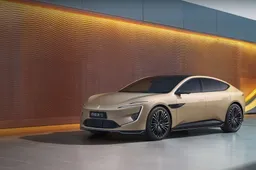
Xiaomi's legal team didn't mince words. A coordinated defamation operation, running since at least December 2024, had deployed close to 10,000 social media accounts to flood Chinese platforms with fabricated stories about the company's electric vehicles. Automated tools rewrote and redistributed the content at scale. Welcome to modern corporate warfare.

The "Black Traffic" Playbook
Here's how it works, and it's frankly more sophisticated than most people realize. Bad actors use AI tools to generate and rewrite defamatory content at speed — a volume no human team could manage manually. Those fabricated stories get seeded across thousands of fake accounts simultaneously, manufactured outrage follows, and the resulting viral spike generates advertising revenue and platform engagement. That's the "black traffic." The product isn't the lie. The lie is just the mechanism. The product is the click.
Xiaomi confirmed that tactics included inciting public hostility, amplifying competitor narratives, and systematically manipulating online discourse around its SU7 and upcoming YU7 SUV launches. Multiple suspects are now under criminal investigation by Chinese authorities. CEO Lei Jun didn't stay quiet either — he posted publicly that "the internet is not a lawless zone."

A Company Perpetually in the Crosshairs
I suppose some of this comes with the territory. Xiaomi entered the EV market as a tech disruptor in an industry where billions of yuan in market share shift based on perception as much as product. That makes it a target. Its SU7 outsold Tesla's Model 3 in China. When you do that, someone notices.
But here's the catch — not every piece of negative coverage is manufactured. Chinese media outlet Qianjiang Evening News made this point pointedly: public safety concerns about Xiaomi's door handle design and L2 assisted driving incidents are real issues that warrant real answers. Labeling all criticism as "black PR" creates its own credibility problem. Xiaomi has navigated this tension imperfectly, but it's navigating it.
The Bigger Picture for the EV Industry
China's Cyberspace Administration launched a three-month enforcement campaign specifically targeting AI-generated misinformation, fake online water armies, and coordinated defamation networks — with the new energy vehicle sector cited explicitly as a priority area. This isn't a Xiaomi-specific problem. It's an industry-wide one.
AI lowers the cost of running disinformation at scale. That means smaller players, not just well-funded rivals, can now run operations that would've required serious infrastructure five years ago. The deterrent, for now, is enforcement. Whether that's enough remains to be seen.


Loading