Google’s new Gemini Intelligence is the Most Exclusive Feature of Android
aiSunday, 17 May 2026 at 09:07
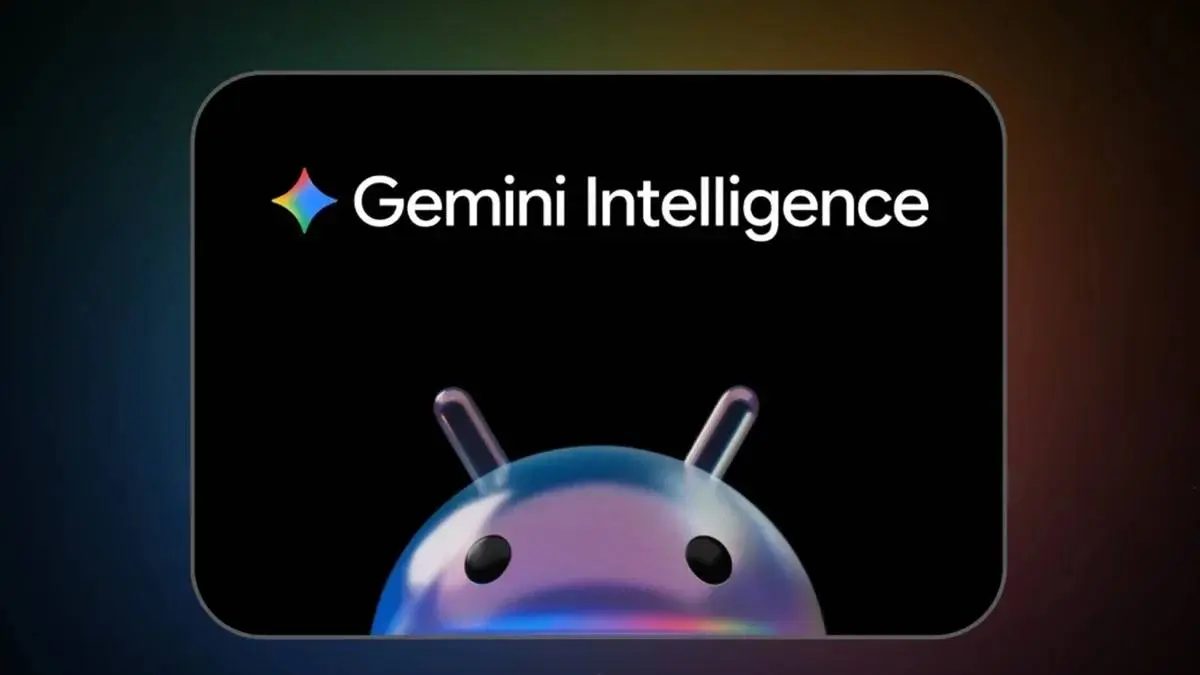
The Pixel 9 doesn't qualify. Neither does the Galaxy Z Fold 7. Those are last year's flagships.
Summary
- Google's Gemini Intelligence requirements, published in a footnote on android.com, include a flagship-grade chipset, a minimum of 12GB of RAM, support for AI Core, and Gemini Nano v3 or newer — a combination that excludes most current-generation devices.
- The Gemini Nano v3 requirement is the primary barrier: devices like the Pixel 9 series, Samsung Galaxy Z Fold 7, and Xiaomi 17 series are currently running Nano v2, meaning they don't qualify for Gemini Intelligence regardless of their RAM.
- Gemini Intelligence is expected to debut on the Samsung Galaxy Z Fold 8 and Z Flip 8 in July, with the Pixel 10 series and Galaxy S26 series confirmed to support it this summer — the OPPO Find X9 series is also among the handful of current devices meeting the Nano v3 requirement.
- Google's 12GB RAM floor creates an uncomfortable question about the Pixel 11: leaks suggest the base model may ship with only 8GB of RAM, which would exclude Google's own next entry-level flagship from Google's own marquee AI feature.
- Beyond RAM and chipset, Google requires devices to guarantee at least five Android OS upgrades and six years of security patches, while meeting quality thresholds for system stability, crash rates, spatial audio support, HDR, and low-light media performance.
"The Gemini Nano v3 requirement means the Pixel 9 series — Google's own 2025 flagship — doesn't qualify for Gemini Intelligence. Google has effectively made a feature that its most recent previous phones cannot run."
What Gemini Intelligence Actually Does
The feature set justifies the steep hardware floor. Gemini Intelligence enables autonomous multi-step task execution entirely in the background — sourcing information, transforming it, and interacting with apps and websites on the user's behalf without requiring ongoing input. Other confirmed features include Gboard's Rambler voice-to-text tool, which handles filler words and mixed-language input naturally, and a "Create my Widget" function that generates contextual home screen widgets using AI. These run on-device using the Gemini Nano v3 model, which is why the hardware requirements are so specific — the model is large enough that 12GB of RAM represents a practical minimum, not an arbitrary threshold.

The Nano v3 Problem Is Worse Than It Looks
Google's developer page listing Nano v3-compatible devices shows almost exclusively 2026 releases, with the Pixel 10 series and OPPO Find X9 series being notable exceptions as 2025-era devices that made the cut. That means the Galaxy S25 Ultra, Pixel 9 Pro, and Z Fold 7 — all premium devices from last year — are currently blocked not by their RAM or chipset but by which version of an AI model runs on their infrastructure. Whether Google updates those devices to Nano v3 via software is the open question. The feature set is expected to grow considerably across 2026 flagships, but current devices appear locked out for now.
The Pixel 11 Contradiction
It would be unusual for Google to heavily promote advanced on-device AI features while scaling back on memory in its flagship phones. The base Pixel 11 at 8GB of RAM would not meet the 12GB minimum — a deeply strange situation for a company whose main product pitch this year is Gemini Intelligence. Either the leak is wrong about the Pixel 11's RAM, Google plans an exception for its own hardware, or the base Pixel 11 simply won't run Gemini Intelligence. None of those scenarios is comfortable to explain at a product launch.

Who Actually Gets It
The Galaxy Z Fold 8, expected July 2026, is set to be the first device to debut Gemini Intelligence features publicly. The Galaxy S26 series and Pixel 10 series follow this summer. Beyond that, any 2026 flagship that ships with Nano v3 support, 12GB of RAM, and meets Google's quality standards joins the list. For buyers choosing a phone today with Gemini Intelligence in mind, the Galaxy S26 series is currently the safest option.
Popular News


Latest News
Loading