Apple MacBook Neo Sales Exceed Expectations as Competitors Prepare Responses
AppleFriday, 10 April 2026 at 10:12
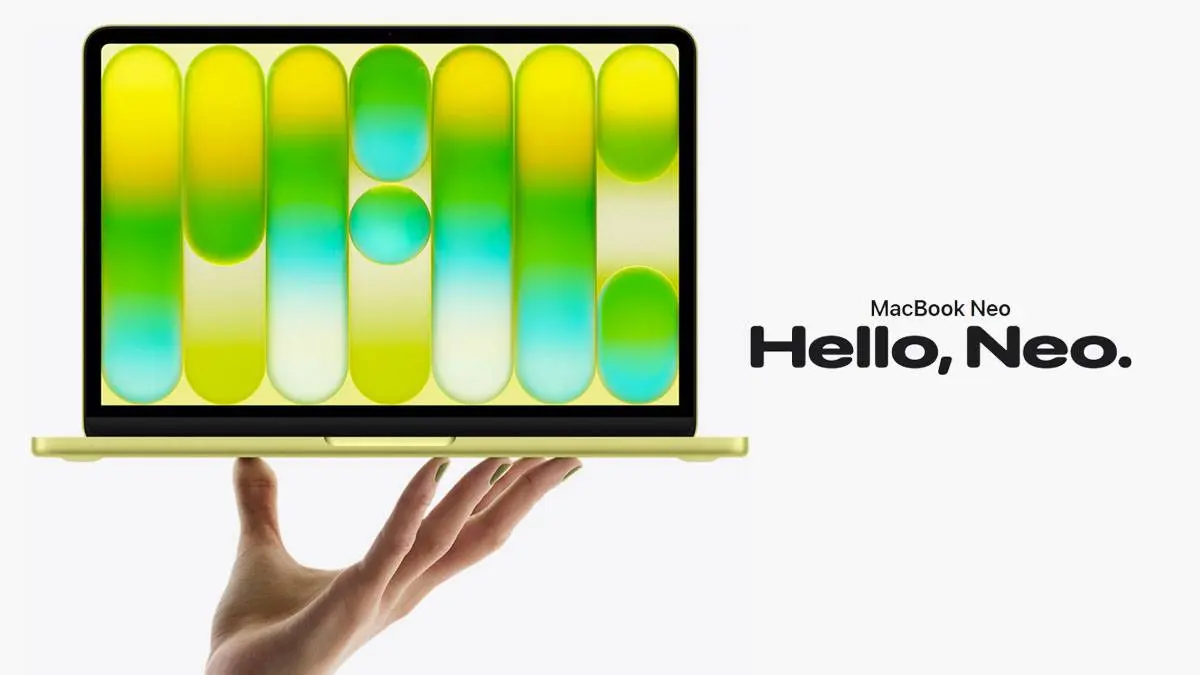
A few weeks in. Some colors sold out. Production talks already underway. That's not a product launch. That's a disruption.

Summary
- The MacBook Neo launched in March 2026 at $599 (or $499 for education), powered by the A18 Pro chip — Apple's first laptop to use an iPhone-derived processor — and has exceeded sales expectations enough to prompt production expansion talks.
- Tim Cook confirmed Apple's best-ever launch week for first-time Mac customers, with TrendForce projecting a 7.7% year-over-year growth in Apple laptop shipments and macOS market share reaching 13.2%.
- Apple's timing was deliberately strategic: while Windows OEMs face $90–$165 per-unit cost increases due to the 2026 memory shortage, Apple's supply chain leverage allowed it to hold the $599 price point — a move analysts called a "strategic masterstroke."
- Huawei is preparing its most direct competitor, the tentatively named MateBook Neo, reportedly powered by the Kirin 9030 Pro chipset and priced around CNY 4,000 (~$575), with a possible first-half 2026 launch in China.
- The MacBook Neo's weaknesses are real — just 8GB of RAM, no backlit keyboard, only two USB-C ports, and a 13-inch display — but at this price, they haven't stopped it from selling.
This is Apple doing something it almost never does: competing on price. And frankly, the entire PC industry wasn't ready for it.

Why $599 Is a More Disruptive Number Than It Looks
The MacBook Neo costs less than the standard iPhone 17. It costs roughly half the MacBook Air. The ASUS CFO called it "a shock to the entire market." These aren't PR lines — they reflect genuine structural alarm from manufacturers who have spent years competing in the sub-$600 laptop space and suddenly find themselves sharing it with Apple.
Here's the part that makes this genuinely difficult for competitors to counter. Memory prices have surged 50–90% in 2026, driven by AI data centers outbidding consumer electronics for DRAM and NAND supply. Windows OEMs are being forced to either raise prices or cut specs. Apple, as the world's largest single semiconductor buyer, negotiated supply agreements that insulate it from the worst of this storm. While Dell, HP, and Lenovo quietly absorb cost pressure, Apple is holding its price and gaining share. That asymmetry isn't accidental.
Huawei Prepares Its Counter — But It's Complicated
The only named competitor taking direct aim at the MacBook Neo is Huawei. Leakers report a device tentatively called the MateBook Neo, expected to run the Kirin 9030 Pro chipset and come in at roughly CNY 4,000 — about $575 — potentially with more generous memory configurations than Apple's 8GB starting point.

I suppose 24GB of RAM at that price sounds compelling on a spec sheet. But here's the catch: Huawei operates in a fundamentally different ecosystem. HarmonyOS versus macOS isn't a minor footnote — for buyers outside China, it's often the deciding factor. The MateBook Neo will almost certainly win in markets where Huawei already has strong retail presence. Everywhere else, it's a harder sell.
The Tradeoffs Apple Made
The Neo isn't without its critics. No backlit keyboard on a $599 laptop is a legitimate grievance. Eight gigabytes of unified memory feels tight heading into 2026. Two USB-C ports — one USB 3, one USB 2 — is a connectivity setup that belongs on a device from a different era. Windows rivals at the same price routinely offer 16GB of RAM, more ports, and larger screens.
But for the demographic Apple is targeting — first-time Mac buyers, students, light users priced out of the Air — none of those tradeoffs appear to be dealbreakers. The production expansion conversations reportedly underway confirm it.
Popular News


Latest News
Loading