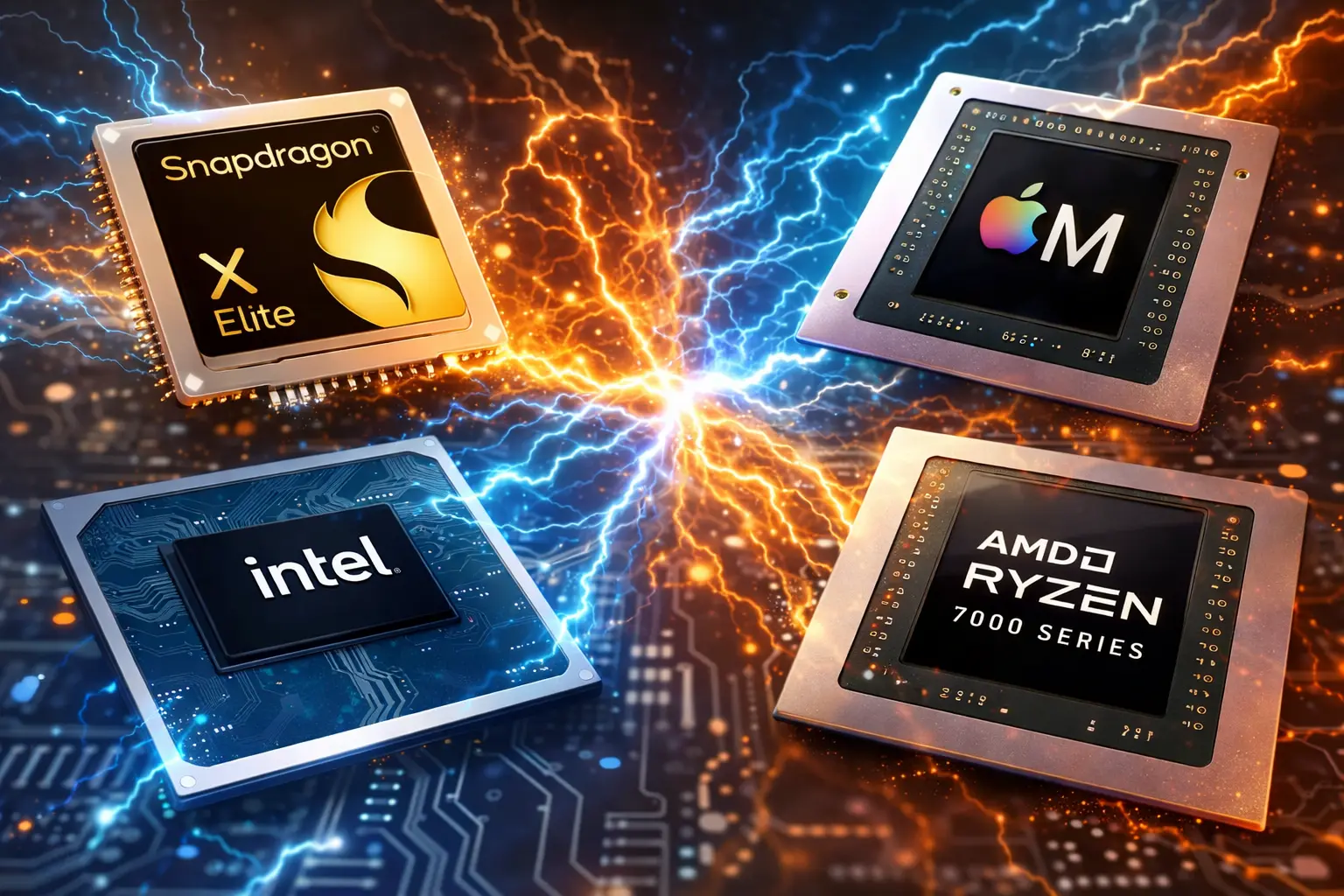
Until fairly recently, putting smartphone chips and PC CPUs in the same conversation did not make much sense. One lived under strict power limits and thermal constraints. The other had fans, headroom, and an assumption that electricity was plentiful. The difference still exists in 2026, but it is no longer the full story. The discussion has shifted, quietly and steadily, toward efficiency.
PC CPUs vs Mobile CPUs - Efficiency is The New Crown
We must acknowledge that Mobile CPUs have certain disadvantages compared to PC CPUs; they lack the same capabilities. They have been forced to mature faster and to deliver efficiency without the same add-ons of PCs. Heating mobile CPUs were easily scrutinized, like the Snapdragon 810. The mobile CPUs don't have the luxury of excess power or aggressive cooling. Every design decision is shaped by battery life, heat, and sustained usability. The result is a generation of chips that are careful about when they work hard and disciplined about when they do not. They wake quickly, finish tasks efficiently, and return to idle without drama. A few years ago, the disparity was massive; now things are changing.
The PC CPUs, particularly on the x86 side, still focus on flexibility and peak output. That approach remains valuable, especially for demanding workloads. However, most people do not spend their day compiling large projects, rendering complex scenes, or pushing CPUs to their limits. They browse, write, attend meetings, manage files, and consume media. These tasks rarely justify the power behavior many PCs still exhibit. When you're a gamer, video editor, or software designer, things are different. However, most people will never experience the true power of PCs.
PC and Mobile CPUs Have Different Ways of Working and Both Have Their Advantages
When it comes to efficiency, this is a place where both PC and Mobile CPUs clash. The battery life is where theory meets reality. A modern smartphone can maintain responsiveness for hours under mixed use, often without noticeable heat or performance swings. Many laptops, even premium ones, still struggle to maintain that balance without throttling or audible cooling.

In this regard, the mobile CPUs benefit from architectures designed around variability. The Different core types handle different workloads, and background tasks are tightly managed. The power states shift constantly, often without the user noticing. The system works only as hard as necessary. PCs, by contrast, still carry architectural and software assumptions rooted in an era where being always ready mattered more than being selective.

This does not mean mobile CPUs are replacing PCs. That narrative oversimplifies the issue. Heavy professional workloads still demand the sustained performance that desktop and high-end laptop CPUs provide. Like I've said before, Gaming, advanced creative work, and large-scale development remain firmly in PC territory. The Raw power still has a place, even amidst the memory crisis, and it is not going away.
Phones today handle hours of mixed use without much drama. They stay responsive, they stay cool, and they rarely need to slow themselves down. Laptops often struggle to keep that balance, even at the high end.

Software Makes The Difference
Nowadays, we can say that software easily makes the difference. Most of the tasks are event-based, cloud-assisted, or optimized for short bursts rather than continuous load. For daily tasks, feeling fast matters more than pushing maximum performance for long stretches. Efficiency shapes that experience, from how responsive a device feels to how long the battery holds up.
This is why this whole conversation feels different in 2026. The Mobile CPUs are not outperforming PC CPUs across the board, but they are starting to change expectations. Users notice when devices fade into the background instead of demanding attention. They notice when battery life becomes predictable rather than a constant concern. These behaviors can easily shape the overall experience. In some scenarios, the ARM-based PCs that use mobile CPUs will offer advantages. While others will still rely on conventional PCs.
Read also
Highlights
- Efficiency is the real battleground in 2026, not raw benchmark dominance or peak wattage.
- Mobile CPUs matured under pressure, learning to balance performance, heat, and battery life without relying on brute force.
- PC CPUs still excel at sustained heavy workloads, but most everyday tasks rarely tap into that potential.
- Smartphones deliver consistent responsiveness for hours, while many laptops still struggle with heat, noise, and throttling.
- Architectural differences matter: mobile chips are built around variability and selective performance, while PCs carry legacy assumptions.
- Software optimization now shapes user experience more than theoretical maximum performance.
- ARM-based PCs are changing expectations, offering efficiency advantages in specific scenarios without replacing traditional PCs.
- The future is about alignment, matching power delivery to real-world use instead of chasing headline numbers.
Conclusion
The efficiency race is not about replacing one category with another. But it is about aligning power with purpose. The most interesting chips in 2026 are not automatically the fastest ones on a slide deck. They win by staying consistent, by feeling fast without constantly reminding you they are working hard. As laptops and desktops continue to split into different categories with different priorities, that kind of balance is becoming the real benchmark, whether the industry likes it or not.
Popular News

Latest News
Loading