Samsung Patents Two Rollable Phone Designs — One Hides the Screen Completely
SamsungFriday, 22 May 2026 at 09:26
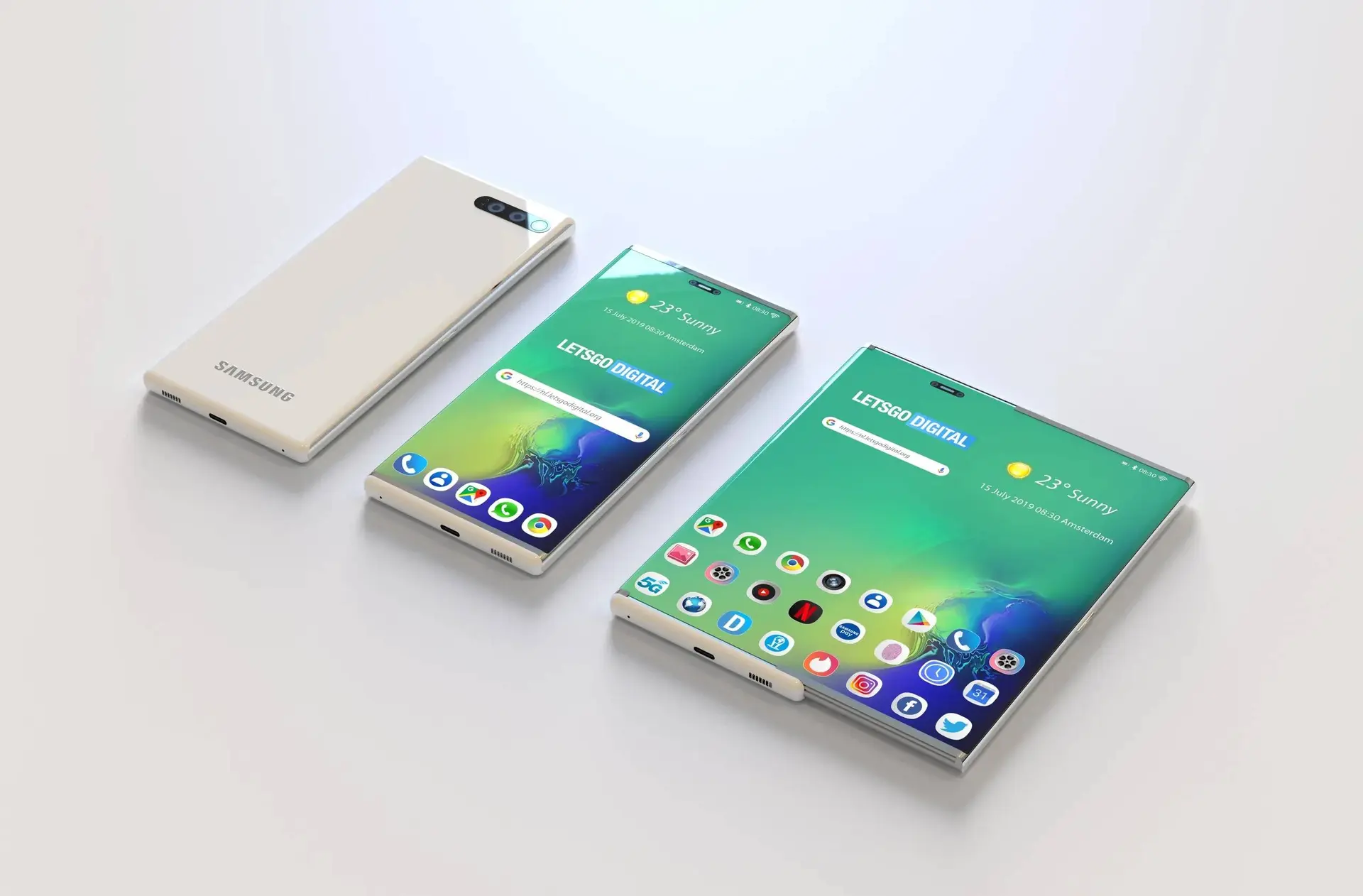
Samsung just filed two rollable phone patents spotted by WearView, and one of them is genuinely unusual. Most rollable concepts extend the screen outward when expanded. Samsung's second design goes further — the display is completely hidden inside the body when not in use, only sliding out when the sides are pulled apart.
Patents aren't products. But Samsung's Display division has already shown rollable OLED prototypes at CES and MWC, so this isn't purely theoretical.

Key Points
- Samsung filed two distinct rollable and sliding phone patents, spotted by WearView — one expands horizontally like a traditional rollable, the second hides the display entirely inside the body
- The hidden-display concept specifically addresses screen protection — flexible displays stored inside the chassis can't be scratched or damaged when the phone is pocketed
- Both patents include sensors that detect how far the screen has been extended and how quickly it moves — allowing software to dynamically adapt the UI based on current screen dimensions
- Samsung Display has already demonstrated rollable and slidable OLED prototypes publicly at CES and MWC — these patents build on physical hardware that already exists
- Engineering challenges remain significant — durability, moving parts, battery space constraints, and long-term reliability are all unresolved for commercial rollables
Two Concepts, Two Philosophies
The first design is the more conventional rollable approach. In its compact state, it looks like a standard smartphone. Pulling horizontally extends the display outward, creating a wider canvas for multitasking, gaming, or video. It's essentially the foldable's ambition — more screen when you need it — achieved through rolling rather than folding. No hinge. No crease along the fold line.
The second concept is the more ambitious one. The display doesn't just extend — it's fully concealed inside the chassis when not in use. The screen slides out when the sides are pulled, revealing a larger panel from what initially looks like a displayless brick. Samsung frames this as a protection solution. Flexible screens stored inside the body can't accumulate scratches, dust damage, or impact marks from daily handling. Whether that translates to meaningfully longer screen lifespan in practice would require real-world testing to determine.

The Adaptive Software Angle
The sensor integration is the detail worth paying attention to beyond the form factor novelty. Detecting extension distance and movement speed allows the OS to respond intelligently to partial and full extension states. A phone extended halfway could show a different layout than one fully expanded. Apps could reflow content progressively rather than waiting for a fixed screen size. That's a more sophisticated interaction model than current foldables offer — those snap between fixed states rather than adapting continuously.
Read also

Why Samsung Is Still Exploring This
Foldables have a crease problem. The fold line on every current book-style foldable is visible, tactile, and for some users genuinely off-putting. Clamshell foldables improve on this but still require a hinge. A rollable with a flexible display that doesn't fold at all eliminates the crease entirely — the screen bends gradually around a roller rather than sharply at a hinge point.
Samsung Display's existing rollable prototypes have demonstrated that the panel technology is far enough along for public showcasing. The gap between prototype and commercial product is still engineering-intensive — but it's narrowing.
Whether buyers who've only just started warming up to foldables are ready for rollables is the market question Samsung can't answer with a patent filing.
Popular News


Latest News
Loading