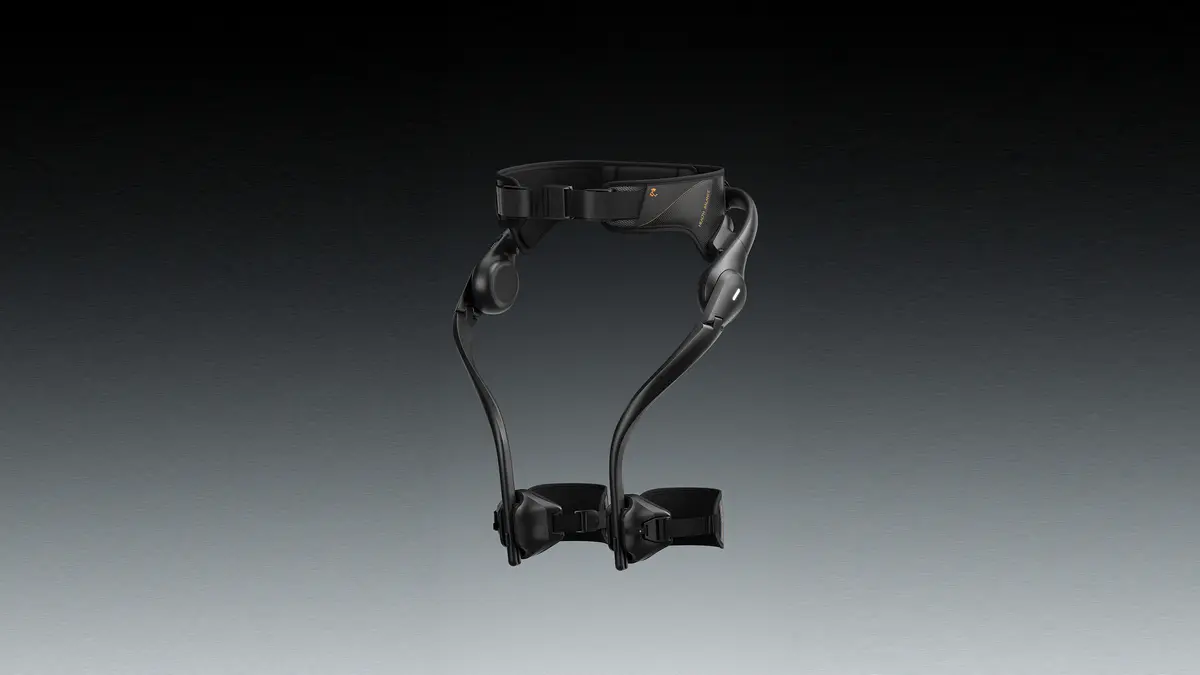
The future is coming fast, and things that once belonged only to our imagination or Sci-Fi movies are starting to become a reality. Today, Haier has officially introduced the Haier W3, a new wearable device designed to help users move more efficiently during physical activity. The company says it is the world’s lightest AI-powered sports exoskeleton, weighing just 1.75kg. The lightweight design makes it easier to wear for long periods without feeling heavy or uncomfortable.
If you feel like your body could use an upgrade, this exoskeleton wants to help. It works like extra hardware for your body, giving more support and making physical activity easier and more efficient.

Haier W3 - Lightweight Design Built With Premium Materials
The Haier W3 is made from carbon fiber and titanium alloy. These materials make it light but still strong. This makes it easy to wear during exercise or daily activities without feeling heavy. It is built to feel comfortable, move easily with your body, and give extra support when needed.
Read also

AI Technology Helps Reduce Physical Effort
The Haier W3 uses an AI gait algorithm 3.0, which allows it to adjust to different types of movement. It can support 12 different sports and movement scenarios, helping users whether they are walking, running, or exercising. The exoskeleton can provide up to 16N·m of assistance per leg, helping reduce strain during movement.

According to Haier, this can lower physical energy use by up to 37%, helping improve endurance and reduce fatigue.
Key Points
- Weighs only 1.75kg
- Very light and easy to wear
- Built with carbon fiber and titanium alloy
- Strong but still lightweight
- Made for comfort during daily use
- Uses AI gait algorithm 3.0
- Learns and adjusts to your movement
- Supports 12 movement modes
- Works for walking, running, and exercise
- Gives 16N·m support per leg
- Helps reduce strain on the body
- Can cut energy use by up to 37%
- Helps users move longer with less fatigue
- Built to improve physical performance
- Designed as a smart wearable robot assistant
If we are already surprised by the boom of robot-related technology, Haier W3 shows how wearable robotics are becoming more practical for everyday use. With lightweight materials, smart AI support, and strong performance assistance, it could become an important step forward for fitness and mobility technology.
Popular News





Latest News
Loading