Xiaomi 17 Max Is Official — 8,000mAh, 200MP Leica, Starting at 4,299 Yuan (~$594)
Xiaomi NewsThursday, 21 May 2026 at 14:34
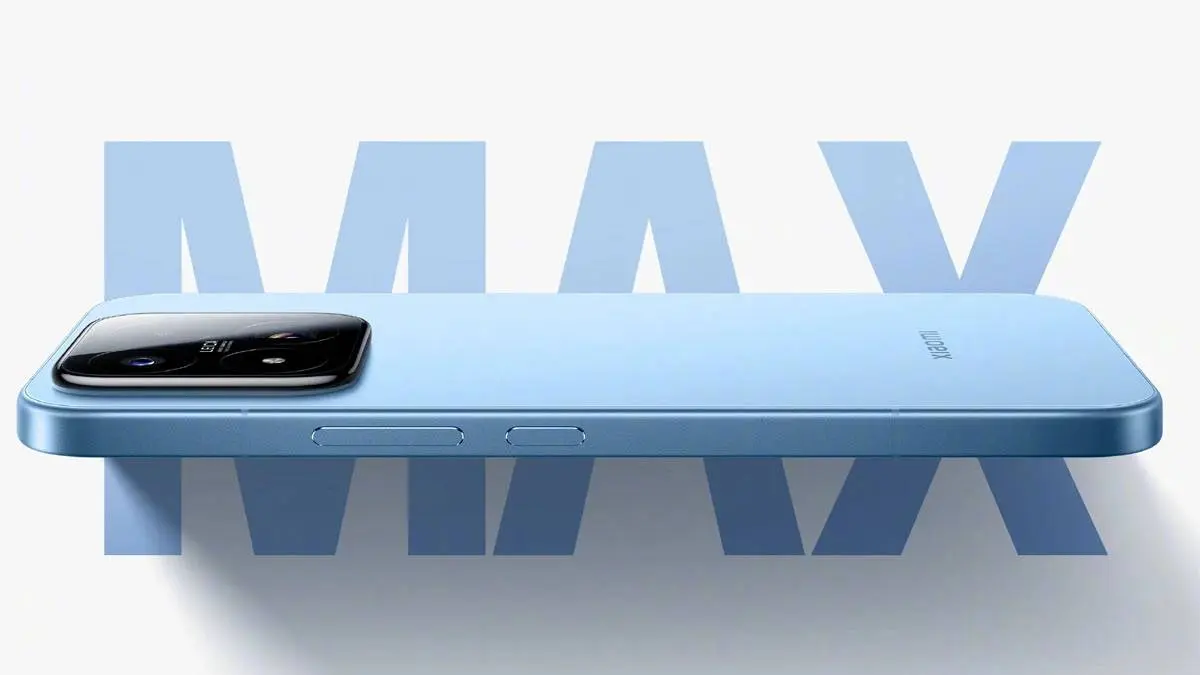
Xiaomi launched the 17 Max today at its ecosystem event. Pre-orders are open now. Sales begin May 25 at 10AM China time. The starting price is 4,299 yuan (~$594) after national subsidies — and the spec sheet justifies every yuan.
Eight thousand milliamp hours. Two hundred megapixels. Leica triple cameras. The most ambitious Xiaomi non-Ultra flagship ever made.

Key Points
- Xiaomi 17 Max officially launched at 4,299 yuan (~$594) after subsidies — pre-orders open, sales start May 25 at 10AM in China
- 8,000mAh Xiaomi Jinshajiang silicon-carbon battery with 16% silicon content, 894Wh/L energy density — 100W wired, 50W wireless, Surge P3 charging chip and Surge G2 battery management chip
- Leica triple camera: 200MP main at 1/1.4-inch with pyramid coating, large-sensor periscope telephoto with 1/2-inch sensor, 3x golden portrait focal length, 6x lossless zoom, and 15cm macro
- 6.9-inch SuperPixel LTPO 1-120Hz display — M10 luminescent material, 3,500 nits peak brightness, Dragon Crystal Glass Gen 3, DC-like dimming with switchable 2160Hz PWM
- Snapdragon 8 Elite Gen 5, 3D ring-shaped cold pump cooling, stereo speakers, ultrasonic fingerprint, Xiaomi Star Communication — white, sky blue, and pixel black

The Battery Is Everything Xiaomi Promised
Eight thousand milliamp hours with 16% silicon content in the anode. The 894Wh/L energy density is an engineering milestone — packing that capacity into a chassis that doesn't feel like carrying a brick requires exactly this kind of high-density silicon-carbon chemistry. In Xiaomi's official Bilibili video streaming test, the 17 Max hit 33.3 hours of continuous screen-on time — outlasting two fully charged iPhone 17 Pro Max units combined.

The Surge P3 fast charging chip and Surge G2 battery management chip are Xiaomi's own silicon handling the power delivery. At 100W wired and 50W wireless, the 8,000mAh cell charges fully in roughly 60-70 minutes — fast enough that the capacity doesn't translate to inconvenient overnight-only charging.
The Display Is Smarter Than the Numbers Suggest
SuperPixel technology is the headline. Xiaomi claims the panel delivers 2K-equivalent perceived clarity while running at 1.5K power consumption — a software and panel engineering approach to sharpness rather than a raw resolution increase. M10 luminescent material — the same generation used in the highest-end OLED panels currently available — drives 3,500 nits of peak brightness, making the screen genuinely usable in direct sunlight.

Dragon Crystal Glass Gen 3 with 20 times improved drop resistance over standard glass is the durability addition. The LTPO panel scales between 1Hz and 120Hz. Default dimming is DC-like for eye comfort, switchable to 2160Hz PWM for users who prefer that mode.
Xiaomi Star Communication handles satellite connectivity alongside the standard 5G suite. Ultrasonic fingerprint. Stereo dual speakers. The 17 Max leaves nothing off the spec sheet.
Leica's First 200MP Main Camera
The 1/1.4-inch sensor on the primary camera is large by any standard. The ultra-high transmittance pyramid coating — a Leica optical addition — reduces internal reflections and improves light transmission through the lens stack. Multi-frame fusion at 200MP combines multiple exposures computationally for detail, dynamic range, and low-light output that raw sensor resolution alone can't achieve.

The periscope telephoto on a 1/2-inch sensor at 3x optical zoom with 6x lossless zoom is the focal length most people will use daily. The 15cm macro distance on a telephoto is an unusual and genuinely useful addition — close-up product shots, nature detail, and food photography without a dedicated macro lens.

Snapdragon 8 Elite Gen 5 and the Cooling Story
The three-dimensional ring-shaped cold pump heat dissipation system is Xiaomi's answer to the thermal demands of a 6.9-inch screen running Genshin Impact at extreme settings. The validated claim — 5.7 hours of full-frame-rate Genshin Impact at maximum graphics settings — is the most demanding gaming endurance test any manufacturer has published this year. The combination of Snapdragon 8 Elite Gen 5 efficiency and the cold pump system makes that number believable.

Popular News


Latest News
Loading